Arizona has become one of America's most exciting laboratories for energy innovation. With abundant sunshine, rapid population growth, expanding technology investments, semiconductor manufacturing, and increasing electricity demand, the state has unique opportunities to combine renewable energy with Internet of Things (IoT) technologies to create smarter, more sustainable communities.
Energy sustainability today is no longer just about generating clean electricity. It is about collecting better data, making smarter decisions, reducing waste, improving resilience, and using connected technologies to optimize every aspect of energy consumption.
Many discussions focus exclusively on solar panels or electric vehicles. While those technologies are important, Arizona's biggest opportunity lies in connecting them together.
Imagine an ecosystem where:
- Smart electric grids balance renewable energy automatically.
- Commercial buildings adjust HVAC systems based on occupancy.
- Electric vehicle chargers communicate with utilities.
- Water infrastructure reduces pumping costs through automation.
- Industrial facilities optimize production based on energy pricing.
- Battery storage responds instantly to grid demand.
- Cities monitor energy usage across public infrastructure.
This is where sustainability becomes intelligent.
Arizona faces several unique energy challenges:
- Extreme summer temperatures
- Rapid residential development
- Growing commercial construction
- Increasing electricity demand
- Water scarcity
- Expanding manufacturing sector
- Large logistics operations
- Growing EV adoption
Each challenge also creates an opportunity for connected IoT solutions.
Smart energy combines connected devices, cloud software, sensors, AI, automation, and analytics to optimize how electricity is generated, distributed, stored, and consumed.
| Traditional Energy |
Smart Energy |
| Reactive operations |
Predictive optimization |
| Manual inspections |
Remote monitoring |
| Limited consumption visibility |
Real-time analytics |
| Fixed schedules |
Demand-based automation |
| Standalone systems |
Connected infrastructure |
Modern electrical grids are becoming increasingly intelligent through IoT sensors, smart meters, automation systems, and predictive analytics.
Connected grids help utilities:
- Balance electricity demand
- Integrate renewable energy
- Detect outages faster
- Reduce transmission losses
- Support EV charging
- Improve grid reliability
- Predict equipment failures
Related Reading:
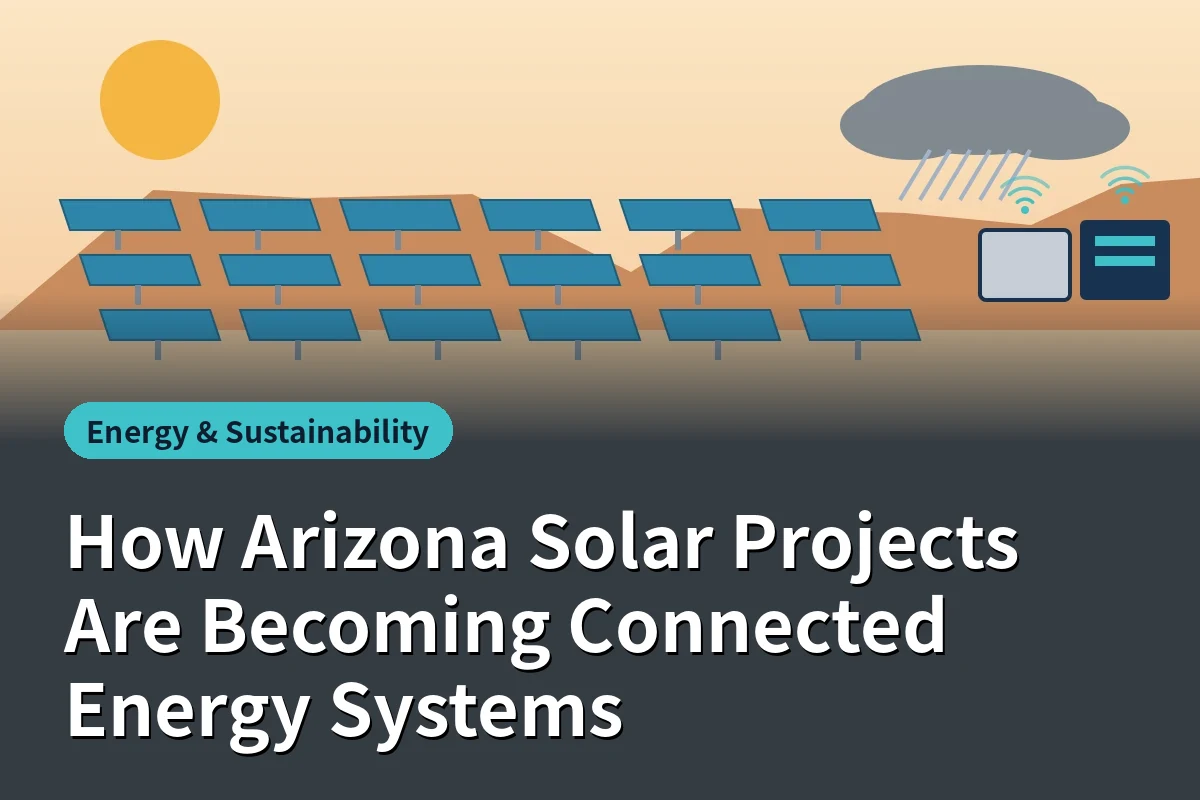
Arizona receives some of the highest solar radiation levels in North America, making solar energy one of the state's greatest natural resources.
IoT makes solar smarter by monitoring:
- Panel performance
- Weather conditions
- Energy production
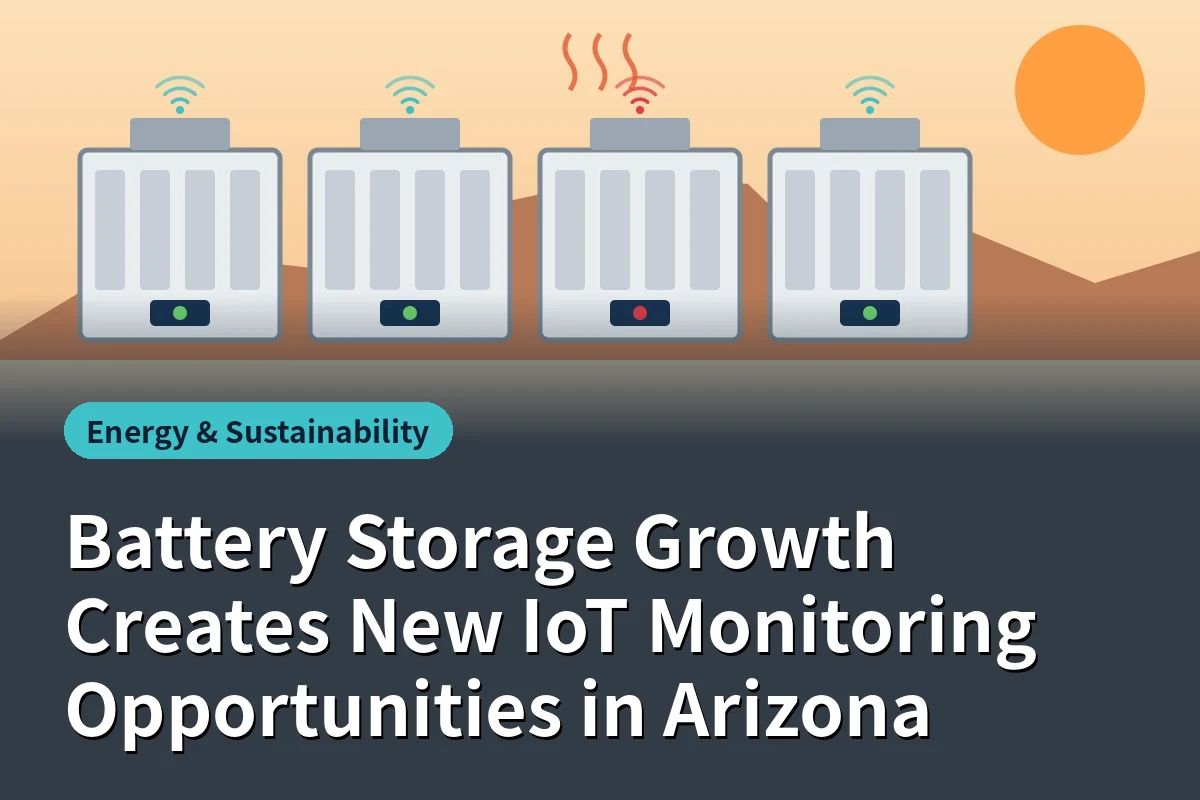
- Battery storage
- Inverter health
- Cleaning schedules
- Grid exports
Instead of simply generating electricity, solar installations become intelligent energy assets.
Commercial real estate consumes significant energy for HVAC, lighting, elevators, security, ventilation, and equipment.
Building automation systems can reduce waste by adjusting systems automatically based on:
- Occupancy
- Weather
- Time of day
- Utility pricing
- Air quality
- Energy demand
Related Reading
Water and energy are closely connected. Pumping, treating, transporting, and storing water all require electricity.
IoT helps reduce both water waste and energy consumption through:
- Smart water meters
- Leak detection
- Pressure monitoring
- Pump optimization
- Remote valve control
- Consumption analytics
Related Reading
As electric vehicles become more common, charging infrastructure becomes part of Arizona's energy system.
Connected charging stations help utilities balance:
- Peak demand
- Renewable energy availability
- Fleet charging
- Commercial charging
- Battery storage
- Electricity pricing
Related Reading
Arizona continues attracting advanced manufacturing investments, including semiconductor production, aerospace, electronics, and logistics.
Industrial IoT improves sustainability by monitoring:
- Machine energy consumption
- Compressed air systems
- Production efficiency
- Equipment maintenance
- Motor performance
- Factory environmental conditions
Explore:
Smart meters, sensors, and connected devices generate enormous amounts of operational data.
Organizations use analytics to answer questions like:
- Which buildings consume the most energy?
- Where are equipment failures likely?
- When should maintenance occur?
- Which systems waste electricity?
- How much renewable energy is generated?
- How can demand charges be reduced?
Energy sustainability is one pillar of smart cities.
Connected cities combine:
- Smart transportation
- Public safety
- Energy systems
- Water management
- Connected buildings
- Air quality monitoring
- Environmental sensors
Related Reading
| Benefit |
Business Impact |
| Lower energy costs |
Reduced operational expenses |
| Predictive maintenance |
Less equipment downtime |
| Renewable integration |
Cleaner electricity generation |
| Better asset utilization |
Improved ROI |
| Reduced emissions |
Supports ESG goals |
| Improved resilience |
Better response to outages |
- Installing smart devices without analytics.
- Ignoring cybersecurity.
- Not integrating building systems.
- Collecting data without operational goals.
- Neglecting preventive maintenance.
- Viewing sustainability only as a compliance requirement.
These organizations represent important parts of Arizona's broader semiconductor, electronics, automation, sensing, and connected technology ecosystem that supports intelligent infrastructure.
The next decade will see energy systems become increasingly intelligent through AI, IoT, battery storage, distributed energy resources, digital twins, predictive analytics, and connected infrastructure.
Arizona's combination of solar resources, advanced manufacturing, commercial growth, and technology investment positions the state to become a national leader in intelligent energy management.
Energy sustainability in Arizona is evolving beyond renewable generation. The greatest opportunity lies in connecting energy production, buildings, transportation, utilities, manufacturing, and cities into one intelligent ecosystem powered by IoT.
Organizations that embrace connected infrastructure today will be better positioned to reduce costs, improve resilience, support sustainability goals, and adapt to Arizona's rapidly growing economy.
Frequently asked questions
Smart energy uses IoT devices, automation, cloud software, and analytics to optimize energy generation, distribution, and consumption.
Arizona has abundant solar resources, rapid growth, advanced manufacturing investment, and increasing demand for intelligent infrastructure.
IoT provides real-time monitoring, predictive maintenance, automation, analytics, and operational optimization that reduce waste and improve efficiency.
Building automation reduces HVAC, lighting, and equipment energy consumption while improving occupant comfort.
Connected charging stations help balance electricity demand, integrate renewable energy, and support transportation electrification.
Smart grids improve reliability, integrate renewable energy, detect outages faster, and support future electricity demand.
Related articles


 Energy & Sustainability