 Smart Building & Commercial IoT
Predictive Maintenance for Commercial Properties in Arizona:...
Published On 21-06-2026

Published by IOT Arizona Research & Editorial Team
Arizona has never been an easy place to operate commercial buildings. Summer temperatures regularly exceed 100°F, energy demand surges during peak hours, and HVAC systems often work harder than almost anywhere else in the United States.
In 2026, building owners are no longer asking, "How do we cool our buildings?" They are asking, "How do we cool our buildings intelligently?"
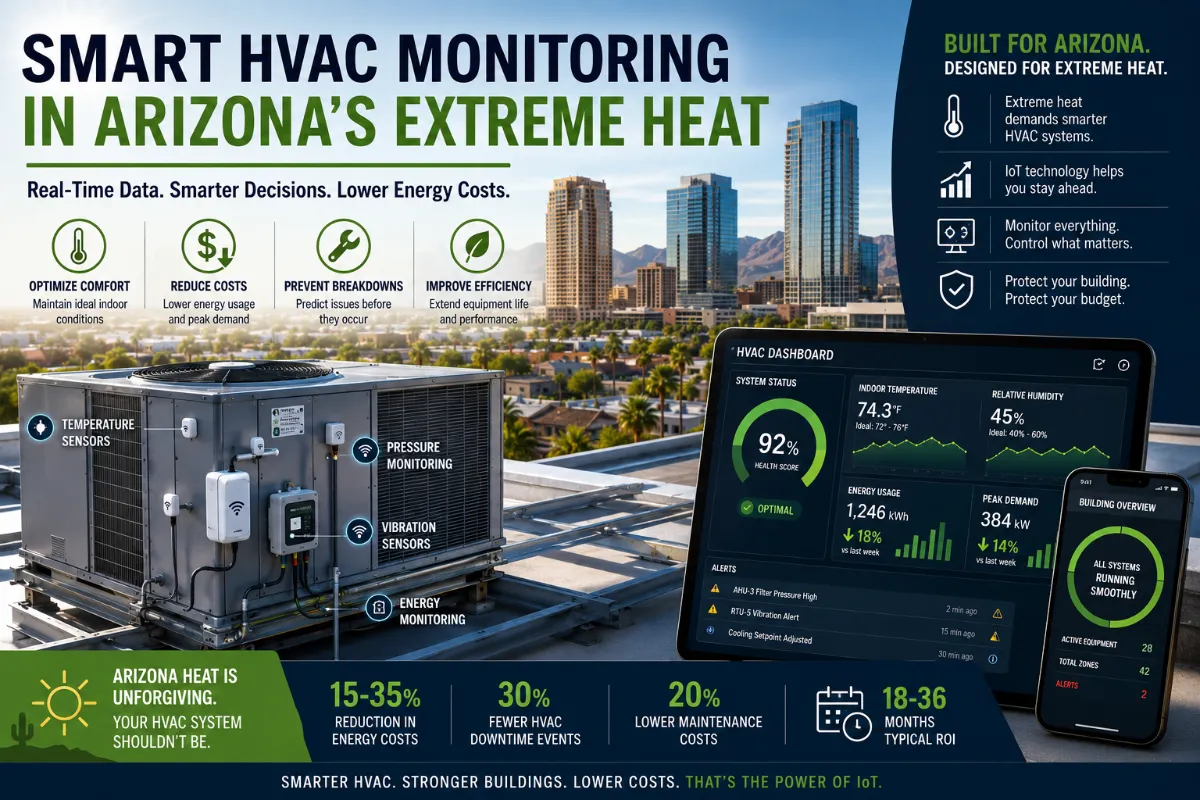
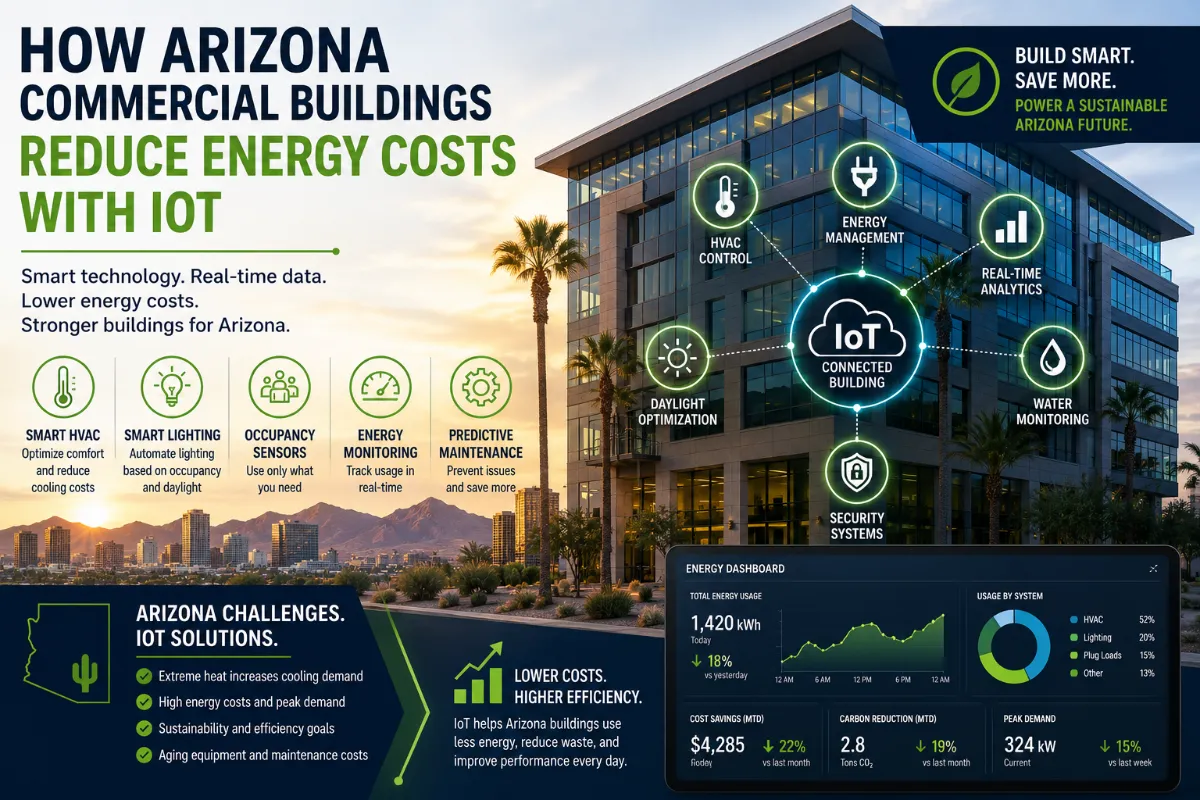
Smart HVAC monitoring is becoming one of the most valuable investments for Arizona commercial properties because it helps businesses reduce energy costs, prevent system failures, improve occupant comfort, and extend equipment lifespan.
Unlike traditional HVAC systems that operate on fixed schedules, smart HVAC systems continuously collect data, identify inefficiencies, and automatically optimize performance.
Arizona's climate creates operational challenges that generic building strategies cannot solve.
Commercial buildings in Phoenix, Scottsdale, Mesa, Chandler, Tempe, Tucson, and Glendale often experience:
Traditional thermostats simply cannot react fast enough to these changing conditions.
Smart HVAC monitoring uses connected sensors, cloud platforms, building automation systems, and artificial intelligence to continuously monitor HVAC performance.
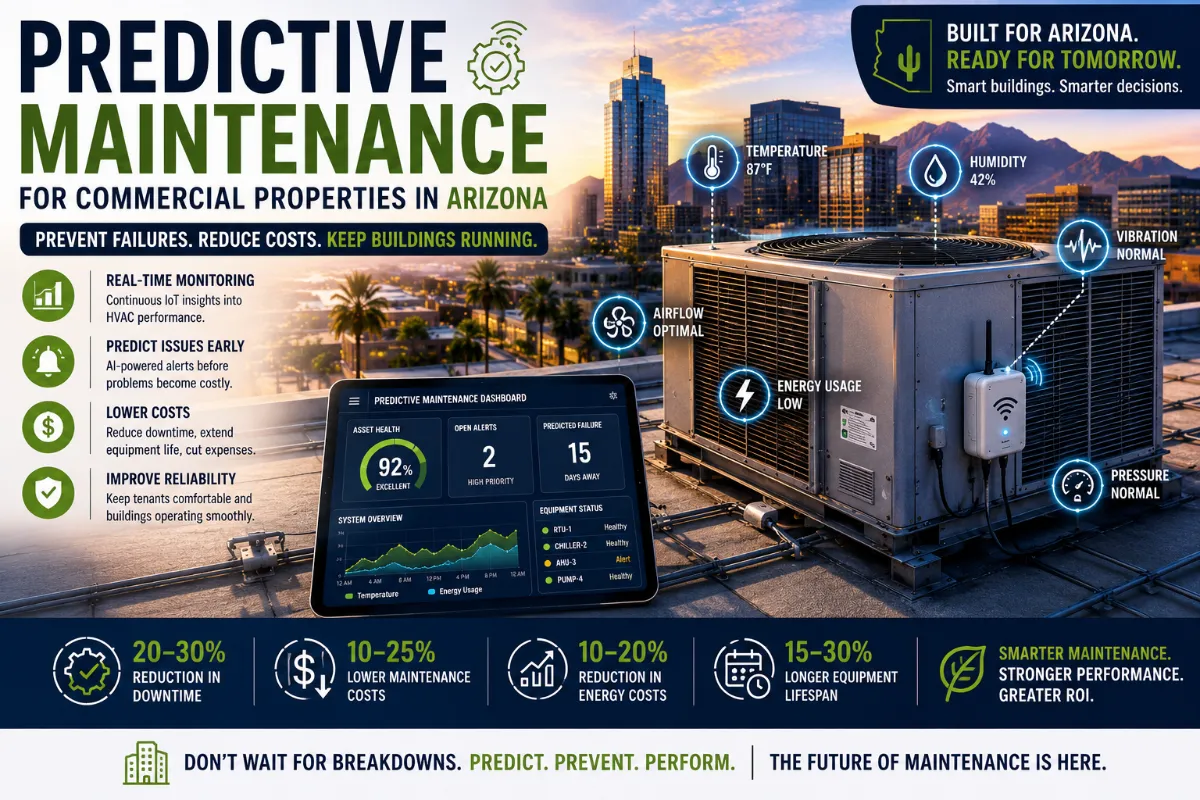
Instead of waiting for equipment to fail, the system analyzes data and identifies problems before they become expensive.
| Data Point | Purpose |
|---|---|
| Temperature | Optimize cooling performance |
| Humidity | Improve indoor comfort |
| Airflow | Detect inefficiencies |
| Occupancy | Adjust cooling based on usage |
| Equipment Runtime | Reduce unnecessary operation |
| Energy Consumption | Lower utility costs |
| Vibration | Predict equipment failure |
| Pressure | Monitor system health |
Many Arizona buildings waste significant amounts of energy by cooling every area equally.
Examples include:
Smart HVAC systems solve this problem by dynamically adjusting cooling based on real building activity.
Sensors detect when spaces are occupied.
The system automatically adjusts:
This prevents energy waste in empty areas.
HVAC failures during Arizona summers can be expensive.
Smart systems monitor:
Maintenance teams receive alerts before a breakdown occurs.
Electricity costs often increase during afternoon peak demand periods.
Smart systems can:
Modern systems can integrate with weather forecasts.
If temperatures are expected to exceed 110°F, the system prepares in advance.
This reduces stress on HVAC equipment.
Traditional HVAC systems often operate like a black box.
Smart dashboards provide visibility into:
Building managers can make decisions based on data instead of assumptions.
| Building Type | Primary Benefit |
|---|---|
| Office Buildings | Occupancy-based cooling |
| Medical Buildings | Indoor comfort and reliability |
| Retail Centers | Energy optimization |
| Warehouses | Zone management |
| Schools | Scheduled automation |
| Hotels | Guest comfort optimization |
| Data Centers | Environmental protection |
| Area | Potential Improvement |
|---|---|
| Energy Costs | 15% to 35% reduction |
| Equipment Downtime | Up to 30% reduction |
| Maintenance Costs | Up to 20% reduction |
| Comfort Complaints | Significant reduction |
| Equipment Lifespan | Extended operational life |
Most Arizona buildings achieve measurable ROI within 18 to 36 months.
Identify all rooftop units, chillers, air handlers, thermostats, and control systems.
Deploy sensors for:
All HVAC data should feed into a single platform.
Examples include:
Review performance monthly and adjust settings as usage patterns change.
Connected HVAC systems are part of a building's technology infrastructure.
Building owners should implement:
The next generation of HVAC systems will become increasingly autonomous.
Future systems will:
Arizona buildings are moving from automation toward intelligent climate management.
Smart HVAC monitoring is no longer a luxury upgrade for Arizona buildings.
It is becoming essential infrastructure.
Buildings that invest in real-time monitoring today will reduce energy costs, improve comfort, prevent failures, and operate more efficiently throughout Arizona's extreme heat conditions.
This article was reviewed by the IOT Arizona Editorial Team for accuracy, clarity, and relevance. Information may be sourced from publicly available treatment resources, government agencies, and healthcare references where applicable.
Last reviewed: June 2026
Smart Building & Commercial IoT
 Smart Building & Commercial IoT
 Smart Building & Commercial IoT
 Smart Building & Commercial IoT