 Smart Cities & Government
Public Safety IoT Technologies: How Cities Are Moving from E...
Published On 21-06-2026

Published by IOT Arizona Research & Editorial Team
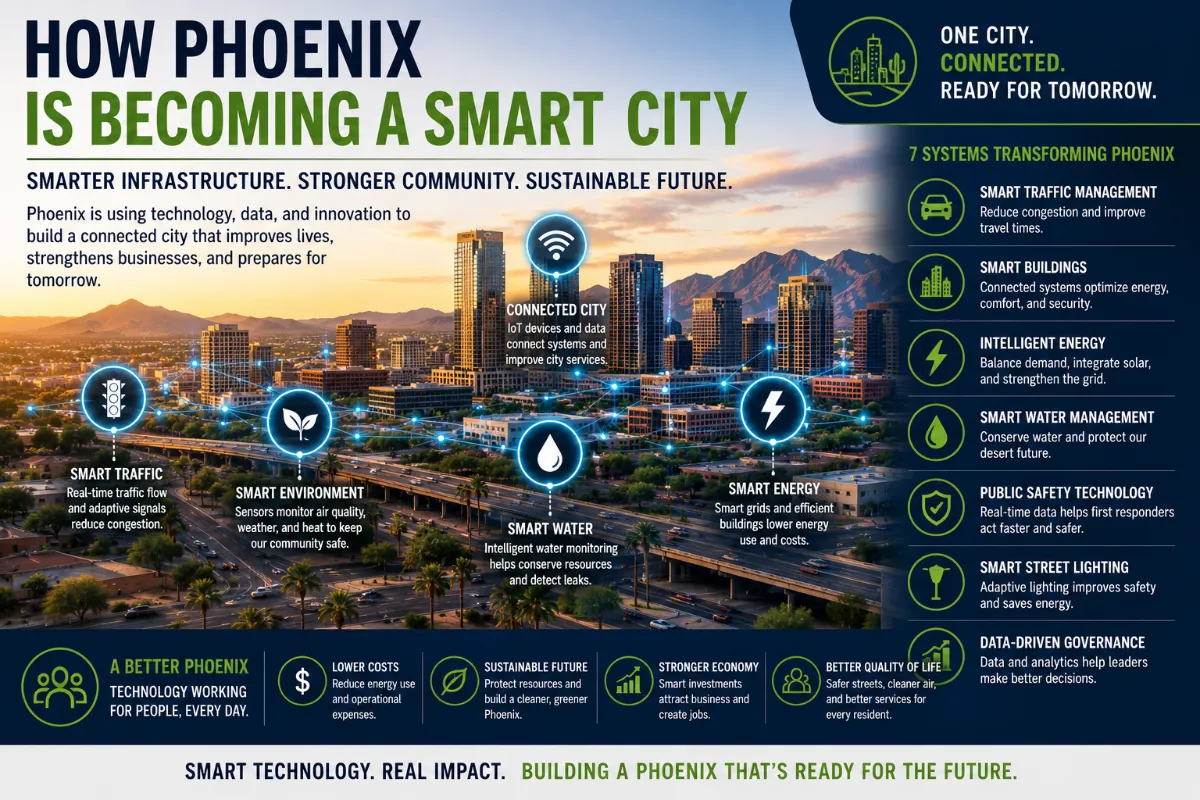
Phoenix is no longer simply one of America's fastest-growing cities. It is quietly becoming one of the most technologically connected cities in the Southwest.
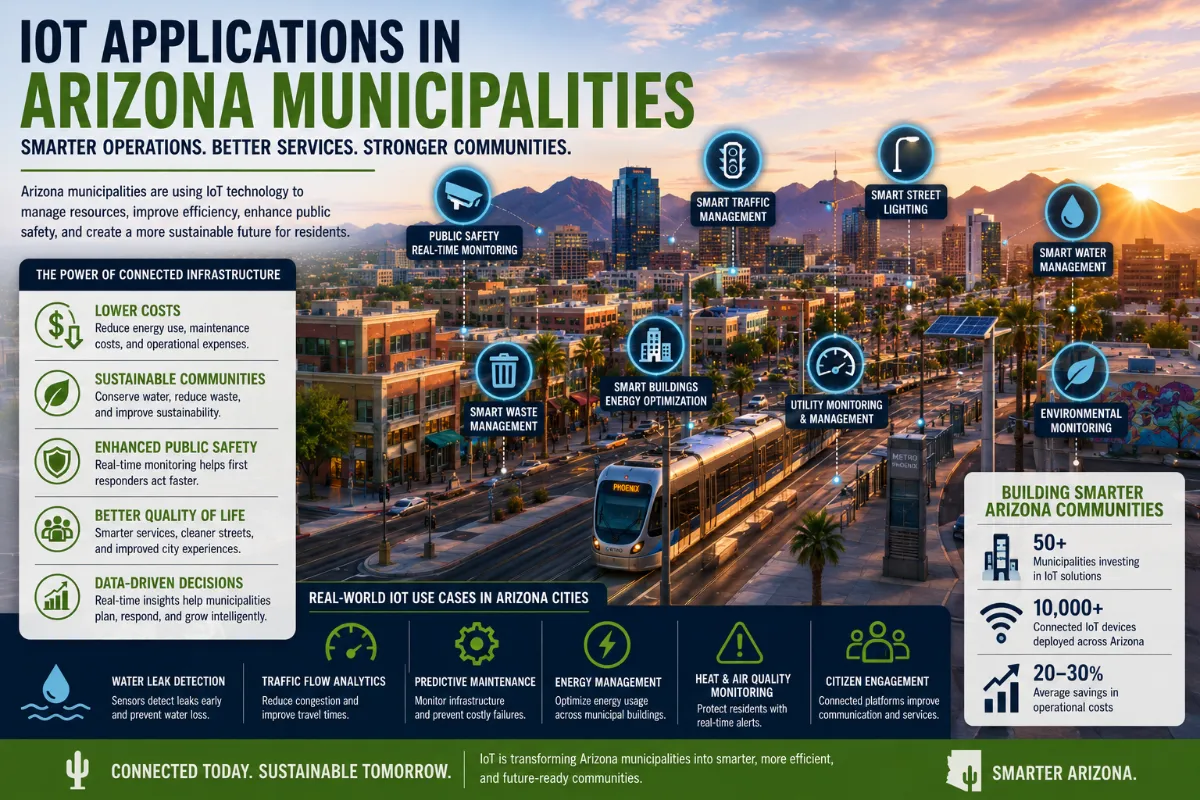
In 2026, Phoenix is building a new kind of infrastructure. Roads, buildings, energy systems, public safety, transportation, water management, and public services are becoming increasingly connected through data.
This transformation is not about adding more technology. It is about creating a city that can make smarter decisions in real time.
As Phoenix continues to grow, city leaders, businesses, developers, and technology providers are rethinking how urban environments should operate in one of America's most challenging climates.
Phoenix faces challenges that many cities do not experience at the same scale.
Traditional infrastructure cannot always react quickly enough to these changing conditions.
Smart city technology allows Phoenix to become more proactive instead of reactive.
Every modern city has physical infrastructure.
Phoenix is now adding a digital layer on top of this infrastructure.
Connected sensors, IoT devices, cloud platforms, and AI systems continuously collect information and help city systems operate more efficiently.
Instead of waiting for problems to occur, the city can detect patterns and respond earlier.
Traffic signals are becoming increasingly intelligent.
Connected systems can analyze:
This data helps optimize traffic movement and reduce delays.
Commercial buildings are becoming connected ecosystems.
Building systems now monitor:
This helps reduce operating costs while improving occupant comfort.
Phoenix experiences high electricity demand during summer months.
Smart energy systems help:
Water management is becoming one of Phoenix's highest priorities.
Smart water systems monitor:
These systems help reduce waste and improve sustainability.
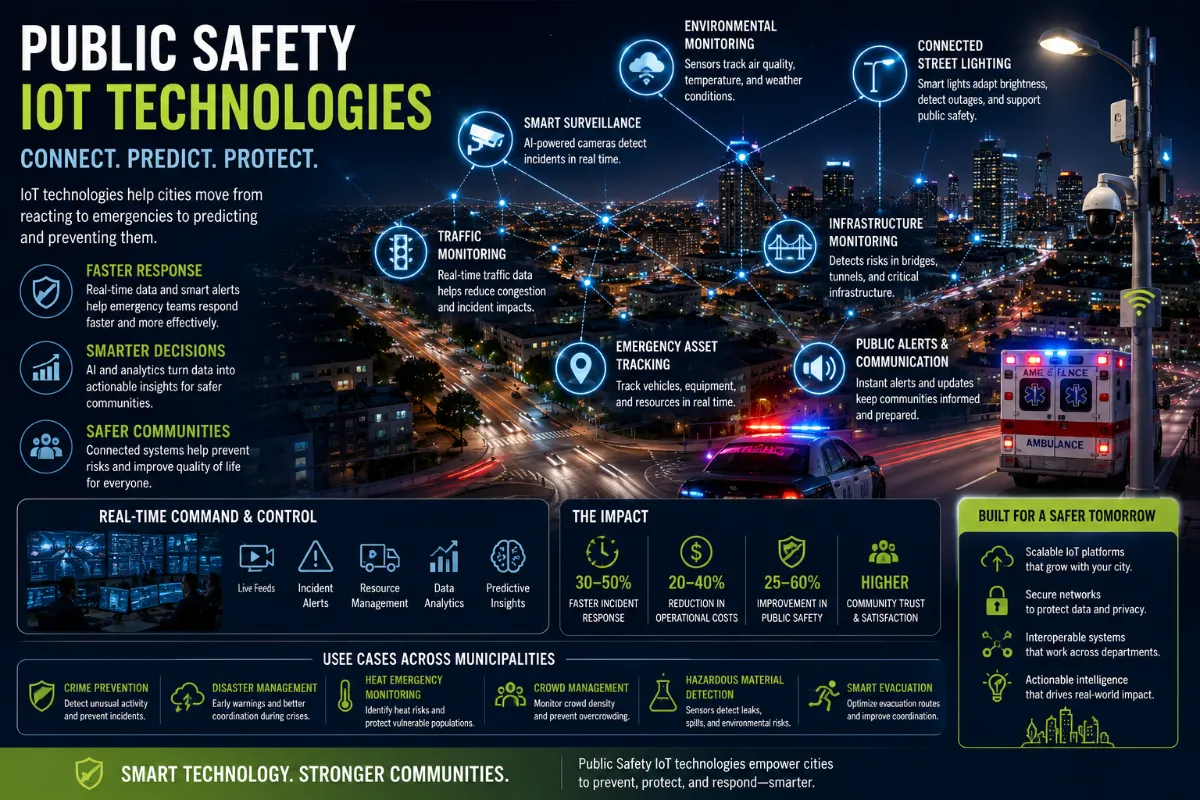
Connected systems support emergency services.
Technology can help identify:
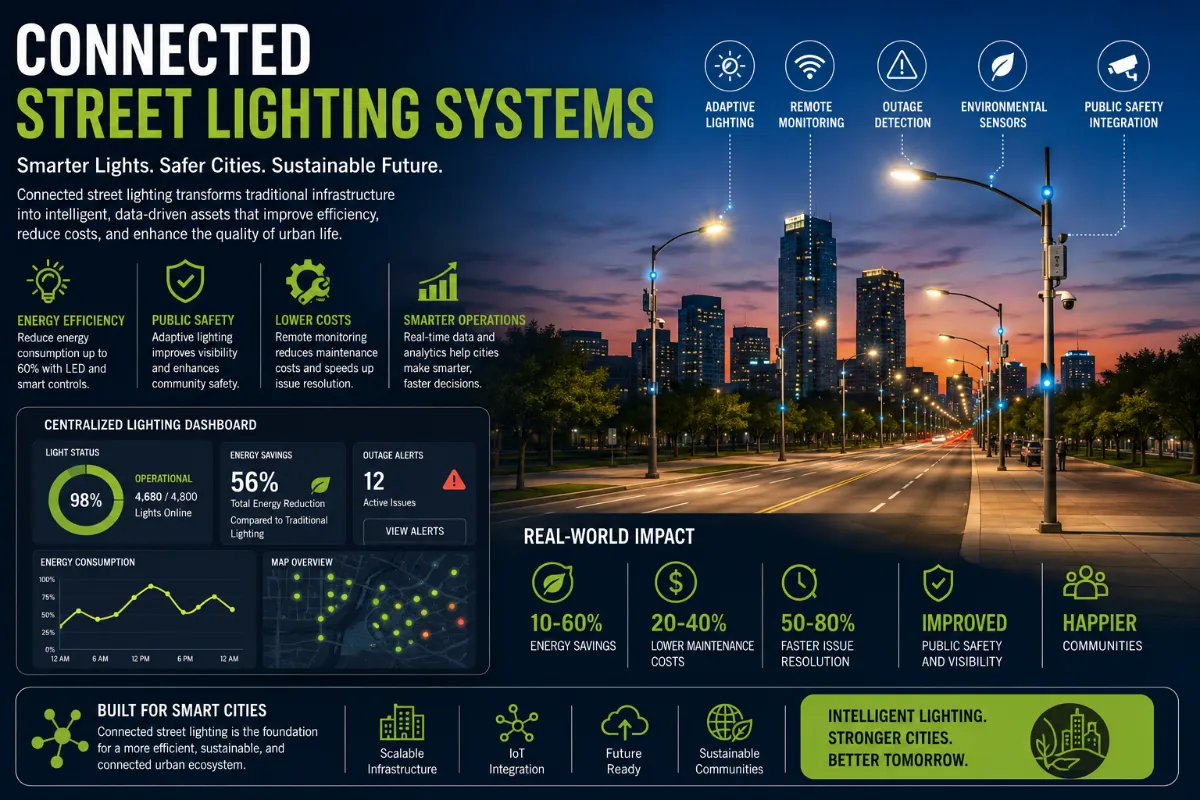
Connected streetlights can:
Data is helping Phoenix plan future development.
City planners can better understand:
| Technology | Purpose |
|---|---|
| IoT Sensors | Collect real-time data |
| Artificial Intelligence | Analyze and predict patterns |
| Cloud Platforms | Centralize information |
| Digital Twins | Model city operations |
| 5G Networks | Improve connectivity |
| Smart Meters | Track resource usage |
| Automation Systems | Improve efficiency |
Smart city infrastructure creates opportunities for businesses.
Benefits include:
Businesses that align with smart city initiatives will likely become more competitive over time.
Phoenix is attracting technology investment because it offers several advantages.
These factors make Phoenix an ideal environment for smart infrastructure projects.
| Area | Potential Impact |
|---|---|
| Energy Usage | Reduced operational costs |
| Transportation | Less congestion |
| Water Management | Reduced waste |
| Commercial Buildings | Higher efficiency |
| Public Safety | Faster response times |
| Sustainability | Lower environmental impact |
Smart cities also create new responsibilities.
Phoenix must continue addressing:
Technology alone is not enough. Proper governance is equally important.
By 2030, Phoenix may operate very differently than it does today.
The city could feature:
Phoenix is gradually becoming a living digital ecosystem.
Phoenix is not trying to become a futuristic city filled with gadgets.
It is building resilient infrastructure that can respond to heat, growth, sustainability demands, and future urban challenges.
The smartest cities are not necessarily the most technologically advanced. They are the cities that use data to improve everyday life.
Phoenix is positioning itself to become one of those cities.
This article was reviewed by the IOT Arizona Editorial Team for accuracy, clarity, and relevance. Information may be sourced from publicly available treatment resources, government agencies, and healthcare references where applicable.
Last reviewed: June 2026
Smart Cities & Government
 Smart Cities & Government
 Smart Cities & Government
 Smart Cities & Government