 Smart Building & Commercial IoT
Predictive Maintenance for Commercial Properties in Arizona:...
Published On 21-06-2026

Published by IOT Arizona Research & Editorial Team
Arizona's extreme climate is changing how commercial buildings are managed. In 2026, IoT building automation is no longer just a smart technology upgrade. It is becoming an essential operating system for commercial properties, industrial facilities, healthcare buildings, multifamily developments, schools, retail centers, warehouses, and data centers across the state.
Building owners in Phoenix, Scottsdale, Mesa, Tucson, Chandler, Tempe, Glendale, and surrounding Arizona markets are using IoT systems to reduce energy waste, improve indoor comfort, monitor equipment, conserve water, increase security, and make better operational decisions.
Arizona has a unique set of building challenges. Extreme summer heat, high cooling demand, water conservation concerns, rapid commercial growth, and rising expectations from tenants are pushing property owners to modernize building operations.
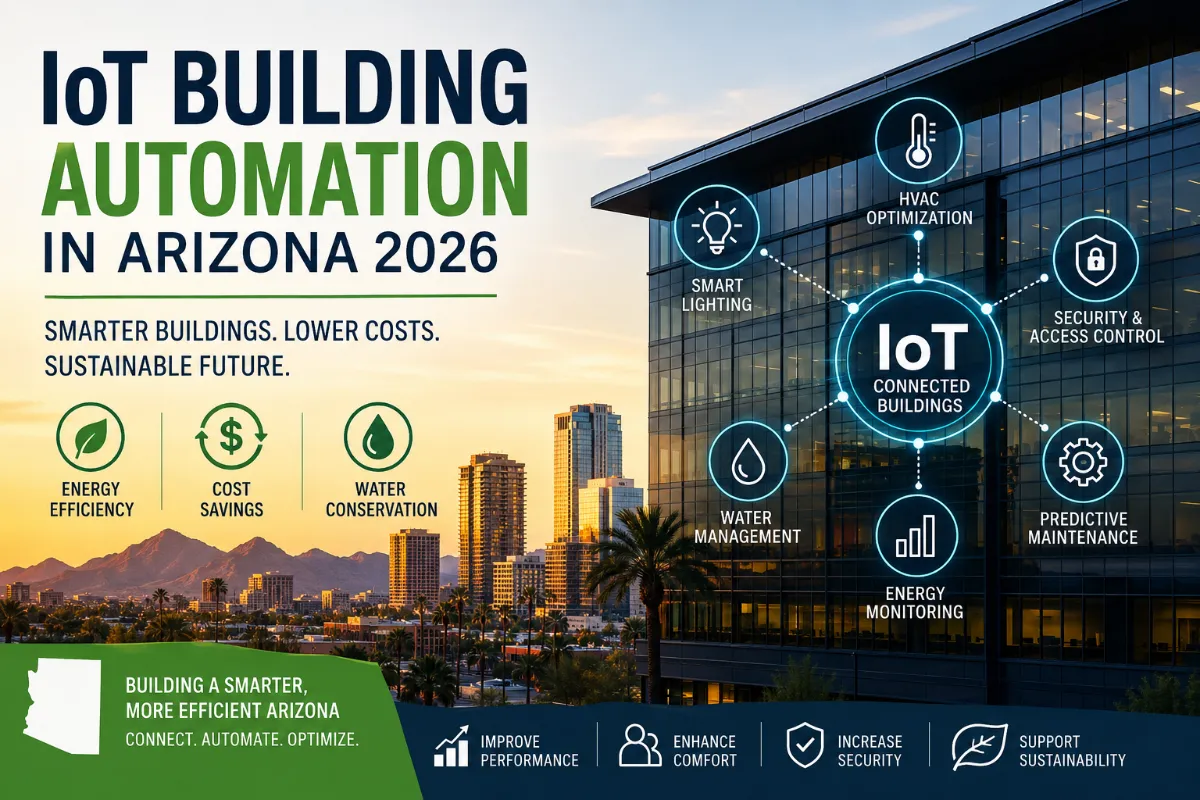
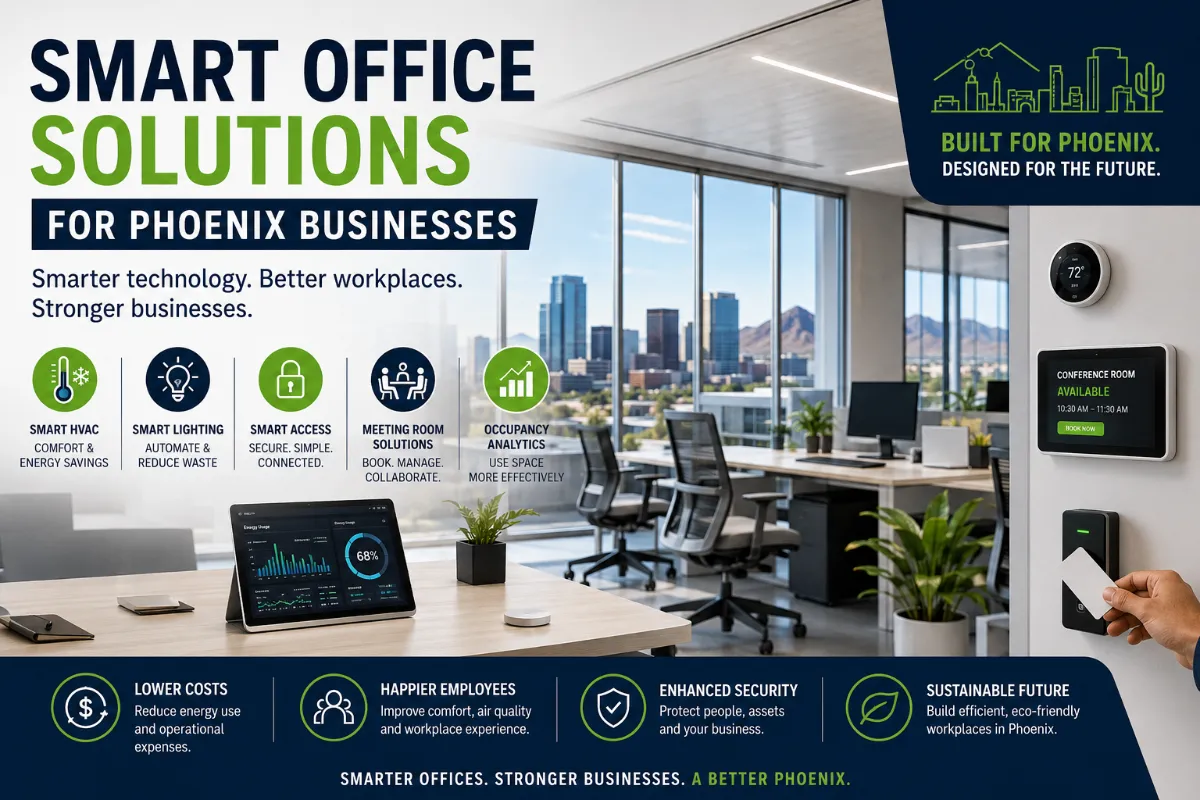
Traditional building systems often operate in isolation. HVAC, lighting, water systems, access control, elevators, parking, and energy systems may each have their own controls. IoT building automation connects these systems so they can collect data, communicate, and respond more intelligently.
IoT building automation uses connected sensors, smart devices, cloud platforms, building management systems, and analytics tools to monitor and control building operations automatically.
Instead of relying only on manual inspections or fixed schedules, IoT systems collect real-time data from the building. This data can be used to improve comfort, reduce waste, prevent failures, and optimize performance.
| Building System | IoT Automation Function |
|---|---|
| HVAC | Temperature control, zone optimization, energy reduction |
| Lighting | Occupancy-based lighting, daylight harvesting, scheduling |
| Security | Smart access control, visitor management, monitoring |
| Water Systems | Leak detection, smart irrigation, usage monitoring |
| Energy Systems | Smart metering, demand monitoring, solar integration |
| Indoor Air Quality | CO2 monitoring, ventilation control, air quality alerts |
| Equipment | Predictive maintenance and performance monitoring |
Arizona is a strong market for IoT building automation because local buildings must operate efficiently under demanding environmental conditions. A building in Arizona does not face the same operational pressure as a similar building in a mild climate.
Cooling is one of the largest operational expenses for Arizona buildings. Smart HVAC systems can use sensors, occupancy data, weather data, and automated controls to reduce unnecessary cooling while maintaining comfort.
Smart water monitoring can help Arizona properties detect leaks, reduce irrigation waste, and identify abnormal water consumption before it becomes expensive.
As Arizona continues to grow, property managers are responsible for larger and more complex buildings. IoT automation helps teams manage more space with better data and fewer manual processes.
Modern tenants expect comfortable, secure, efficient, and sustainable buildings. IoT systems help property owners improve tenant experience through better climate control, mobile access, lighting automation, and indoor environmental monitoring.
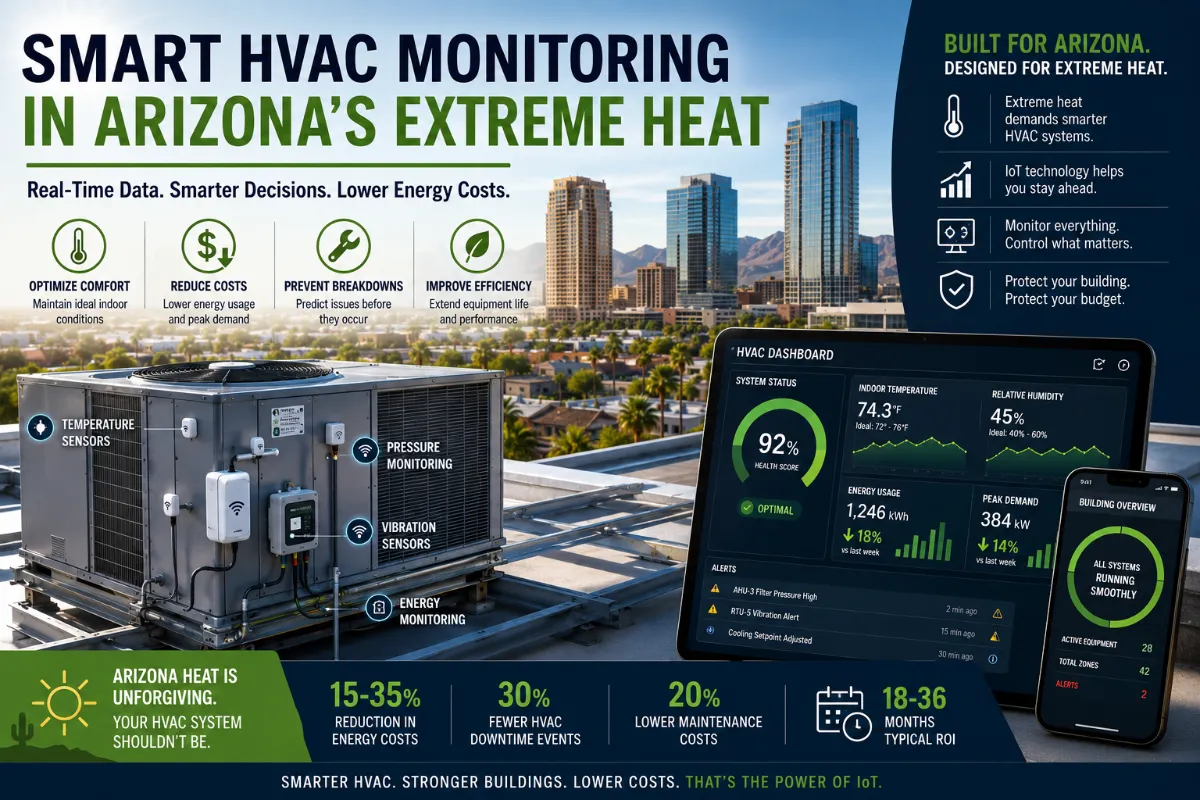
Smart HVAC is one of the most valuable IoT building automation upgrades in Arizona. Sensors can monitor occupancy, temperature, humidity, airflow, and equipment performance. The system can then adjust cooling based on real-time building demand.
This helps reduce energy waste during low-occupancy periods while keeping high-use areas comfortable.
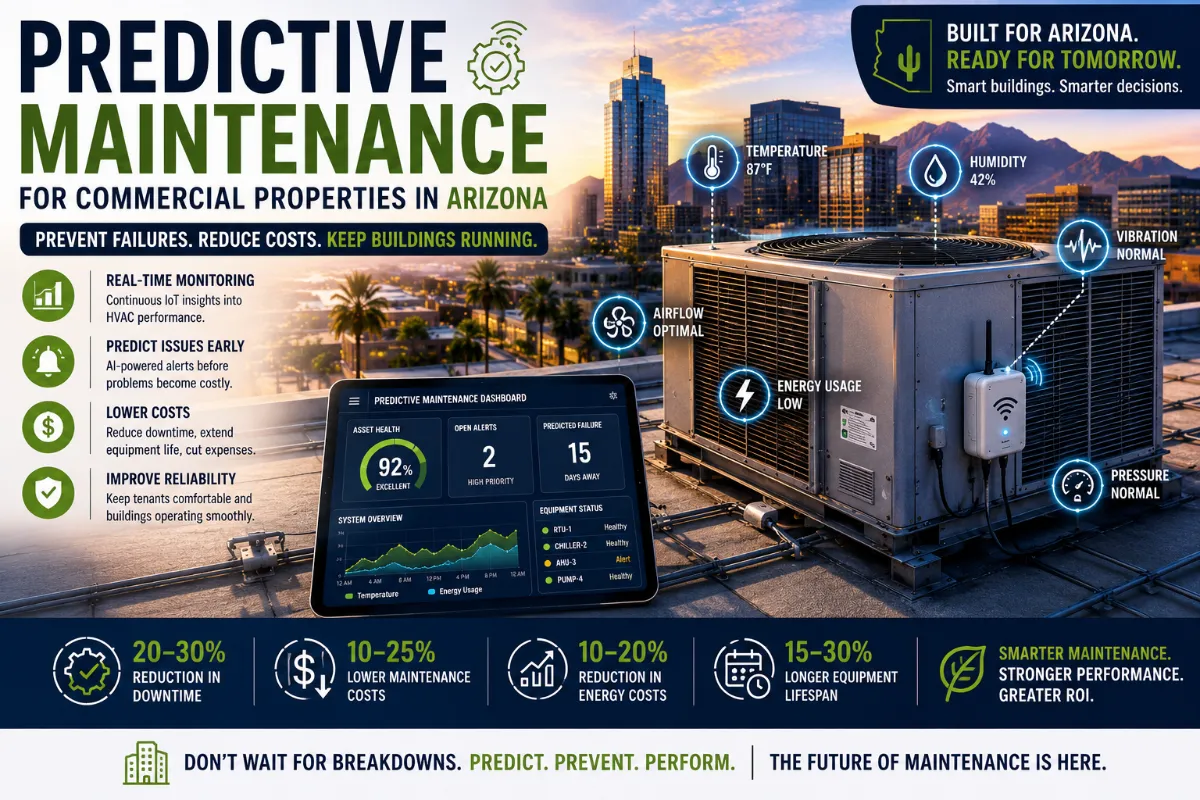
Predictive maintenance uses sensors to monitor equipment conditions such as vibration, temperature, runtime, pressure, and airflow. Instead of waiting for a system to fail, building teams can receive alerts when equipment shows early signs of problems.
This is especially valuable in Arizona because HVAC failures during peak summer months can create serious comfort, safety, and business continuity issues.
IoT water systems can detect leaks, track irrigation use, monitor cooling tower water consumption, and identify unusual usage patterns. For Arizona properties, smart water management can reduce waste and support sustainability goals.
Connected lighting systems can adjust based on occupancy, daylight, schedules, and building zones. This reduces energy consumption and improves the experience for occupants.
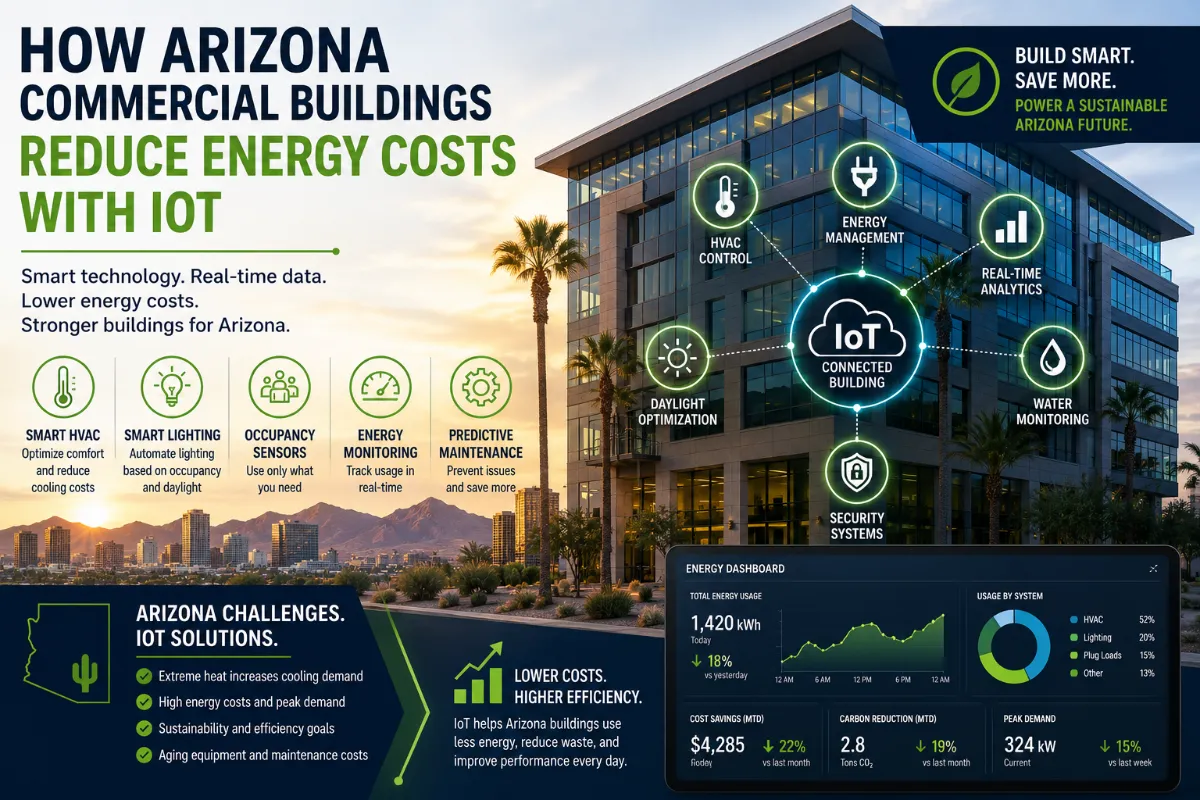
Smart meters and connected energy platforms allow building owners to see when and where energy is being used. This helps identify peak demand periods, inefficient systems, and opportunities to reduce utility costs.
Indoor air quality sensors can track CO2, humidity, temperature, particulate matter, and ventilation performance. This is especially useful for offices, schools, healthcare buildings, and high-occupancy commercial spaces.
IoT security systems can include mobile access control, smart locks, video monitoring, visitor management, and automated alerts. These systems improve safety while making building access more convenient.
The cost of IoT building automation depends on building size, system complexity, number of connected devices, software requirements, and integration needs.
| Building Type | Estimated Investment |
|---|---|
| Small Office Building | $10,000 to $30,000 |
| Mid-Size Commercial Building | $40,000 to $100,000 |
| Large Commercial Facility | $150,000 to $500,000+ |
| Industrial or Data Center Facility | Custom pricing based on system requirements |
Common cost factors include sensors, controllers, software licenses, installation, system integration, cybersecurity, maintenance, and staff training.
IoT building automation can produce a strong return on investment when it is planned correctly. Many savings come from lower energy use, reduced equipment downtime, better maintenance planning, and lower water waste.
| Performance Area | Potential Improvement |
|---|---|
| Energy Costs | 15% to 35% reduction |
| Water Consumption | 10% to 25% reduction |
| Maintenance Costs | Up to 20% reduction |
| Equipment Downtime | Up to 30% reduction |
| Tenant Comfort | Improved through better environmental control |
Actual ROI depends on the building's current condition, utility rates, occupancy patterns, and automation strategy.
As more building systems become connected, cybersecurity becomes a major priority. A smart building is also a connected network. If it is not protected properly, it can create risk for building owners, tenants, and operational systems.
Start by reviewing current HVAC, lighting, security, water, and energy systems. Identify which systems are outdated, inefficient, or difficult to monitor.
The best IoT projects solve real problems. For Arizona buildings, this may include high cooling costs, water waste, equipment failures, poor visibility into energy usage, or tenant comfort complaints.
Most Arizona buildings should begin with HVAC optimization, energy monitoring, leak detection, or predictive maintenance because these areas often produce measurable savings.
Select platforms that can grow over time. A building owner may begin with HVAC sensors and later add lighting, water, access control, solar integration, or analytics.
Technology is only useful when teams know how to use it. Facility managers should understand dashboards, alerts, reporting, and maintenance workflows.
Track energy use, maintenance costs, water consumption, comfort complaints, and equipment performance before and after implementation.
In 2026, IoT building automation is becoming more advanced because buildings are moving from simple automation to data-driven optimization. Systems are no longer just turning lights on and off. They are learning patterns, predicting issues, and helping owners make better decisions.
For Arizona, this matters because environmental pressure is high. Buildings must stay comfortable during extreme heat, use energy efficiently, reduce water waste, and operate reliably.
The future of Arizona smart buildings will include deeper integration between IoT, artificial intelligence, solar energy, battery storage, electric vehicle charging, and grid-responsive building operations.
Buildings may soon adjust automatically based on weather forecasts, occupancy levels, utility pricing, and equipment performance. This will allow Arizona properties to become more resilient, efficient, and profitable.
IoT building automation in Arizona is no longer a basic smart building upgrade. It is becoming a critical strategy for reducing costs, improving comfort, conserving water, protecting equipment, and managing commercial properties more intelligently.
Arizona building owners that invest in connected automation systems in 2026 will be better prepared for higher energy demand, stricter efficiency expectations, and the future of smart infrastructure.
This article was reviewed by the IOT Arizona Editorial Team for accuracy, clarity, and relevance. Information may be sourced from publicly available treatment resources, government agencies, and healthcare references where applicable.
Last reviewed: June 2026
Smart Building & Commercial IoT
 Smart Building & Commercial IoT
 Smart Building & Commercial IoT
 Smart Building & Commercial IoT