Arizona is growing fast, and that growth is putting new pressure on the systems that keep homes, businesses, factories, data centers, hospitals, warehouses, and public infrastructure running. Power demand is rising. Water planning is becoming more important. Extreme heat is stressing equipment. Cities are expanding. Large employers need dependable service. For Arizona, smart utilities are no longer a future concept. They are becoming part of how the state manages reliability, cost, conservation, and long-term infrastructure planning.
Smart utilities use connected sensors, meters, automation systems, data platforms, and predictive analytics to help electric, water, wastewater, and municipal infrastructure providers understand what is happening across their networks in real time. Instead of waiting for outages, leaks, overloads, or equipment failures, utilities can detect early warning signs and respond faster.
Smart utility technology is useful everywhere, but Arizona has a unique combination of challenges that makes it especially important. The state has extreme summer temperatures, rapid population growth, industrial expansion, semiconductor investment, logistics growth, large commercial buildings, and rising demand from data-heavy businesses.
In practical terms, this means Arizona utilities must answer harder questions: Where is electricity demand growing fastest? Which neighborhoods need better outage visibility? Which commercial buildings are creating peak-load pressure? Where are water losses happening before they become expensive breaks? Which pumps, substations, transformers, and meters need maintenance before failure?
Smart utility systems help answer those questions with live data instead of delayed reports.
Smart utilities are not one single technology. They are a connected operating model for modern infrastructure.
Smart meters give utilities and customers better visibility into energy usage. Instead of relying only on monthly readings, smart meters can support more accurate billing, outage detection, peak demand analysis, and energy-use insights.
Grid automation helps electric utilities detect faults, reroute power, manage voltage, monitor substations, and restore service faster after disruptions. In a state where heat can increase both demand and equipment stress, automation can improve reliability.
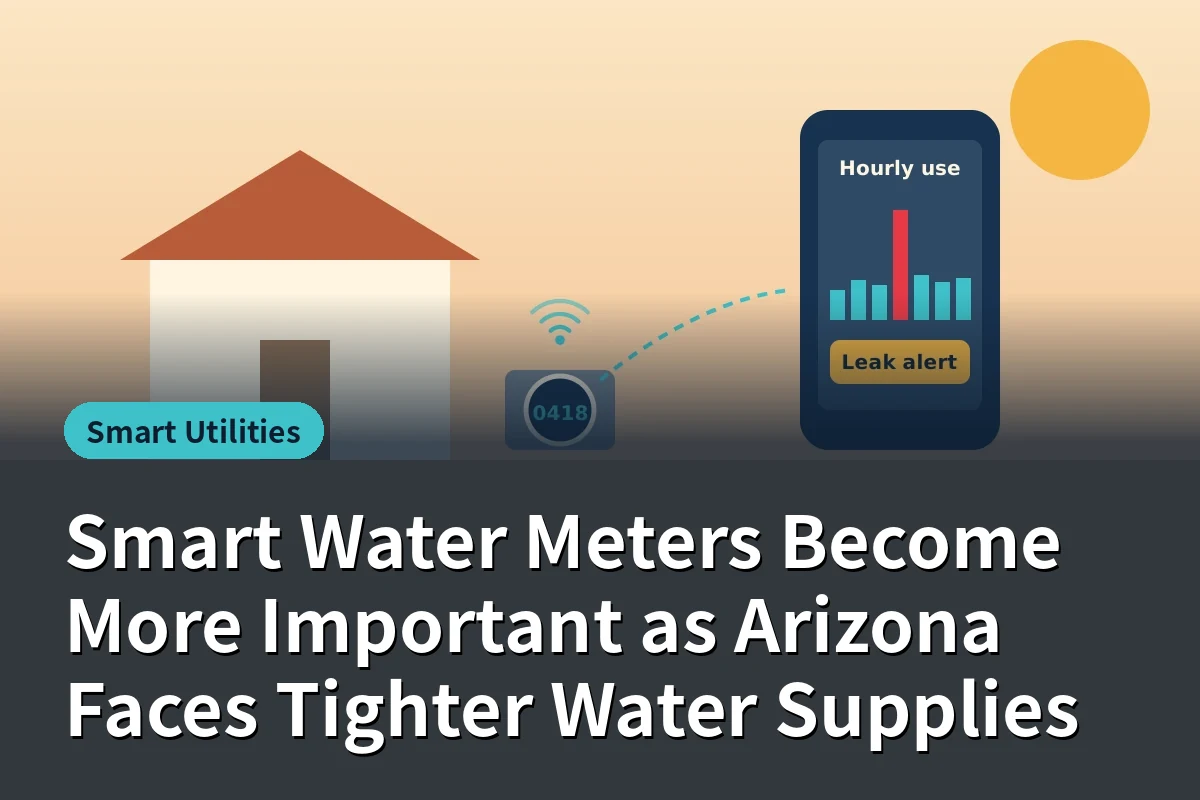
Smart water systems use sensors and analytics to detect leaks, pressure changes, abnormal flow, water quality concerns, and pump performance issues. This is especially valuable in Arizona, where water conservation and infrastructure efficiency are long-term priorities.
Predictive maintenance uses data from equipment to identify problems before they cause service interruptions. For utilities, this can apply to transformers, pumps, meters, valves, lift stations, substations, and treatment systems.
Demand response programs help utilities manage high-use periods by encouraging reduced or shifted electricity usage. In Arizona, this can be especially useful during summer afternoons when air conditioning demand is high.
Arizona’s utility challenge is not only about adding more infrastructure. It is about making existing infrastructure more intelligent. A traditional utility network may know that something failed after customers report a problem. A smart utility network can often detect abnormal behavior before customers are affected.
For example, a smart grid may identify voltage irregularities in a fast-growing commercial corridor. A smart water system may detect a slow underground leak before it becomes a major road repair. A municipal utility may use sensor data to prioritize which assets need replacement first. A commercial building may use smart utility data to reduce peak energy demand during extreme heat.
This is where IoT becomes valuable. It gives Arizona utilities and city planners a clearer view of distributed infrastructure across large, hot, and rapidly developing service areas.
Different Arizona cities may use smart utility technology in different ways depending on their growth patterns and infrastructure needs.
Phoenix has large commercial districts, industrial zones, healthcare campuses, logistics facilities, and fast-growing neighborhoods. Smart utilities can support outage response, building energy management, water monitoring, and demand forecasting.
Tempe’s mix of commercial buildings, university activity, multifamily housing, and technology businesses creates strong use cases for smart meters, energy analytics, and smart water monitoring.
Chandler’s semiconductor and advanced manufacturing presence makes utility reliability especially important. Smart grid systems, backup power planning, and predictive maintenance can help support high-demand industrial users.
Mesa’s growth across residential, industrial, and commercial sectors makes smart utility planning important for both electric and water infrastructure.
Scottsdale’s commercial properties, resorts, healthcare facilities, and high-value real estate can benefit from smart building utility monitoring, energy optimization, and water efficiency systems.
Industrial growth, warehousing, logistics, and new development make smart utility systems important for planning capacity and managing infrastructure reliability in the West Valley.
Commercial buildings are one of the most important parts of Arizona’s smart utility conversation. Office buildings, hospitals, warehouses, retail centers, hotels, schools, and industrial properties use large amounts of electricity and water. Many also operate during peak heat periods.
Smart utility data can help building owners understand where energy is being wasted, when equipment is overworking, and how usage patterns affect monthly costs. When smart meters are connected with building automation systems, property managers can make better decisions about HVAC scheduling, lighting, refrigeration, irrigation, and backup systems.
For Arizona commercial real estate, this means smart utilities are not just a public infrastructure topic. They are also a property performance topic.
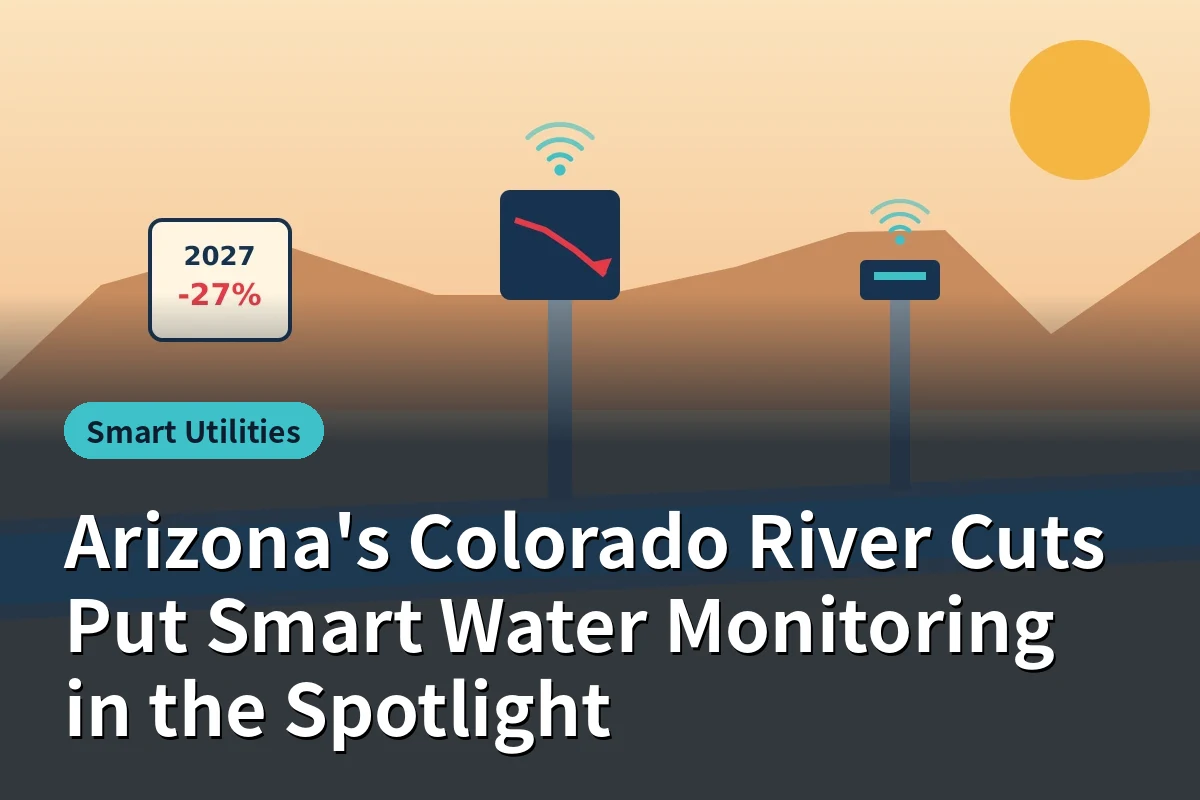
Water is one of Arizona’s most important long-term infrastructure concerns. Smart water systems can help utilities and municipalities reduce losses, improve monitoring, and make better decisions about repair priorities.
Common smart water applications include:
- Leak detection sensors
- Smart water meters
- Pressure monitoring
- Pump station monitoring
- Water quality sensors
- Remote valve monitoring
- Usage analytics for conservation programs
For cities and utility operators, the biggest benefit is visibility. A small issue that was once hidden underground or inside a remote pump station can now create a digital alert before it becomes a larger failure.
Electric grid modernization includes smarter meters, automated substations, advanced communication networks, distributed energy resource management, battery storage integration, and improved forecasting. The U.S. Department of Energy describes smart grid modernization as using advanced technologies, communications, analytics, and control systems to improve power delivery and resilience.
For Arizona, grid modernization is especially important because energy demand is changing. More homes, electric vehicles, data centers, manufacturing facilities, and commercial buildings create new load patterns. A smarter grid can help utilities see those patterns earlier and plan more effectively.
Smart meters and grid sensors can help utilities identify outages faster and sometimes pinpoint the affected area before customers call.
Predictive maintenance helps utilities prioritize assets that show early signs of failure.
Smart water systems can detect leaks, abnormal usage, and pressure issues more quickly.
Utility data helps cities and providers understand where demand is growing and where infrastructure investment is needed.
Smart meters can give homes and businesses clearer information about energy and water use.
Smart utilities create the foundation for broader smart city systems, including connected streetlights, EV charging, traffic systems, public safety networks, and municipal infrastructure monitoring.
Smart utilities also come with challenges. Technology alone does not solve infrastructure problems. Utilities need reliable networks, cybersecurity, trained teams, clear data policies, and careful investment planning.
Important challenges include:
- Cybersecurity for connected utility systems
- Cost of upgrading legacy infrastructure
- Data privacy for customer usage information
- Interoperability between old and new systems
- Reliable communication in remote or fast-growing areas
- Balancing customer costs with infrastructure benefits
This is why smart utility planning should focus on practical outcomes: fewer failures, better conservation, faster response, stronger reliability, and more informed capital planning.
Arizona businesses should pay attention to smart utility trends because utility performance directly affects operating costs. A warehouse with poor energy visibility may pay more during peak demand. A hotel with unnoticed water waste may lose money every month. A manufacturer may face downtime if power reliability is not carefully planned. A commercial building may overwork HVAC systems during summer if utility and building data are not connected.
Businesses should start asking better questions:
- Do we know our peak energy demand patterns?
- Can we detect water waste early?
- Are our HVAC systems connected to utility data?
- Do we have backup plans for outage-prone operations?
- Can our building automation system reduce utility costs?
- Are we prepared for future EV charging, solar, or battery integration?
The future of smart utilities in Arizona will likely be shaped by three major forces: growth, climate pressure, and infrastructure modernization. As more people and businesses move into the state, utilities will need better data to manage demand. As extreme heat continues to affect buildings and equipment, predictive systems will become more valuable. As water and energy planning become more connected, cities will need smarter infrastructure visibility.
The most successful smart utility projects will not be the ones that simply install sensors. They will be the ones that turn data into better decisions.
Smart utilities in Arizona are becoming essential infrastructure for a hotter, faster-growing, more connected state. From smart meters and grid automation to water monitoring and predictive maintenance, IoT is helping utilities move from reactive service to proactive infrastructure management.
For Arizona cities, businesses, and property owners, the opportunity is clear: smarter utility systems can improve reliability, reduce waste, support growth, and make infrastructure planning more accurate. In a state where power, water, heat, and development are all connected, smart utilities are not just a technology upgrade. They are part of Arizona’s next phase of economic and infrastructure resilience.
Frequently asked questions
Smart utilities use connected meters, sensors, automation, and data analytics to monitor and manage electric, water, wastewater, and infrastructure systems more efficiently.
Arizona faces rapid growth, extreme heat, rising energy demand, and long-term water planning challenges. Smart utilities help improve visibility, reliability, and conservation.
IoT devices collect real-time data from meters, pumps, substations, transformers, valves, and other infrastructure assets. This helps utilities detect problems earlier and make better decisions.
No. Smart utility technology can be used for electricity, water, wastewater, irrigation, gas, street lighting, and municipal infrastructure systems.
Businesses can use smart utility data to reduce energy waste, manage peak demand, detect water issues, improve building performance, and plan for backup power or automation upgrades.
Related articles


 Smart Utilities