Arizona’s water story is not only about supply. It is also about visibility. Every hidden pipe leak, irrigation break, cooling system failure, underground main issue, or unnoticed commercial plumbing problem can waste water, damage property, increase operating costs, and place extra pressure on local infrastructure.
That is why leak detection systems are becoming an important part of Arizona’s smart utility and smart building future. These systems use sensors, smart meters, acoustic monitoring, pressure data, flow analytics, and automatic alerts to identify water problems earlier than traditional manual inspection methods.
In Arizona, water leaks are not just small maintenance issues. A hidden leak can become a cost problem, a conservation problem, a building damage problem, and a utility planning problem. The state’s dry climate, high summer temperatures, large commercial properties, irrigation systems, pools, resorts, warehouses, and growing neighborhoods all create conditions where leak detection has real financial and operational value.
Arizona properties often rely on complex water systems, including indoor plumbing, irrigation lines, cooling towers, fire suppression systems, pools, water heaters, underground service lines, and municipal distribution networks. Many leaks do not appear immediately. They may continue for days or weeks before a visible sign appears.
Modern leak detection systems help identify abnormal flow, pressure changes, acoustic signatures, moisture presence, and continuous water movement before damage becomes severe.
A leak detection system is a technology setup designed to identify unwanted water movement or moisture before it causes major waste or damage. Depending on the application, it may use physical sensors, water meters, pressure monitors, acoustic devices, IoT gateways, mobile alerts, or automatic shutoff valves.
In homes, leak detection may involve point sensors under sinks, near water heaters, behind washing machines, or around appliances. In commercial buildings, systems may monitor risers, mechanical rooms, restrooms, cooling equipment, irrigation, and building-wide water flow. In municipal networks, leak detection may involve acoustic sensors, pressure monitoring, district metering, and analytics across underground pipe systems.
| System Type |
How It Works |
Best Arizona Use Case |
| Flow-Based Leak Detection |
Monitors water flow and flags abnormal continuous usage |
Homes, commercial buildings, HOAs, schools |
| Smart Water Meters |
Tracks usage patterns and identifies possible leaks through meter data |
Utilities, residents, businesses |
| Point Moisture Sensors |
Detects water where it should not be present |
Water heaters, kitchens, bathrooms, equipment rooms |
| Acoustic Leak Detection |
Listens for sound patterns created by pressurized water escaping pipes |
Municipal systems, underground mains, large campuses |
| Pressure Monitoring |
Detects unusual pressure drops or fluctuations |
Municipal utilities, commercial plumbing, industrial facilities |
| Automatic Shutoff Systems |
Turns off water when a serious leak is detected |
Homes, condos, vacation properties, commercial buildings |
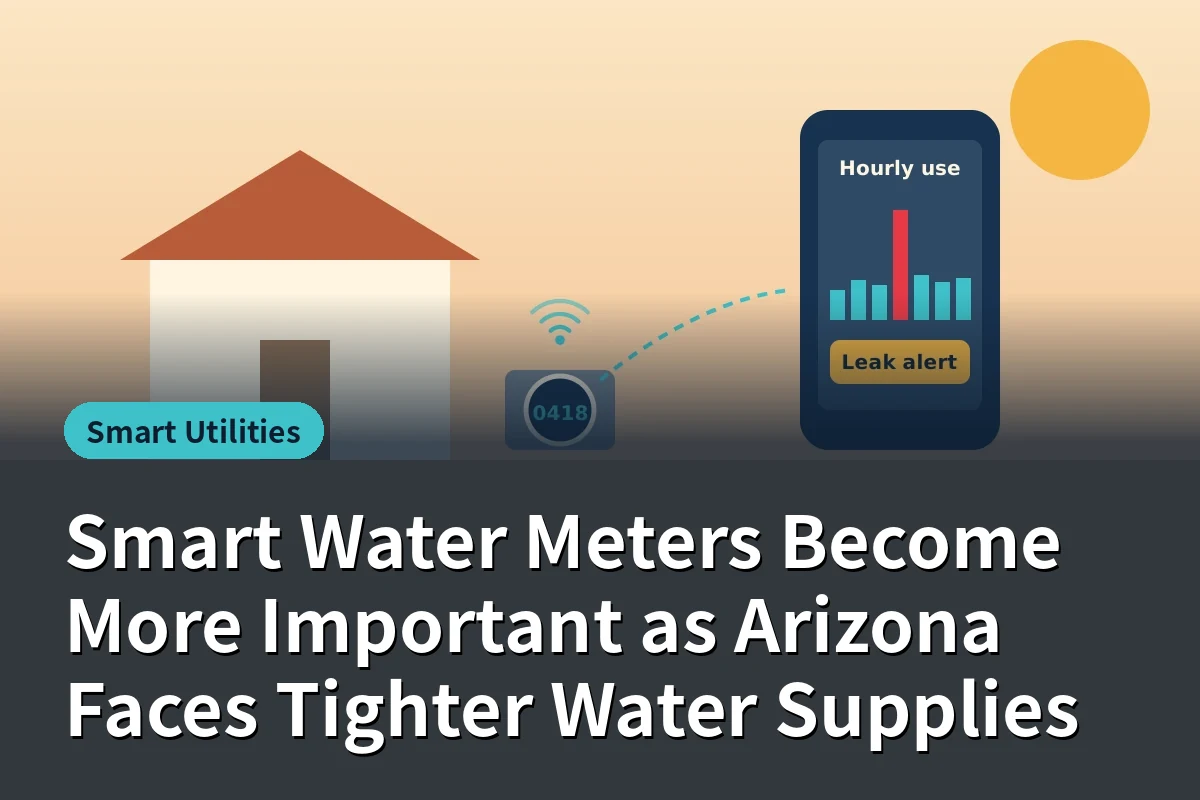
Smart water meters and leak detection systems are related, but they are not always the same thing. A smart meter can show unusual water use and may help determine whether a leak exists. However, smart meters usually do not pinpoint the exact physical location of a leak. The U.S. Department of Energy notes that smart meters and advanced metering infrastructure can help water managers determine if a leak exists, but they are not the same as distribution system leak-locating technologies. DOE leak detection guidance
This distinction matters for Arizona utilities and property owners. Smart meters are excellent for usage visibility. Dedicated leak detection tools are often needed when the goal is to locate the actual leak source.
A smart meter may show that a commercial property has continuous overnight water use. That tells the property team there may be a leak. Acoustic monitoring, pressure testing, moisture sensors, or inspection tools may then help locate whether the issue is in an irrigation line, restroom fixture, underground pipe, or mechanical system.
IoT makes leak detection more useful because it connects sensors to real-time alerts and centralized dashboards. Instead of finding out about a leak only after damage appears, property managers and utilities can receive notifications when abnormal activity begins.
A typical IoT leak detection setup may include:
- Water flow sensors
- Moisture sensors
- Pressure sensors
- Smart meters
- Wireless gateways
- Cloud dashboards
- Mobile alerts
- Automatic shutoff valves
This connects closely with Smart Utilities, Smart Buildings, and Energy & Sustainability because water, energy, buildings, and infrastructure are increasingly monitored through connected systems.
For homeowners, leak detection systems can help prevent costly damage from plumbing failures, slab leaks, appliance leaks, water heater issues, and irrigation problems. Arizona homes may also have outdoor water systems, pools, drip irrigation, and landscape lines that can waste water if problems go unnoticed.
Common residential leak detection locations include:
- Water heaters
- Washing machines
- Dishwashers
- Under sinks
- Bathrooms
- Pool equipment areas
- Irrigation valves
- Main water line entry points
For vacation homes or rental properties, automatic shutoff systems can be especially valuable because leaks may occur when nobody is present.
Commercial properties face higher water risk because they often have larger plumbing systems and more expensive damage exposure. A small leak in a high-rise office, hotel, medical facility, warehouse, school, or multifamily property can affect multiple rooms, floors, tenants, and mechanical systems.
Commercial leak detection systems can monitor:
- Restrooms
- Mechanical rooms
- Cooling towers
- Boiler rooms
- Roof drains
- Fire suppression lines
- Irrigation systems
- Tenant spaces
- Data rooms and equipment areas
When integrated with IoT building automation in Arizona, leak detection can become part of a larger building performance strategy. The same facility team monitoring HVAC, energy, occupancy, and equipment status can also monitor water risk.
Arizona’s heat creates special challenges for water systems. High temperatures can stress irrigation systems, outdoor pipes, valves, pumps, and cooling-related equipment. Commercial buildings may use significant water for cooling towers, landscaping, restrooms, and cleaning systems.
Leaks in these systems can be harder to notice because outdoor evaporation and dry soil may hide visible signs. A smart leak detection system can identify abnormal flow or pressure before water loss becomes obvious.
Related reading: Smart HVAC Monitoring in Arizona’s Extreme Heat
Irrigation leaks are especially relevant in Arizona. HOAs, resorts, golf courses, parks, schools, commercial campuses, multifamily communities, and residential properties may have large irrigation systems that operate early in the morning or at night when problems are less visible.
Common irrigation leak signals include:
- Unexpected water usage outside scheduled irrigation times
- Sudden increases in outdoor water use
- Pressure drops in irrigation zones
- Wet areas near valves or drip lines
- Plants receiving too much or too little water
Smart controllers, flow sensors, and meter analytics can help detect these issues earlier. For large properties, this can reduce water waste and support sustainability goals.
Municipal leak detection is different from home or building leak detection. Cities and utilities must monitor underground distribution networks that include mains, valves, hydrants, service lines, storage, and pressure zones.
Common municipal leak detection methods include acoustic loggers, pressure monitoring, district metered areas, smart meters, satellite-assisted analysis, and field inspections. Acoustic sensors can help identify leaks by detecting sound patterns created by water escaping pressurized pipes.
For Arizona cities, municipal leak detection supports conservation, infrastructure planning, and non-revenue water reduction. It also helps utilities prioritize repairs before a small underground issue becomes a major road closure or service disruption.
Explore related city pages:
Leak detection is not only a plumbing topic. It is part of smart city infrastructure. A city that can monitor water losses, pressure changes, pump performance, and abnormal meter activity has better visibility into public assets.
Smart leak detection supports broader Smart Cities & Government initiatives because water networks, connected lighting, energy systems, traffic infrastructure, and public safety technologies increasingly rely on real-time monitoring.
Related reading: IoT Applications in Arizona Municipalities
| Benefit |
Why It Matters in Arizona |
| Water Conservation |
Reduces waste in a state where efficient water use is a long-term priority |
| Lower Damage Risk |
Helps prevent expensive repairs from hidden plumbing failures |
| Operational Continuity |
Protects hotels, warehouses, schools, and medical facilities from disruptions |
| Better Maintenance Planning |
Allows teams to identify recurring issues and prioritize repairs |
| Insurance and Risk Management |
May support stronger property risk controls and documentation |
| Sustainability Reporting |
Provides water usage data for ESG, conservation, and operating reports |
The right leak detection system depends on the property type, risk level, water usage, budget, and monitoring needs. A small home may need a flow-based shutoff valve and point sensors. A resort or commercial campus may need building-wide monitoring, irrigation flow analytics, and integration with facility management systems. A utility may need acoustic sensors, district metering, and pressure analytics.
- Do you need alerts only, or automatic shutoff?
- Are you monitoring indoor plumbing, irrigation, or underground lines?
- Does the system integrate with building automation?
- Can it distinguish normal high usage from possible leaks?
- Does it provide historical usage reports?
- Is wireless coverage reliable at the property?
- Who receives alerts after hours?
- Can the system scale across multiple properties?
Leak detection becomes more valuable when it is connected to predictive maintenance. Instead of responding to every leak as an isolated event, property teams can use data to identify recurring patterns, failing equipment, pressure problems, or seasonal risks.
For example, if a commercial property repeatedly shows abnormal irrigation usage during summer, the issue may not be one broken line. It may indicate poor zone design, valve wear, controller scheduling problems, or maintenance gaps.
Related reading: Predictive Maintenance for Commercial Properties in Arizona
- Only monitoring indoor plumbing: In Arizona, irrigation and outdoor water systems can create major losses.
- Ignoring after-hours alerts: A leak detection system is only useful if someone responds.
- Skipping shutoff planning: Alerts help, but automatic shutoff may be needed for high-risk properties.
- Not connecting data to maintenance: Leak data should inform repairs, inspections, and capital planning.
- Assuming smart meters locate leaks: Smart meters can indicate abnormal usage, but additional tools may be needed to find the exact source.
Leak detection systems depend on sensors, chips, wireless communication, automation, cloud platforms, and building technology. Arizona’s broader IoT ecosystem includes companies connected to these enabling technologies.
These companies may not all sell leak detection systems directly, but they represent the type of semiconductor, sensing, automation, and connected technology ecosystem that supports smarter infrastructure.
The next generation of leak detection will likely combine smart meters, acoustic sensors, pressure data, AI analytics, building automation, and automatic shutoff systems. New research is also exploring low-power acoustic detection, long-range wireless leak sensors, and AI-assisted pipeline anomaly detection.
For Arizona, the most valuable systems will be the ones that turn water data into practical decisions: where to repair, when to shut off, which buildings waste the most water, which irrigation zones need attention, and which infrastructure assets are most likely to fail.
Leak detection systems are becoming an important part of Arizona’s smart infrastructure future. For homeowners, they can prevent damage and reduce waste. For businesses, they can protect operations and lower risk. For cities and utilities, they can improve water visibility, conservation, and infrastructure planning.
In a state where water efficiency matters, leak detection should not be treated as an optional add-on. It is a practical technology layer that helps Arizona use water more intelligently, protect buildings more effectively, and modernize infrastructure for long-term growth.
Frequently asked questions
A leak detection system uses sensors, smart meters, pressure data, acoustic monitoring, or flow analytics to identify unwanted water movement or moisture before major damage occurs.
They are important because Arizona faces water conservation needs, extreme heat, irrigation demand, commercial growth, and infrastructure stress.
Smart water meters can help identify abnormal usage that may indicate a leak, but they may not locate the exact leak source. Dedicated leak detection tools may be needed for location-specific diagnosis.
Homes, commercial buildings, hotels, hospitals, schools, warehouses, HOAs, resorts, multifamily properties, industrial facilities, and municipal systems can all benefit.
Some systems include automatic shutoff valves. Others only send alerts. High-risk properties may benefit from systems that do both.
Many modern leak detection systems are IoT-based because they connect sensors, meters, gateways, cloud dashboards, and mobile alerts.
Yes. Flow sensors and smart monitoring can detect abnormal irrigation usage, broken lines, stuck valves, and watering outside expected schedules.
Leak detection gives cities better visibility into water infrastructure, helping reduce losses, prioritize repairs, and improve utility planning.
Related articles


 Smart Utilities