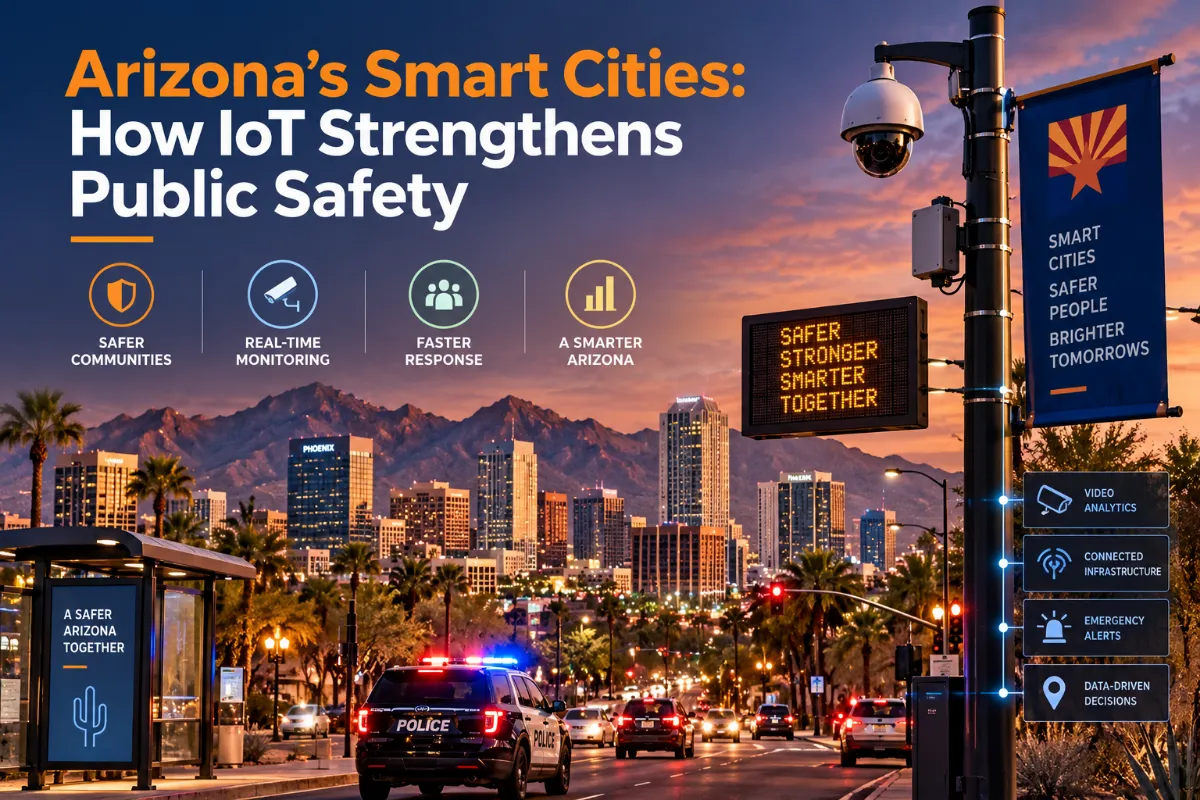
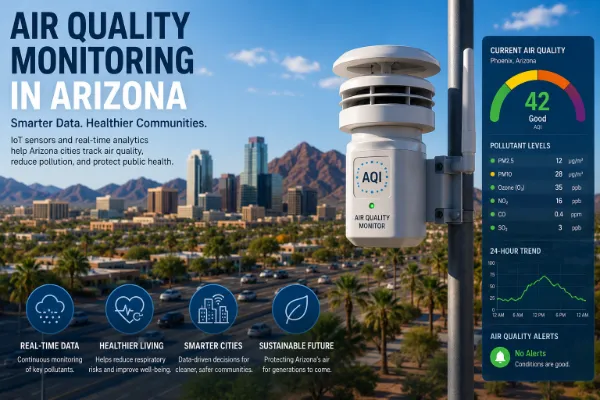
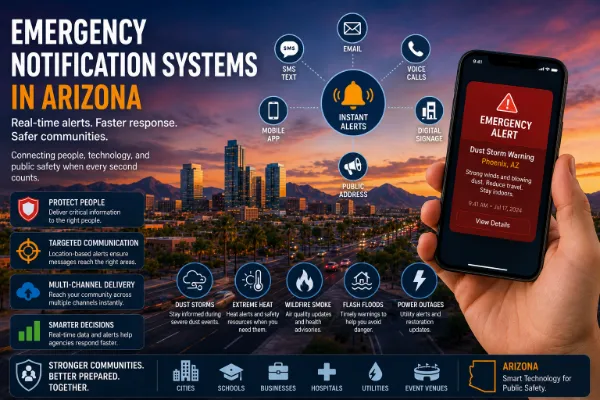
Emergency notification systems in Arizona are becoming a critical part of modern public safety. As communities face extreme heat, dust storms, wildfires, flooding, traffic incidents, utility outages, public safety threats, and fast-moving infrastructure risks, cities and organizations need faster ways to warn residents, employees, students, visitors, and emergency responders.
Emergency notification systems are no longer only sirens, phone trees, or email blasts. Modern systems can combine mobile alerts, SMS, voice calls, email, apps, public address systems, digital signage, social media, connected sensors, weather feeds, smart cameras, utility alerts, and location-based messaging. In Arizona, that connected approach can help communities respond faster when time matters.
Arizona is investing in smarter infrastructure, but data is only useful if it reaches the right people at the right time. A dust sensor, smart camera, water leak alert, air quality monitor, traffic system, or smart grid warning has limited value if nobody receives a clear instruction.
That is why emergency notification systems are the last mile of smart public safety. They turn detection into action.
- A dust storm alert can warn drivers before visibility drops.
- A heat alert can direct residents to cooling resources.
- A smart grid warning can notify facilities about power disruption risk.
- A school alert can inform parents and staff during a safety incident.
- A water main alert can warn businesses about service interruptions.
- A city alert can guide residents during evacuation, shelter, or road closure events.
An emergency notification system is a communication platform that sends urgent information to targeted audiences during emergencies or operational disruptions. These systems are used by cities, counties, schools, utilities, businesses, hospitals, campuses, event venues, and public safety agencies.
| Notification Channel |
How It Helps |
Arizona Use Case |
| SMS/Text Alerts |
Fast delivery to mobile phones |
Heat warnings, road closures, campus alerts |
| Voice Calls |
Useful for urgent instructions and older residents |
Evacuation notices, utility disruptions |
| Email Alerts |
Good for detailed follow-up information |
Business continuity updates, school notices |
| Mobile App Push Alerts |
Supports targeted, real-time messaging |
City apps, campus safety apps, employee alerts |
| Wireless Emergency Alerts |
Can reach phones in a defined geographic area |
Public warnings for imminent threats |
| Digital Signage |
Alerts people already inside a facility |
Airports, campuses, hospitals, office buildings |
| Public Address Systems |
Provides immediate audible instructions |
Schools, venues, warehouses, public buildings |
Arizona has several emergency communication challenges that make real-time notification especially important. The state has extreme summer heat, monsoon storms, dust storms, wildfire smoke, flash flooding, fast-growing highways, large event districts, industrial corridors, schools, resorts, public lands, and rapidly expanding suburbs.
Different emergencies require different messages. A heat alert may need public health guidance. A flash flood alert may need immediate road avoidance instructions. A utility outage may need facility shutdown procedures. A school alert may need parent communication. A public safety alert may need location-based urgency without creating unnecessary panic.
Strong emergency notification systems help organizations deliver the right message to the right group instead of sending broad, confusing alerts to everyone.
Emergency alerts are becoming more powerful because they can connect with public safety IoT. Sensors and smart systems can detect early warning signs, while notification platforms distribute instructions.
Related reading: Public Safety IoT in Arizona
Examples include:
| Emergency Type |
Who Needs Alerts |
Useful Message Type |
| Extreme Heat |
Residents, outdoor workers, schools, public agencies |
Cooling center information, hydration guidance, schedule changes |
| Dust Storms |
Drivers, logistics companies, schools, event venues |
Road warnings, visibility alerts, travel delay notices |
| Wildfire or Smoke |
Communities, schools, healthcare facilities, outdoor workers |
Evacuation guidance, air quality warnings, shelter information |
| Flash Flooding |
Drivers, neighborhoods, emergency teams, businesses |
Road closure alerts, avoid-area instructions, evacuation notices |
| Utility Outages |
Businesses, residents, hospitals, facilities teams |
Service interruption alerts, restoration updates, backup procedures |
| School Safety Incident |
Students, parents, staff, law enforcement |
Lockdown, reunification, all-clear, instruction updates |
| Public Event Incident |
Visitors, event staff, security, nearby businesses |
Exit instructions, shelter guidance, traffic redirection |
In the United States, Wireless Emergency Alerts and FEMA’s Integrated Public Alert and Warning System help authorized public safety officials send geographically targeted emergency messages to mobile devices, radio, and television when there is an imminent threat. These systems are especially important because they do not always require residents to sign up in advance.
For Arizona communities, this matters during high-risk events such as evacuation notices, severe weather, flash flooding, wildfire threats, or public safety emergencies. More localized opt-in systems can then provide additional detail through text, phone, email, or app alerts.
Reference: FEMA IPAWS
Arizona cities can use emergency notification systems for citywide alerts, neighborhood-level warnings, public works incidents, traffic disruptions, event safety, utility outages, and public health messaging.
| City |
Emergency Notification Opportunity |
Internal Link |
| Phoenix |
Heat alerts, traffic incidents, public safety warnings, downtown event communication |
Public Safety in Phoenix |
| Mesa |
Growth corridor alerts, school safety, road closures, utility communication |
Public Safety in Mesa |
| Chandler |
Industrial corridor alerts, semiconductor-area infrastructure, commercial safety |
Public Safety in Chandler |
| Scottsdale |
Resort district safety, event alerts, commercial building notifications |
Public Safety in Scottsdale |
| Tempe |
Campus-area alerts, pedestrian corridors, nightlife and event communication |
Public Safety in Tempe |
| Glendale |
Sports district alerts, event traffic, parking, crowd safety messaging |
Public Safety in Glendale |
| Goodyear |
Warehouse, logistics, road growth, industrial incident notifications |
Public Safety in Goodyear |
| Gilbert |
Residential growth, school zones, municipal alerts, family-focused safety notices |
Public Safety in Gilbert |
| Tucson |
Heat, wildfire smoke, university-area alerts, road and weather communication |
Public Safety in Tucson |
Schools and campuses need emergency notification systems that can reach students, parents, teachers, staff, transportation teams, security teams, and administrators quickly. A strong school alert system should support different message types for different audiences.
Common school notification scenarios include:
- Lockdown alerts
- Shelter-in-place instructions
- Weather delays
- Bus route disruptions
- Air quality or heat-related outdoor activity changes
- Parent reunification instructions
- All-clear messages
For Arizona schools, heat, air quality, traffic, and campus security are all practical reasons to modernize alert workflows.
Commercial buildings also need emergency notification systems. Office towers, hospitals, hotels, warehouses, industrial sites, resorts, shopping centers, and multifamily communities may need to alert occupants, tenants, employees, vendors, and facility teams during urgent events.
Emergency alerts can connect with IoT building automation in Arizona to support faster response when sensors detect fire risk, water leaks, HVAC failure, access control issues, power problems, or indoor air concerns.
Explore category: Smart Building & Commercial IoT
Utilities need clear communication during outages, water main breaks, service disruptions, conservation notices, and infrastructure repairs. Smart utility systems can detect issues earlier, but emergency notification systems help communicate what customers should do next.
Related category: Smart Utilities
Relevant utility articles:
Arizona’s industrial and logistics growth makes emergency notification systems important for worker safety, access control, evacuation, fire response, equipment incidents, hazardous weather, and transportation disruptions.
Warehouses and manufacturing facilities may need alert systems that reach employees across large buildings, outdoor yards, loading docks, security offices, and vehicle routes.
Related category: Industrial IoT
Related reading: Industrial IoT Solutions for Phoenix Manufacturing
| Feature |
Why It Matters |
| Multi-Channel Delivery |
People may miss one channel, so alerts should use text, voice, email, app, signage, and PA systems where appropriate |
| Location Targeting |
Alerts should reach the affected area without unnecessarily alarming unaffected people |
| Audience Segmentation |
Residents, employees, parents, responders, and facility teams may need different instructions |
| Prebuilt Templates |
Emergency teams save time when messages are prepared in advance |
| Two-Way Communication |
Allows people to confirm safety, request help, or provide status updates |
| System Redundancy |
Backup channels are important when power, internet, or mobile networks are stressed |
| Audit Logs |
Organizations need records of who sent alerts, when, and to whom |
- Sending vague alerts: People need clear instructions, not just warnings.
- Using only one channel: A text-only system may miss people without phones or signal.
- Not testing the system: Alert systems should be tested before real emergencies.
- Failing to update contact lists: Old employee, parent, or tenant records reduce effectiveness.
- Over-alerting: Too many low-value alerts can cause people to ignore serious warnings.
- Ignoring accessibility: Alerts should consider language, disability access, and different communication needs.
A strong emergency alert should be short, specific, and action-oriented. It should explain what happened, where it applies, what people should do, and where to get updates.
| Message Element |
Example |
| Threat |
Dust storm warning, power outage, building evacuation, flash flood risk |
| Location |
Affected roads, buildings, neighborhoods, campuses, or service zones |
| Action |
Shelter indoors, avoid travel, evacuate, move to cooling center, check email |
| Time |
When the issue began, expected update time, or immediate deadline |
| Source |
City, school, utility, employer, emergency management office |
| Follow-Up |
Link, hotline, app, email, or next update channel |
Emergency notification systems collect and use contact details, location data, employee lists, student records, resident registrations, or device information. This makes privacy and cybersecurity important.
Organizations should define:
- What data is collected
- Who can send alerts
- Who can access contact lists
- How data is stored
- How users can opt in or update information
- How system access is protected
- How test alerts are handled
Public trust matters. People are more likely to follow emergency instructions when the system is accurate, transparent, and not overused.
Emergency notification systems depend on sensors, communications, cloud platforms, edge devices, cameras, public safety software, semiconductors, and secure infrastructure. Arizona’s broader IoT ecosystem includes companies connected to many of these enabling technologies.
The right system depends on the organization. A city needs public alerting and geographic targeting. A school needs parent and staff communication. A warehouse needs worker safety alerts. A hospital needs redundancy and internal coordination. A commercial building needs tenant, visitor, and facilities communication.
- Who needs to receive alerts?
- Which channels are required?
- Can alerts be targeted by location?
- Can different groups receive different instructions?
- Does the system support templates?
- Can it integrate with sensors, cameras, access control, or building systems?
- Does it provide reporting and audit logs?
- How is user data protected?
- How often will the system be tested?
- What happens if power or internet is unavailable?
The future of emergency notifications in Arizona will likely include more sensor-triggered alerts, smart city dashboards, AI-assisted message routing, multilingual alerts, location-aware notifications, and deeper integration with public safety IoT.
The best systems will not simply send more messages. They will send better messages: targeted, timely, verified, understandable, and connected to real response actions.
Emergency notification systems in Arizona are becoming essential infrastructure for public safety, smart cities, schools, utilities, businesses, and commercial buildings. In a state shaped by heat, growth, dust, wildfire smoke, traffic, and infrastructure pressure, fast communication can reduce confusion and help people act sooner.
The strongest systems connect detection with action. Sensors, cameras, utility data, and weather feeds may identify the risk, but emergency notification systems deliver the instruction that helps people respond.
Frequently asked questions
An emergency notification system is a platform that sends urgent alerts through channels such as text, voice, email, apps, digital signage, public address systems, or Wireless Emergency Alerts.
They are important because Arizona faces extreme heat, dust storms, wildfires, flash flooding, traffic incidents, utility outages, and fast-growing public safety needs.
Cities, counties, schools, utilities, hospitals, businesses, warehouses, commercial buildings, universities, and event venues all use emergency notification systems.
IoT sensors can detect events such as air quality changes, leaks, power disruptions, traffic issues, or security incidents. Notification systems then send alerts to the right people.
A strong system may include SMS, voice calls, email, mobile app alerts, digital signage, PA systems, desktop alerts, and public warning integrations.
Many modern systems support geographic targeting, allowing alerts to reach people in affected areas instead of everyone.
Organizations should test regularly and train staff on alert workflows before an actual emergency occurs.
A good message is short, specific, action-oriented, and includes the threat, location, instruction, time, source, and follow-up information.
Related articles

 Public Safety