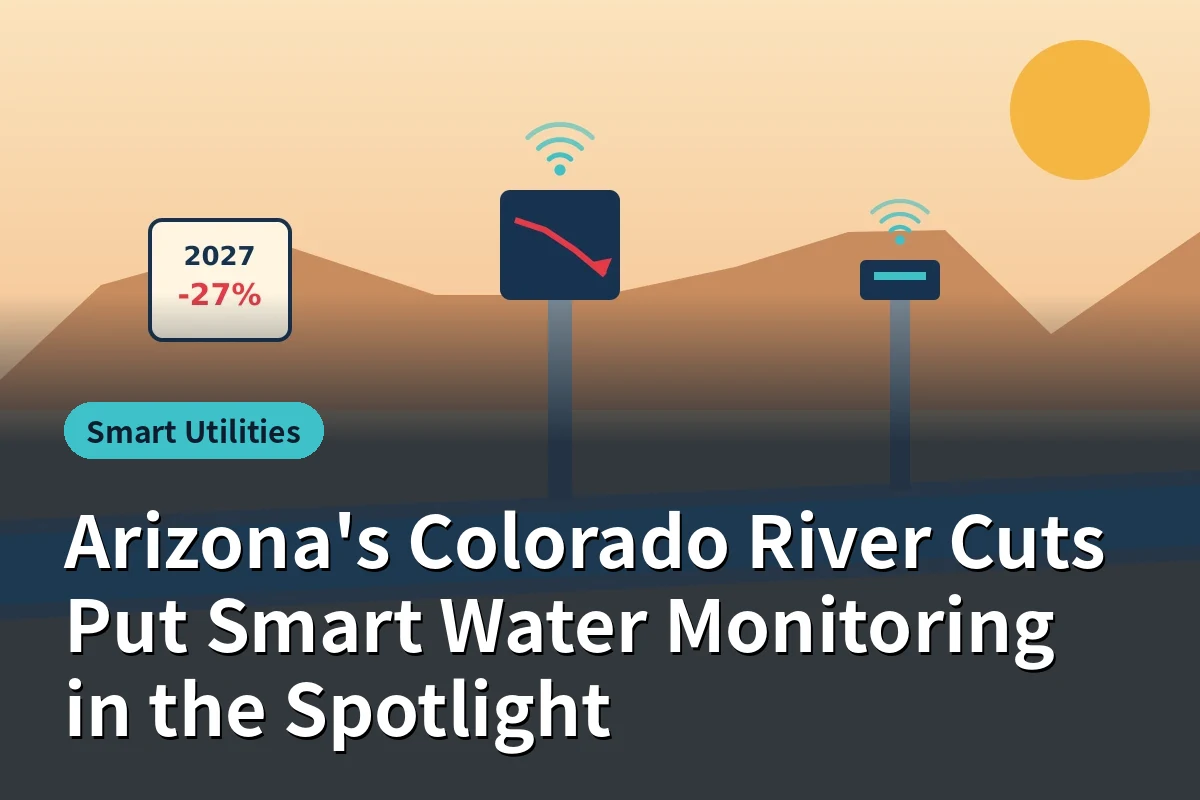
On January 1, 2027, Arizona's reduced Colorado River deliveries take effect. Under the federal 2027 and 2028 operating guidelines adopted in August 2026, the Lower Basin loses 1.25 million acre-feet a year, and Arizona's share of that cut is 760,000 acre-feet, leaving the state about 2.04 million of its 2.8 million acre-foot apportionment, roughly a 27 percent reduction. Phoenix, which gets about 40 percent of its supply from the river, says deliveries to homes are not threatened. Gilbert will lose about 20 percent of its Colorado River allocation. The small town of Cave Creek, which depends on the river for about 95 percent of its water, is pursuing exchange deals with neighbors.
Meanwhile, the rules themselves are in court. Nevada sued on August 24, the Arizona Department of Water Resources moved to intervene on October 16, and the Central Arizona Project moved on October 27 to join as a plaintiff, arguing that the framework breaches the 1922 Colorado River Compact. The judge had not ruled on those motions as of early November.
That combination, real cuts starting in weeks while the long-term rules remain contested, is what puts smart water monitoring in the spotlight. When nobody can be certain what supply will look like after 2028, the organizations that measure their water most precisely will have the most options. This article looks at what needs measuring in the first year of the cuts, and by whom.
In a stable world, water managers can plan around long-term averages. Arizona no longer has that luxury. The federal guidelines run only through 2028, the government can impose deeper cuts of up to 40 percent from 2028 under the framework, and litigation could change the rules again. The Central Arizona Project has warned that its supply could fall to zero if Lower Basin shortages reach 2 million acre-feet, which it says could happen after 2028, and estimates that restoring its 336-mile canal after a year without flow would cost about $358 million.
Under those conditions, three questions matter more than ever: How much water do we actually have? Where is it going? How quickly can we change course? Each answer depends on data from meters, sensors and monitoring wells, collected continuously rather than estimated after the fact.
| Water User | Main Exposure | Monitoring Priority for 2027 |
|---|
| Central Arizona Project | Lower canal deliveries and risk of much deeper cuts after 2028 | Canal flows, pumping energy, delivery accounting to each contractor |
| Cities heavily reliant on CAP | Replacing lost river water with groundwater, stored water or exchanges | Well output and aquifer levels, storage recovery, system losses, customer demand |
| Cities with diverse supplies | Smaller share of cuts but rising costs | Demand by customer class, distribution losses, reclaimed water use |
| Tribal communities | About 45 percent of CAP supply is or will be allocated to 11 tribes | Delivery verification, conservation and leasing accounting |
| Farms and irrigation districts | Long-standing cuts in central Arizona; scrutiny everywhere | Applied water, canal turnouts, soil moisture, well pumping |
| Industry and data centers | Local water rules and public scrutiny | Process water by system, reuse rates, discharge |
When river water falls short, many cities lean on wells and on Colorado River water previously stored underground. The Arizona Water Banking Authority has agreed to give utilities access to 100 percent of the water they lose to cuts, but only for one year, and its supply beyond that is uncertain. Gilbert is finishing eight wells to recover water recharged through ponds at a nature preserve.
Pumping more groundwater makes aquifer monitoring essential. Water level sensors in monitoring wells, flow meters on production wells and water quality sensors tell utilities how aquifers respond to heavier use. Without that data, a backup supply can quietly become a depleted one. Mesa, for example, describes bringing groundwater wells online in real time through its SCADA system when surface water availability drops.
Every gallon lost from a utility's pipes is a gallon that must be replaced from a shrinking supply. Mesa reports citywide water loss under 6 percent, compared with about 10 percent across Arizona and about 16 percent nationally, according to its water resources planning adviser. Closing that gap across the state would effectively add supply without new sources. Our article on how Arizona utilities use sensors and analytics for leak detection covers the techniques.
Smart meters turn monthly guesses into hourly evidence. They reveal customer-side leaks, show which neighborhoods and customer classes drive summer peaks and allow utilities to measure whether conservation programs work. Tucson plans to begin its non-residential smart meter rollout in spring 2026 and finish residential installations by the end of 2029, with a customer portal in early 2027. Our article on why smart meters matter more as supplies tighten explores that side in depth.
Farms use most of Arizona's water, and central Arizona growers have already absorbed severe CAP cuts. Yuma County's senior river rights have shielded it so far, but scrutiny is rising everywhere. Flow meters, soil moisture probes and canal telemetry help farms document water use and stretch every acre-foot. Yuma County's new agriculture-dedicated wireless tower network is designed to make that kind of monitoring practical across the valley, as our article on the Yuma smart-farm network explains.
Officials expect new water infrastructure to show up in customer bills. Gilbert's bills have roughly doubled since 2024. Kathryn Sorensen of Arizona State University's Kyl Center has argued that higher prices, especially in summer, drive conservation more effectively than mandatory rules. Price signals work best when customers can see their use. Hourly meter data, usage alerts and clear bills make rising costs understandable rather than mysterious, which matters for public trust as rates climb.
- Confirm your supply picture for 2027. Know exactly how much river, groundwater, stored and reclaimed water you expect, and from where.
- Close measurement gaps on backup sources. Make sure every well and recovery facility is metered and monitored.
- Run a current water audit. Establish losses by pressure zone or district so repairs target the biggest leaks.
- Prioritize large and fast-growing users for smart metering and conservation outreach.
- Prepare customer communication that explains changes in supply and cost with real data.
- Secure monitoring systems. The 2026 attacks on internet-facing water utility controllers are a reminder covered in our PLC security checklist.
Utilities and districts are planning for several possible futures: the current guidelines continuing, deeper cuts from 2028, or rules reshaped by litigation or a negotiated deal among the basin states. Scenario models are only as good as the data behind them. Accurate demand curves, groundwater response data and verified loss rates let planners test how each scenario would affect customers, budgets and infrastructure, and decide which investments make sense in all of them.
Picture a mid-sized Valley city in the first three months of 2027. Its CAP deliveries drop on January 1. Operators bring additional wells online and begin recovering stored water, with flow meters on each well and water level sensors in nearby monitoring wells tracking how the aquifer responds. Distribution sensors show that one older district loses water at nearly twice the city average, so crews focus acoustic surveys there. Smart meter data shows that a handful of large landscape customers account for a large share of winter use, and the conservation team schedules irrigation audits. By March, the city can report exactly how much river water it lost, how it replaced it and what that cost. The example is illustrative, but cities that can produce that kind of report quickly will be best placed for whatever comes after 2028.
As water becomes scarcer and more expensive, questions of fairness sharpen. Who conserves, who pays and whose supply is cut first are policy decisions for lawmakers, regulators, courts and communities. Monitoring does not settle those questions, but it does make them easier to discuss honestly, because decisions can rest on verified data rather than competing estimates.
Shared data can help here too. When utilities, tribes, farms and regulators work from the same verified measurements, disputes shift from whose numbers are right to what should be done.
The coming months will bring the first deliveries under the new rules, possible rulings in the litigation, the expiry of the Water Bank's one-year backstop and continued negotiations among the seven basin states. Whatever the outcome, Arizona water users that can measure supply, losses and demand precisely will adapt faster than those relying on estimates. The cuts have made smart water monitoring a necessity rather than an upgrade.
Our overview of smart water management in Arizona covers the full water cycle, and our farm water verification guide covers agriculture. Find water technology partners in the IoT Arizona company directory, including smart utility providers in Phoenix. Browse more of our Smart Utilities coverage.
Frequently asked questions
Reduced Lake Mead deliveries take effect January 1, 2027. Arizona's share of the Lower Basin cut is 760,000 acre-feet a year in 2027 and 2028, roughly 27 percent of its apportionment.
Yes. Nevada sued on August 24, 2026. Arizona's Department of Water Resources moved to intervene on October 16 and the Central Arizona Project moved to join as a plaintiff on October 27.
Rules beyond 2028 are unsettled, so water users need precise data on supply, losses and demand to adapt quickly to whatever outcome emerges.
Through groundwater, stored water from the Arizona Water Banking Authority, exchanges and new projects. The Water Bank has offered utilities 100 percent of their lost water for one year only.
Heavier pumping as a backup can deplete aquifers. Water level sensors, well flow meters and quality monitoring show how aquifers respond.
Confirm their 2027 supply mix, meter all backup sources, run a current water audit, prioritize large users for smart metering, prepare customer communication and secure monitoring systems.
Related articles

 Smart Utilities