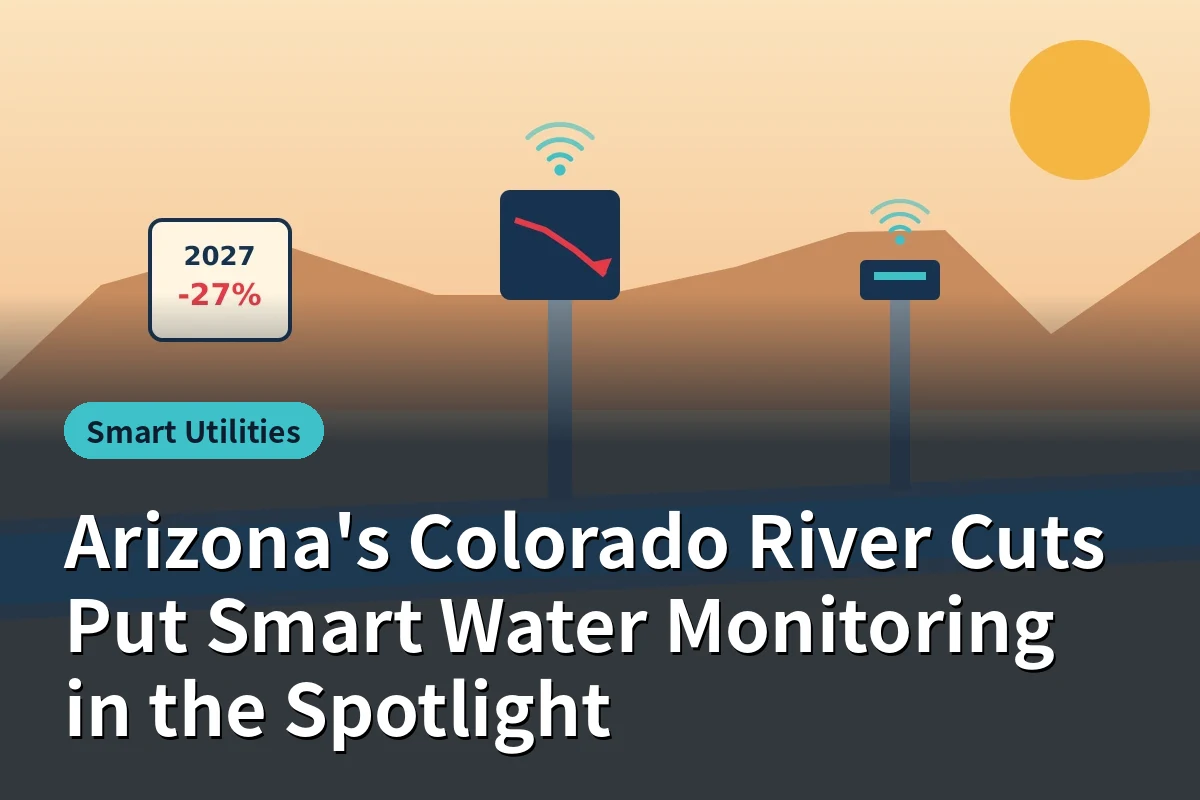
Arizona residents are about to learn something utilities have known for years: water is getting more expensive. Officials expect the cost of replacing reduced Colorado River supplies, including new wells, recycling plants and pipelines, to show up in customer bills. In Gilbert, which will lose about 20 percent of its Colorado River allocation in 2027, water bills have roughly doubled since 2024. Phoenix's Cave Creek water recycling facility is expected to cost more than $359 million to build and about $8.5 million a year to run.
That shift changes the role of the smart water meter. For years, utilities justified smart meters mainly by operational savings: no more meter readers, faster billing, fewer estimated reads. Those benefits still matter. But as supplies tighten and prices rise, smart meters take on a bigger job. They become the way customers see what they use, the way utilities prove that conservation is working and the way rising bills can be explained rather than resented. This article looks at that new role and at where Arizona's rollouts stand.
Kathryn Sorensen of Arizona State University's Kyl Center has argued that higher prices, especially in summer, drive conservation more effectively than mandatory rules. But a price signal only works if customers can connect what they pay with what they do. A monthly bill that arrives weeks after a heat wave tells a customer little about which day the irrigation ran long or when a leak started.
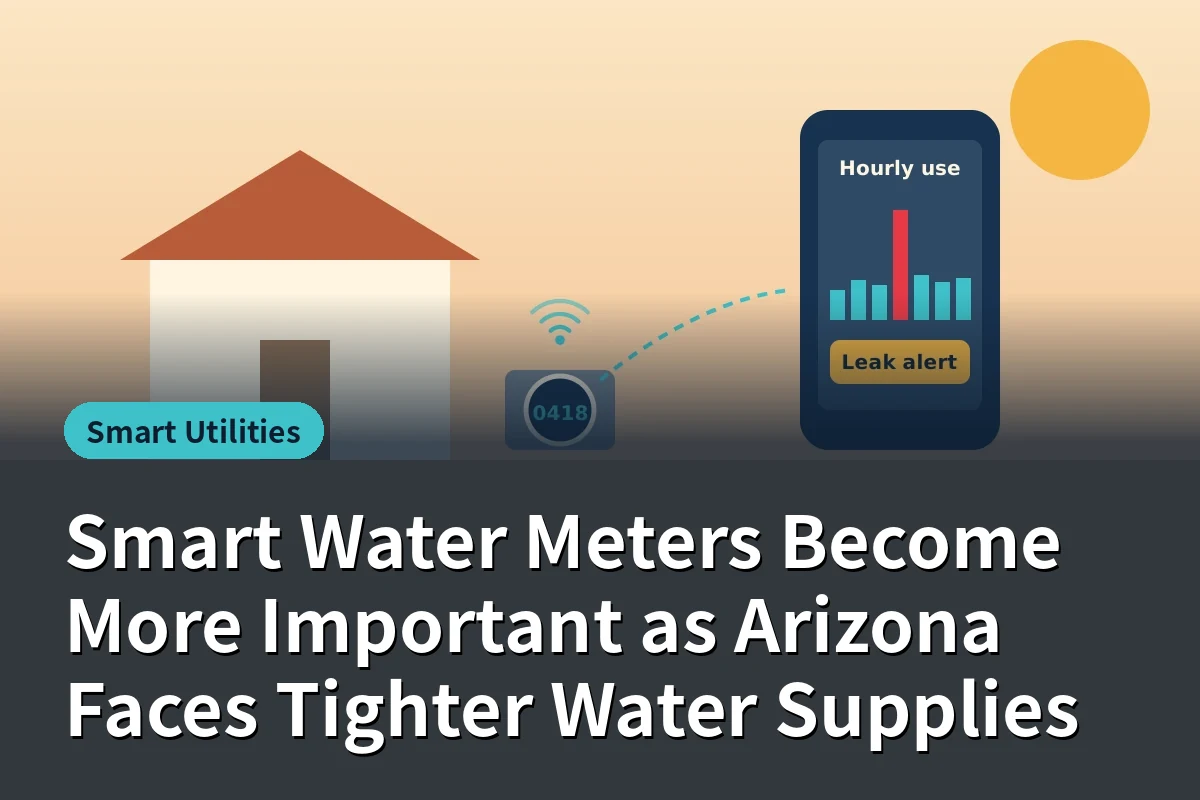
Smart meters close that gap. Hourly data, usage alerts and comparisons with past periods let customers see the effect of a new irrigation schedule within days. Utilities can show customers how their use compares with similar households, and warn them before a high bill rather than after it.
| Utility | Status as Publicly Reported | Notable Detail |
|---|
| Tucson Water | Pilot complete; non-residential rollout of about 45,000 meters starting spring 2026; residential installation 2027 to 2029 | Customer portal planned for early 2027; hourly data and high-use notifications; no opt-out |
| Mesa | Transitioning to AMI, with completion expected within about a year of a March 2026 interview | New meters already producing more than 300 continuous-use notifications a month; customer portal planned |
| Glendale | Pilot program to replace meters citywide reported | Pilot approach before full deployment |
| Prescott Valley | Water Smart customer portal with leak alerts, developed with ADWR support | Estimated savings of about 48 million gallons a year |
Other Valley cities, including Scottsdale and Chandler, have also announced metering upgrades. Timelines change, so customers should check their own utility for current details.
- Hourly visibility. Customers can see when water is used, not just how much each month.
- Leak alerts. Continuous flow, often a sign of a leak, can trigger notifications within a day or two. Mesa's experience shows how common these are: more than 300 continuous-use notifications a month as meters were replaced.
- Fewer surprises. High-use alerts warn customers before a large bill arrives.
- Better accuracy. Older residential meters can under-register low flows, so new meters may record use more completely. Utilities should explain this clearly, because a more accurate meter can mean a higher bill even when habits have not changed.
- Demand planning. Hourly data by neighborhood and customer class shows exactly when and where peaks occur, which helps size infrastructure and plan for reduced supplies.
- Conservation evidence. Utilities can measure the real effect of rebates, outreach and rate changes, rather than estimating it.
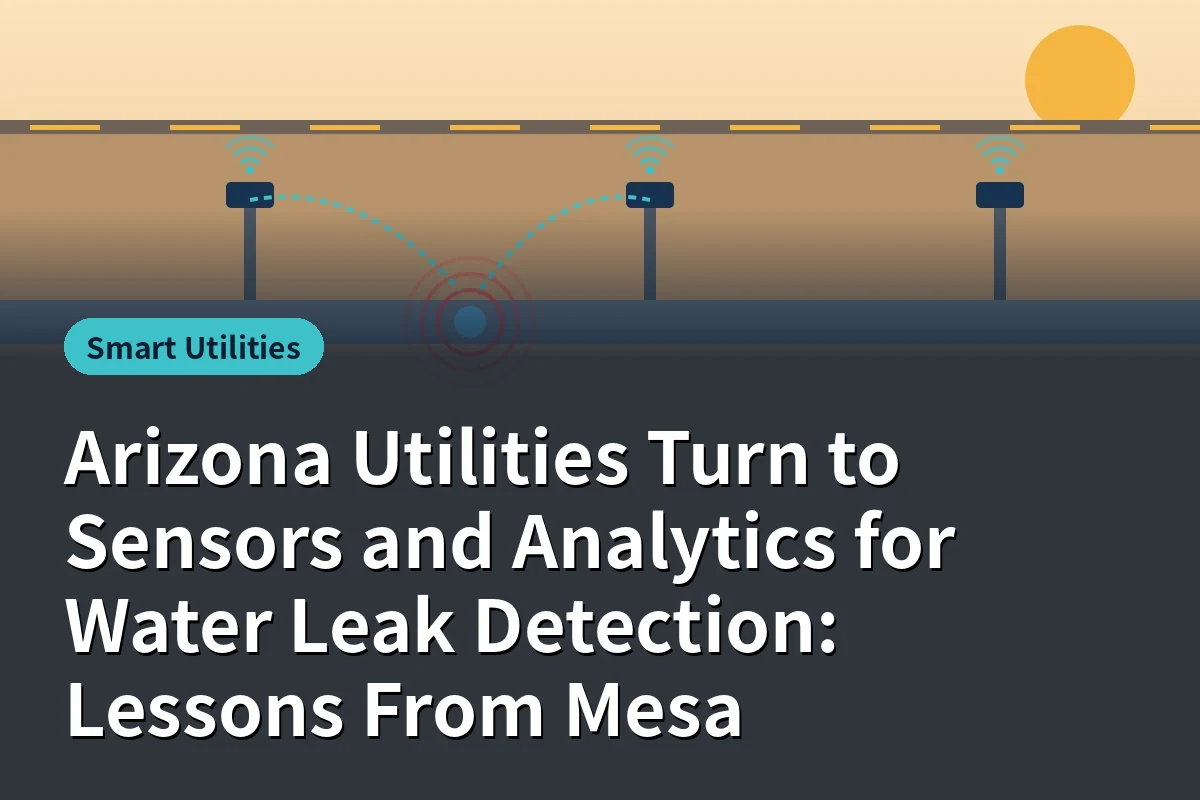
- Loss detection. Comparing water entering a district with water recorded at customer meters narrows down where losses occur. Our article on utility sensors and analytics for leak detection covers that side.
- Rate design. Detailed data supports seasonal or tiered rates and helps predict how customers will respond.
Gilbert's water resources manager has warned that sudden rate hikes can cause public backlash. Smart meters can either ease that tension or worsen it. They worsen it when new meters arrive alongside higher bills without explanation, prompting complaints that the meters are wrong. They ease it when utilities test meters and explain accuracy, give customers tools to see and control their use, help low-income households fix leaks and protect usage data with clear privacy policies.
Tucson notes that its meters are tested for accuracy before and after installation, and that the partner managing its meter data holds independent security certifications. Steps like these matter more as water becomes a larger part of household budgets.
Hourly water data can reveal patterns of daily life, such as when people are home. Utilities should publish what they collect, how long they keep it, who can access it and whether it can be used for enforcing watering restrictions. Our IoT security guide covers the broader principles of protecting connected device data.
Consider a family in the East Valley whose water bill has risen noticeably over two years. With a new smart meter and customer portal, they see that their use spikes every night between 3 and 5 a.m. The culprit is an irrigation controller still set for summer in December. A second alert flags constant low flow, which a plumber traces to a toilet flapper. Within a month, their use drops and their bill becomes predictable. Multiply that across thousands of homes and the conservation adds up, while customers feel they have some control over rising costs. The example is illustrative, but utilities with portals report similar patterns.
Smart meters help everyone, but some customers gain more:
- Households with hidden leaks, such as slab leaks or broken irrigation lines, which can run for weeks unnoticed.
- Seasonal residents who leave homes empty during summer.
- HOAs and commercial landscapes, where irrigation drives most use.
- Low-income households, for whom an unexpected high bill causes real hardship, especially when paired with leak repair assistance.
Our property leak detection guide explains how owners can add their own sensors alongside utility meters.
- Pilot first. Tucson and Glendale both started with pilots before large-scale deployment.
- Start with large users. Non-residential accounts often deliver the biggest early insight per meter.
- Plan for the alert surge. New meters reveal many existing leaks at once. Staff and repair assistance need to be ready.
- Launch the portal promptly. Meters without customer access deliver only half their value.
- Choose hardware for desert heat. Meter boxes in direct sun get very hot, affecting batteries and electronics.
- Integrate billing systems early. Our earlier article on smart meter rollout delays shows how software can slow deployments.
- Read your meter before and after two hours with no water use to check for leaks.
- Sign up for any portal or alerts your utility already offers.
- Review irrigation schedules seasonally, since outdoor watering is often the largest share of household use.
- Ask your utility when smart meters will reach your neighborhood and what data you will see.
Many Arizona utilities already use tiered or seasonal rates that charge more for higher use or summer use. Smart meter data makes those structures fairer and easier to understand. Utilities can show customers which tier they are entering before the bill arrives, model how proposed rate changes would affect different households and identify customers who might need assistance. Some utilities elsewhere are experimenting with alerts when a customer approaches a higher tier. As Arizona utilities revisit rates to pay for new supplies, detailed meter data will be central to designing structures that encourage conservation while protecting essential use.
Large accounts often deliver the biggest gains. Apartment communities with master meters can use smart meter data to spot building-wide leaks quickly, and some add submeters for fair billing and resident awareness. Commercial landscapes, schools, hotels and industrial users benefit from interval data that reveals irrigation running at the wrong times, cooling tower problems and after-hours use. Tucson's choice to start its rollout with about 45,000 non-residential meters reflects that priority.
Utilities can also share anonymized neighborhood data with planners and conservation partners, helping target rebates and outreach where they will save the most water.
As cuts take effect on January 1, 2027 and new supply projects come online over the following years, water prices in many Arizona communities will keep rising. Smart meters will not make water cheaper, but they can make every gallon visible, help customers control their costs and give utilities evidence that conservation and new investments are paying off. In a state learning to live with less, that visibility is becoming essential infrastructure.
Our earlier technical guide to smart meter networks and leak analytics compares metering technologies, and our article on Colorado River cuts and smart water monitoring explains the wider context. Find metering partners in the IoT Arizona company directory, including smart utility providers in Tucson. Browse more of our Smart Utilities coverage.
Frequently asked questions
As supplies tighten and bills rise, hourly meter data helps customers connect cost to use, catch leaks early and helps utilities prove conservation is working.
Tucson plans a non-residential rollout of about 45,000 meters starting spring 2026, residential installation from 2027 to 2029 and a customer portal in early 2027.
Older meters can under-register low flows, so a more accurate meter may record more use. Utilities test meters and should explain this to customers.
They flag continuous flow, which usually signals a leak. Mesa's new meters generated more than 300 continuous-use notifications a month during its transition.
What data is collected, how long it is kept, who can access it and whether it can be used to enforce watering restrictions.
Check the meter for leaks with a two-hour no-use test, sign up for any existing alerts or portal, review irrigation schedules and ask the utility about rollout timing.
Related articles

 Smart Utilities