 Smart Cities & Government
Public Safety IoT Technologies: How Cities Are Moving from E...
Published On 21-06-2026

Published by IOT Arizona Research & Editorial Team
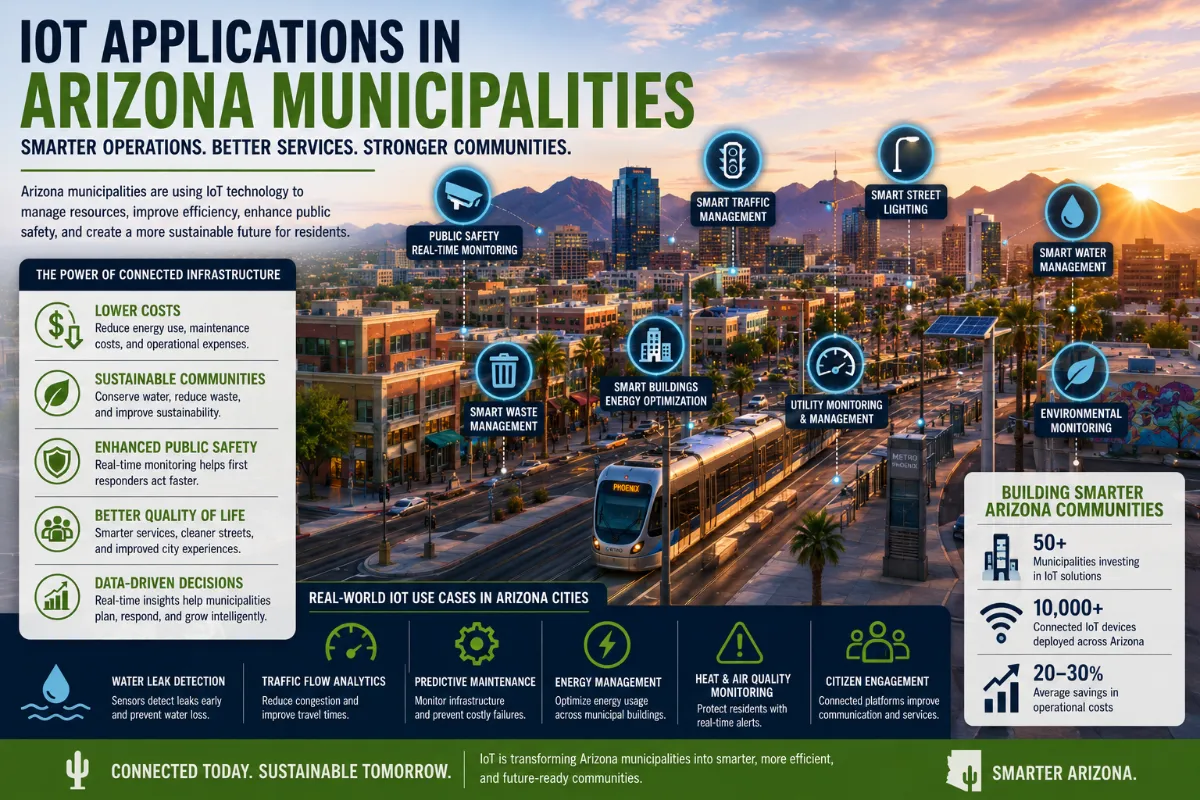
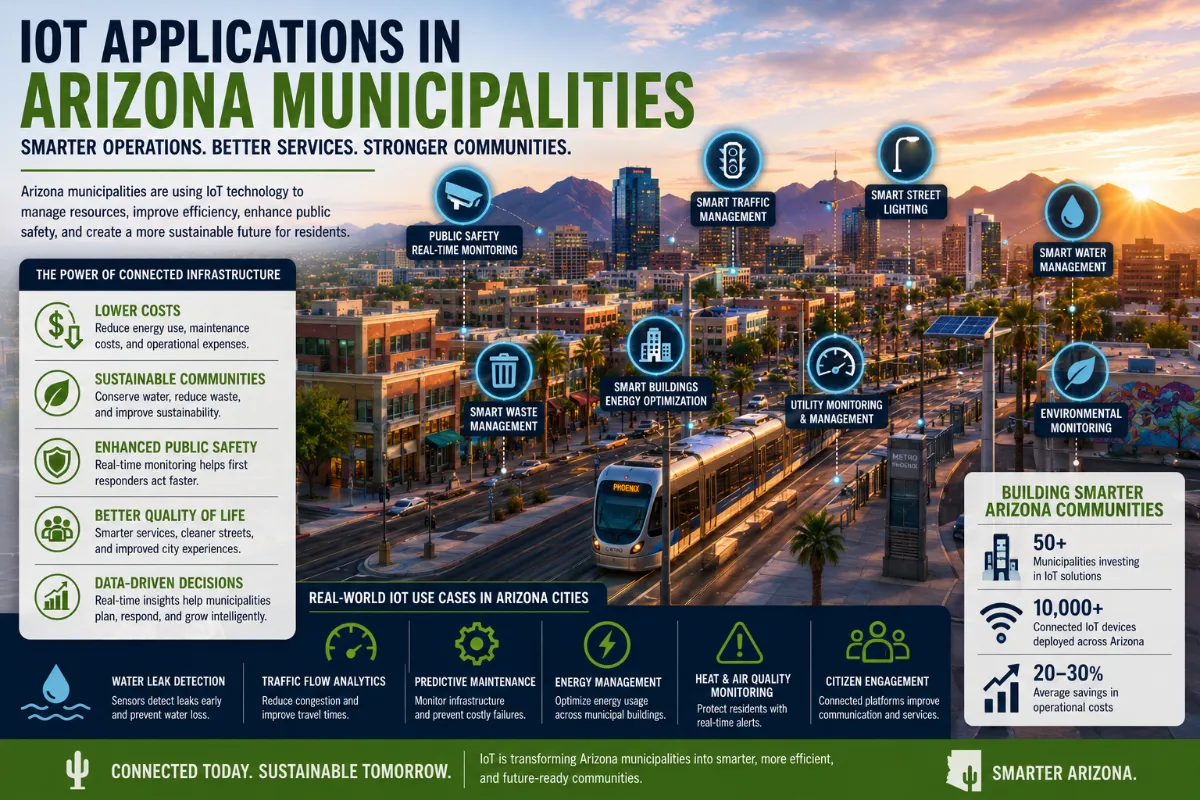
Arizona municipalities are facing a new reality. Cities are growing faster, infrastructure is aging, utility costs are rising, and residents expect better public services.
Traditional city management systems were designed to react to problems after they happened. In 2026, Arizona municipalities are shifting toward predictive operations powered by IoT (Internet of Things).
Instead of simply building more infrastructure, cities are making existing infrastructure smarter.
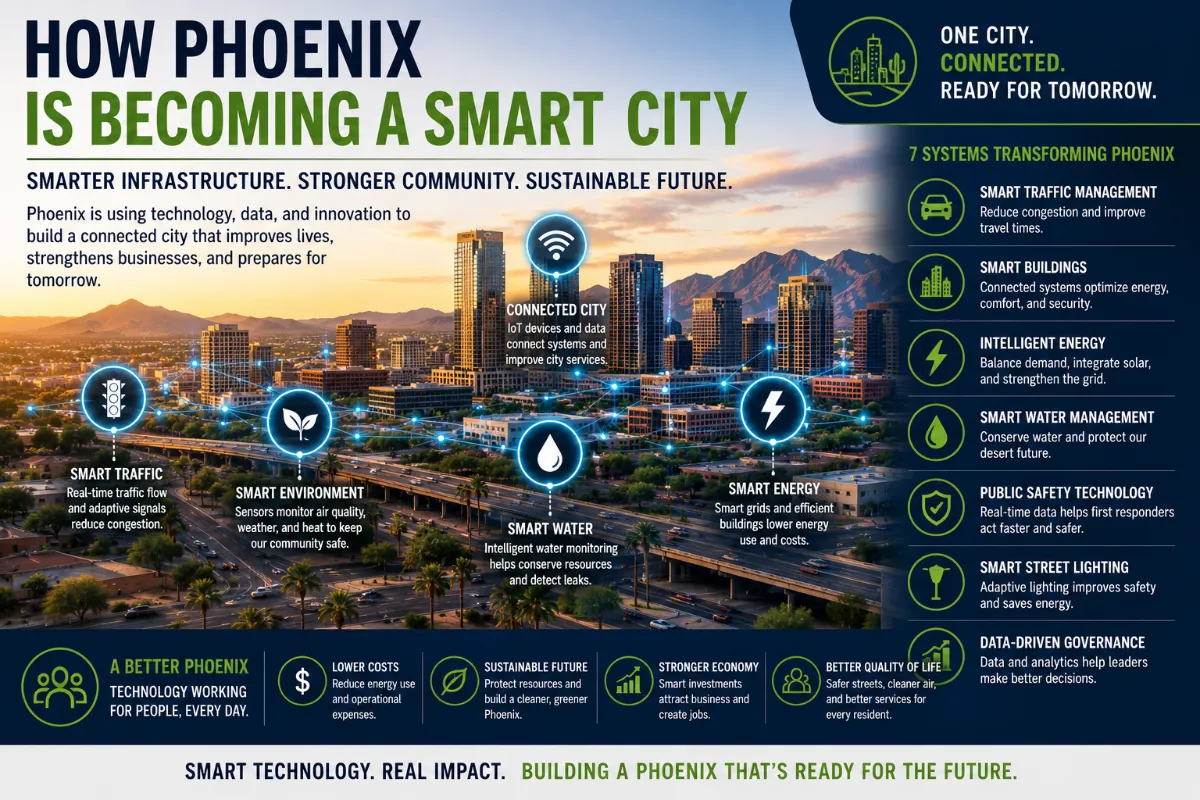
IoT is allowing municipalities to monitor assets, predict failures, conserve resources, improve public safety, and make faster decisions based on real-time data.
Arizona cities face unique environmental and operational challenges.
Municipal leaders are under pressure to deliver better services without dramatically increasing spending.
IoT helps cities become more efficient by turning infrastructure into connected, data-driven systems.
Municipal IoT is the use of connected sensors, cloud platforms, automation systems, artificial intelligence, and analytics to monitor and manage public infrastructure.
Thousands of sensors can continuously collect data and send information to centralized dashboards.
City teams can then identify problems early and respond proactively.
Traffic congestion is one of the largest operational challenges for growing Arizona cities.
Connected traffic systems monitor:
Traffic signals can automatically adjust to improve traffic flow.
Water conservation is a top priority throughout Arizona.
IoT water systems monitor:
Municipalities can identify water waste before it becomes expensive.
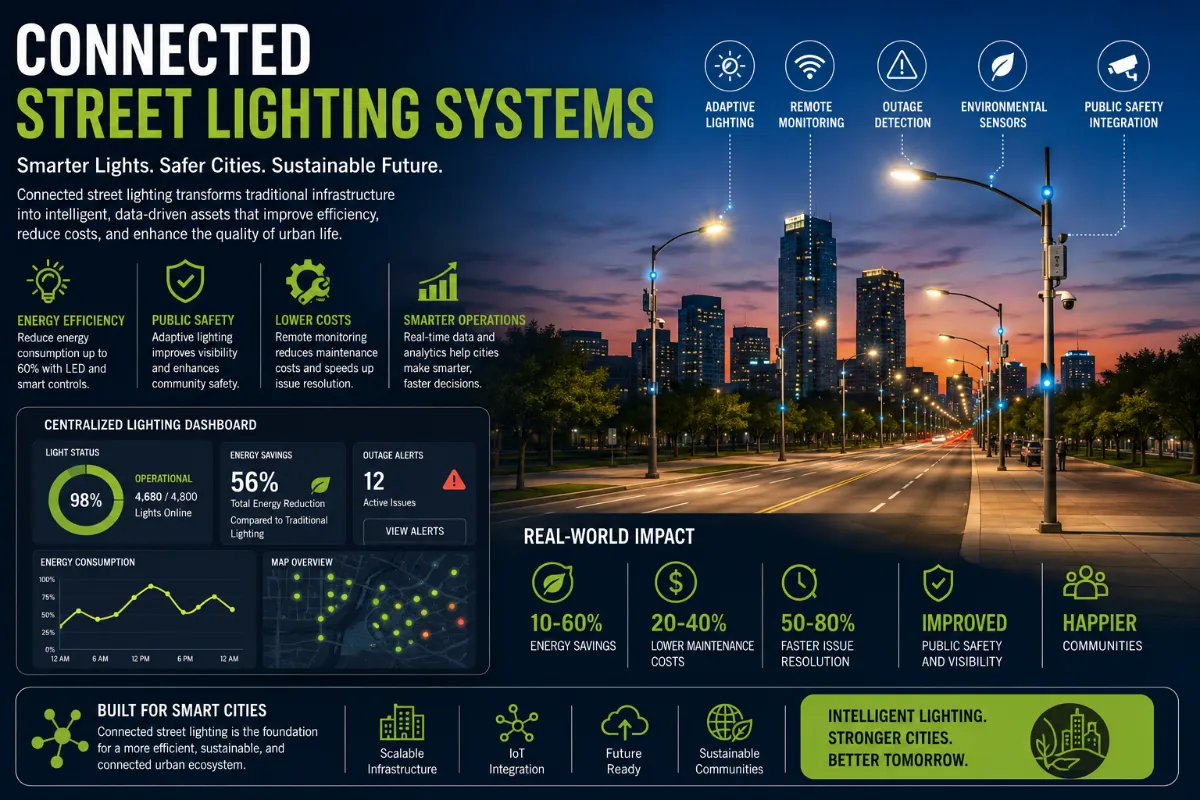
Connected streetlights do more than illuminate roads.
They can:
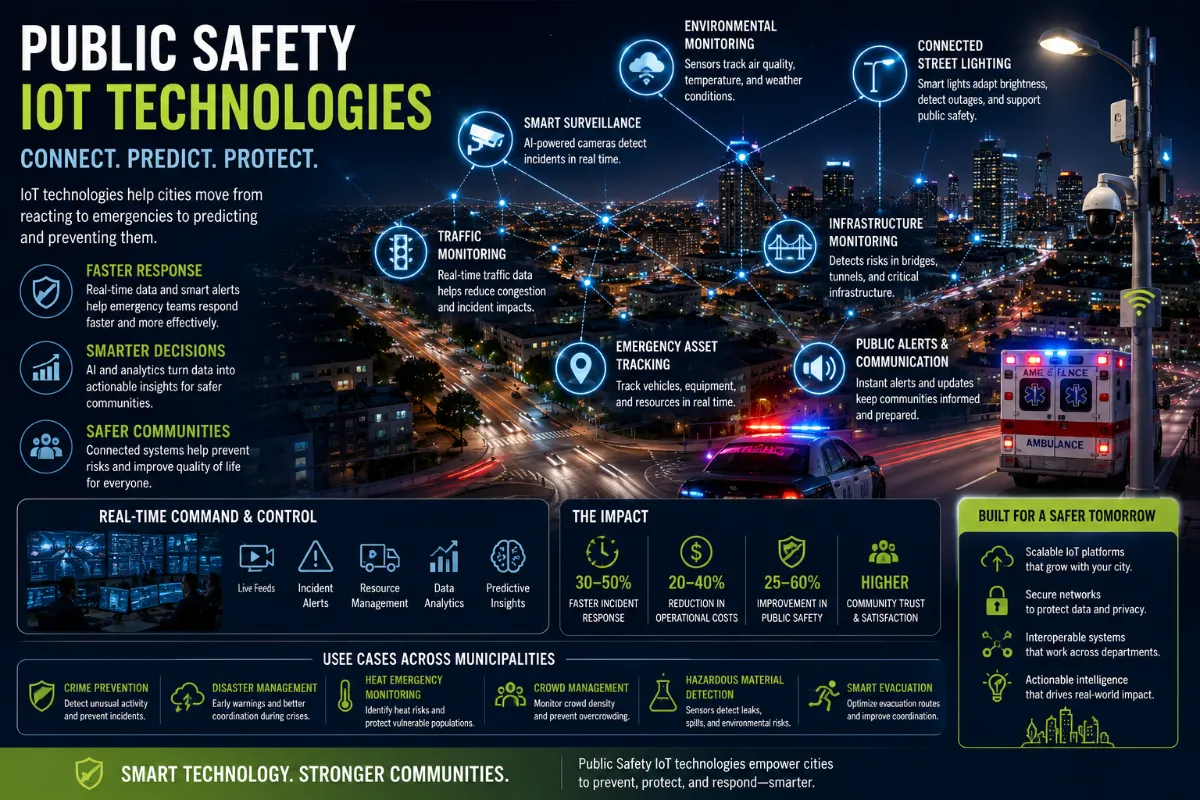
Connected systems can help emergency responders react faster.
Municipalities can monitor:
IoT sensors can monitor waste collection containers.
Collection routes can then be optimized based on actual demand.
This reduces fuel costs and improves efficiency.
Municipal buildings consume significant amounts of electricity.
IoT platforms monitor:
This helps reduce operational costs.
IoT sensors can monitor:
Maintenance teams receive alerts before equipment fails.
Environmental sensors collect data on:
This information helps municipalities make better decisions.
| Step | Function |
|---|---|
| Sensors | Collect real-time information |
| Networks | Transmit data securely |
| Cloud Platforms | Centralize information |
| Analytics Engines | Identify patterns |
| AI Systems | Predict future issues |
| Operations Teams | Take action |
| Municipality Type | Primary IoT Focus |
|---|---|
| Large Cities | Traffic and energy management |
| Mid-Size Cities | Water conservation and infrastructure |
| Growing Communities | Scalable smart infrastructure |
| Tourism Areas | Public safety and transportation |
| Industrial Areas | Environmental monitoring |
| Area | Potential Benefit |
|---|---|
| Energy Costs | 10% to 30% reduction |
| Water Loss | Reduced waste |
| Maintenance Costs | 15% to 25% reduction |
| Traffic Efficiency | Improved flow |
| Emergency Response | Faster reaction times |
| Asset Lifespan | Extended infrastructure life |
Connected infrastructure must be protected against cyber threats.
Municipalities must ensure citizen information is protected.
Older infrastructure often needs modernization before IoT implementation.
Projects must demonstrate measurable ROI.
Teams need training to manage connected infrastructure.
Deploy smart street lighting and water monitoring.
Implement traffic management and predictive maintenance systems.
Connect municipal buildings and energy systems.
Centralize all city operations into a single dashboard.
By 2030, cities may become self-optimizing ecosystems.
Future systems may:
Municipalities will increasingly shift from reactive operations to predictive management.
IoT applications in Arizona municipalities are not about adding more technology.
They are about making existing infrastructure smarter, more efficient, and more resilient.
As Arizona continues to grow, municipalities that embrace connected infrastructure will be better prepared to manage heat, population growth, sustainability goals, and future urban challenges.
This article was reviewed by the IOT Arizona Editorial Team for accuracy, clarity, and relevance. Information may be sourced from publicly available treatment resources, government agencies, and healthcare references where applicable.
Last reviewed: June 2026
Smart Cities & Government
 Smart Cities & Government
 Smart Cities & Government
 Smart Cities & Government