 Smart Building & Commercial IoT
Predictive Maintenance for Commercial Properties in Arizona:...
Published On 21-06-2026

Published by IOT Arizona Research & Editorial Team
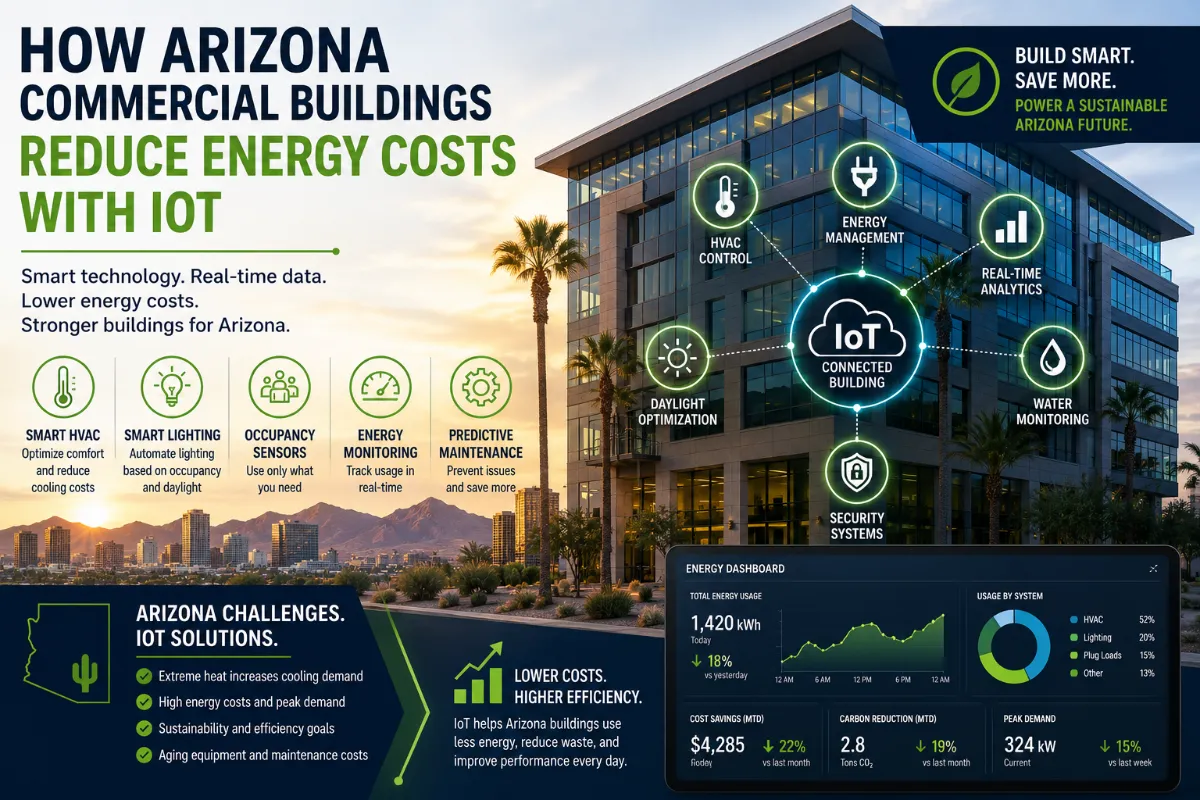
Arizona commercial buildings face a unique energy challenge. Long cooling seasons, extreme summer heat, peak electricity demand, large glass office buildings, warehouses, medical buildings, retail centers, and data-heavy facilities all create pressure on operating budgets.
For building owners in Phoenix, Scottsdale, Tempe, Mesa, Chandler, Glendale, Tucson, and other Arizona markets, IoT is no longer just a smart building trend. It is becoming a practical way to reduce energy waste, control cooling costs, improve equipment performance, and make buildings easier to manage.
Arizona buildings often use large amounts of electricity for cooling. A commercial building may be comfortable in the morning but become expensive to cool by afternoon when outdoor temperatures rise and solar heat gain increases.
This is why generic energy-saving advice is not enough for Arizona. A local energy strategy needs to focus on cooling loads, peak demand, building zones, occupancy patterns, equipment runtime, solar exposure, and real-time monitoring.
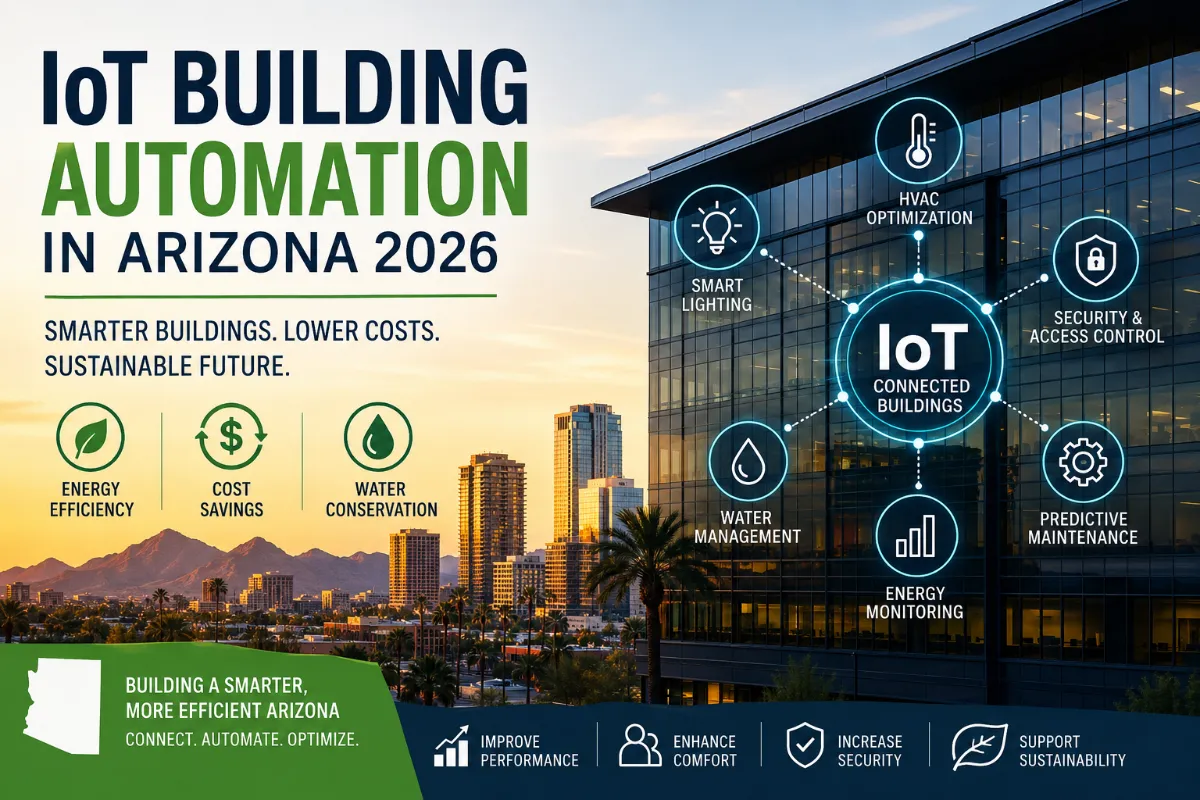
IoT energy management uses connected sensors, smart meters, automation software, and building management platforms to collect real-time data from commercial building systems.
Instead of waiting for a monthly utility bill, building owners can see how energy is being used throughout the day. This allows teams to find waste, correct problems, automate controls, and reduce unnecessary consumption.
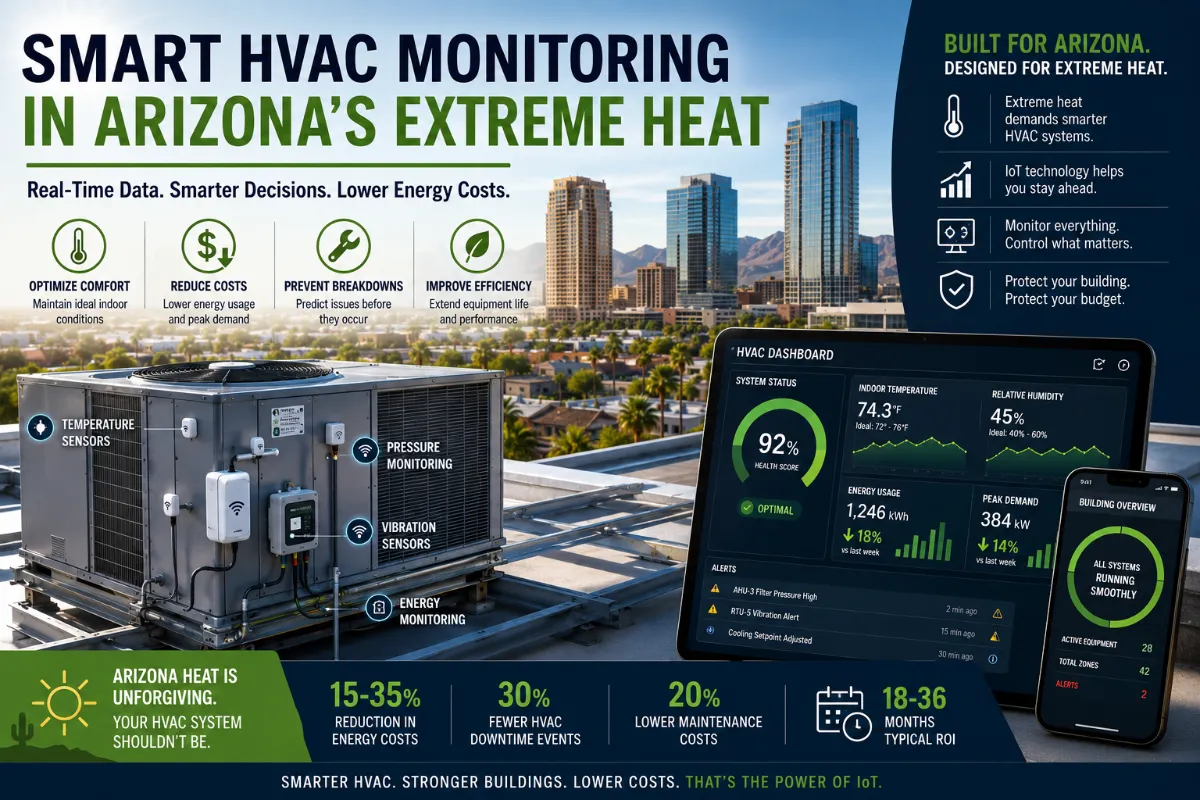
HVAC is often the largest energy expense in Arizona commercial buildings. IoT sensors can monitor temperature, humidity, airflow, occupancy, equipment runtime, and zone-level comfort.
Smart HVAC systems can reduce energy waste by cooling only the areas that need it. For example, a conference room, lobby, or unused office wing should not always receive the same cooling level as a high-occupancy workspace.
Occupancy sensors help buildings understand when spaces are actually being used. This is especially valuable for hybrid offices, medical suites, classrooms, coworking spaces, and multi-tenant buildings.
When occupancy data connects with HVAC and lighting systems, the building can reduce cooling and lighting in unused areas while maintaining comfort in active spaces.
Lighting automation reduces wasted electricity in offices, hallways, restrooms, storage areas, parking garages, and common spaces.
Smart lighting systems can use motion sensors, schedules, daylight sensors, and zone controls to reduce usage during low-activity periods.
Many commercial buildings pay not only for total electricity use but also for peak demand. IoT energy dashboards help building managers see when demand spikes occur.
By identifying peak usage patterns, Arizona buildings can adjust HVAC schedules, stagger equipment startup times, reduce unnecessary loads, and avoid preventable demand spikes.
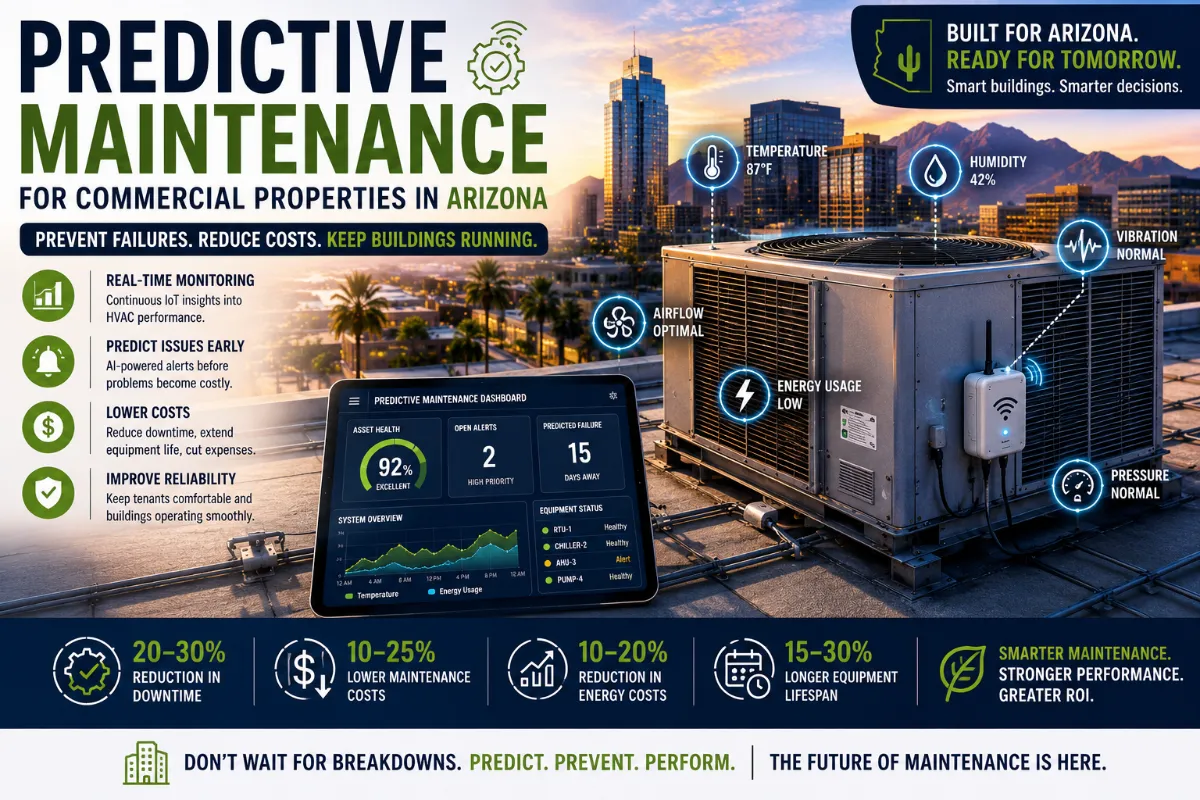
Energy waste often comes from equipment that is running poorly. IoT sensors can detect early signs of HVAC problems, such as unusual vibration, abnormal temperatures, reduced airflow, pressure changes, or excessive runtime.
Fixing equipment before it fails can reduce wasted energy and prevent expensive emergency repairs during Arizona’s hottest months.
Energy dashboards give property managers and facility teams a clear view of building performance. They can compare usage by floor, system, tenant, zone, or time of day.
This helps teams answer important questions: Which systems use the most electricity? Which areas stay cooled when empty? Which equipment runs longer than expected? Which building zones need adjustment?
Many buildings waste energy because systems run on fixed schedules instead of real building activity. IoT platforms allow schedules to adjust based on occupancy, business hours, weather, and tenant needs.
This is useful for offices, retail centers, schools, gyms, medical buildings, and industrial facilities with changing daily usage.
Arizona’s sunny climate makes solar energy attractive for many commercial properties. IoT platforms can help monitor solar production, battery storage, energy use, and grid interaction.
When solar data is combined with building energy data, owners can make better decisions about when to use stored energy, when to reduce demand, and how to improve overall efficiency.
| Building System | IoT Function | Energy Cost Benefit |
|---|---|---|
| HVAC | Zone control, runtime monitoring, automated cooling | Reduces unnecessary cooling |
| Lighting | Motion sensors, daylight control, schedules | Reduces wasted electricity |
| Occupancy | Real-time space usage tracking | Matches energy use to actual demand |
| Equipment | Predictive maintenance sensors | Prevents inefficient operation |
| Energy Meters | Real-time energy dashboards | Finds spikes and waste quickly |
| Solar Systems | Production and storage monitoring | Improves renewable energy use |
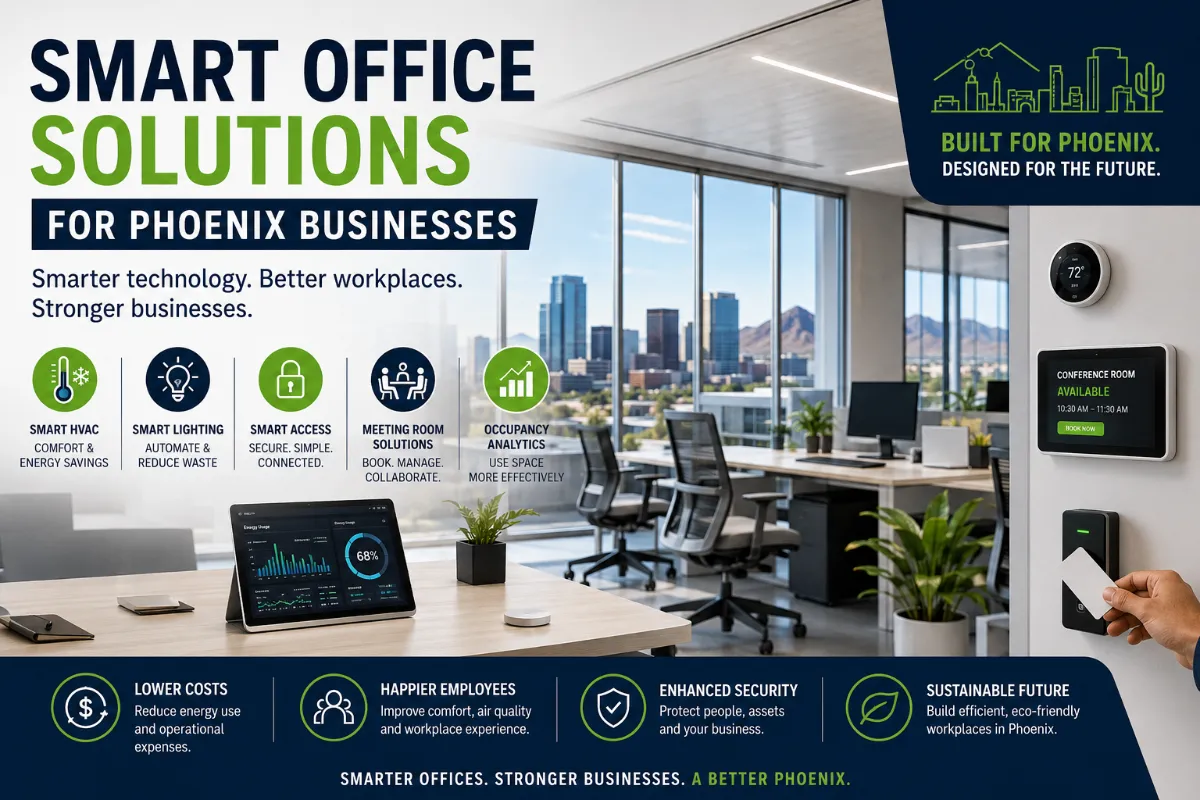
Office buildings often benefit from smart HVAC zoning, occupancy sensors, lighting automation, and energy dashboards. These systems are especially useful for hybrid work environments where space use changes throughout the week.
Retail centers can use IoT to manage lighting schedules, cooling zones, rooftop HVAC units, parking lot lighting, and after-hours energy use.
Warehouses can reduce costs through smart lighting, equipment monitoring, ventilation control, dock-area sensors, and temperature management.
Medical offices and healthcare buildings need comfort, reliability, and air quality control. IoT can help manage HVAC performance, indoor air quality, backup systems, and energy use.
Multi-tenant buildings can use submetering, access data, occupancy analytics, and centralized dashboards to understand energy use by space, floor, or tenant area.
| Project Type | Estimated Cost Range |
|---|---|
| Basic energy monitoring | $5,000 to $20,000 |
| Smart lighting automation | $10,000 to $50,000 |
| Smart HVAC controls | $20,000 to $100,000+ |
| Full building automation integration | $100,000 to $500,000+ |
Actual cost depends on building size, number of connected systems, installation complexity, software licensing, integration needs, and whether the project is a retrofit or new construction.
Arizona building owners should measure energy performance before and after IoT installation. The most useful metrics include monthly electricity use, peak demand, HVAC runtime, lighting usage, comfort complaints, maintenance costs, and equipment downtime.
| Metric | Why It Matters |
|---|---|
| Monthly electricity use | Shows total energy reduction |
| Peak demand | Identifies expensive usage spikes |
| HVAC runtime | Reveals cooling efficiency |
| Occupancy data | Shows whether energy matches actual space usage |
| Maintenance tickets | Shows whether equipment problems are decreasing |
| Tenant comfort complaints | Helps balance savings with comfort |
Smart thermostats can help, but they are only one part of energy management. Larger commercial buildings usually need zone-level sensors, equipment data, dashboards, and integration with building systems.
A building can reduce total energy use but still have expensive demand spikes. IoT systems should monitor both usage and demand patterns.
IoT dashboards are only useful when teams know how to read alerts, adjust settings, and respond to system data.
Disconnected systems create more work. HVAC, lighting, occupancy, energy, and maintenance data should be connected whenever possible.
Start with a review of utility bills, HVAC systems, lighting schedules, occupancy patterns, and known comfort issues.
Look for overcooling, lights left on, old equipment, peak demand spikes, unused spaces, and systems running outside business hours.
Before automating everything, collect data. Energy meters, occupancy sensors, and HVAC monitoring can reveal where savings are most likely.
Start with HVAC, lighting, and peak demand controls because these usually create the clearest energy savings in Arizona commercial buildings.
IoT is not a one-time setup. Buildings should be reviewed regularly so schedules, settings, and alerts can be improved over time.
In 2026, energy management is becoming a competitive advantage for Arizona commercial buildings. Owners that understand their building data can reduce waste, improve comfort, protect equipment, and make smarter capital decisions.
IoT gives commercial buildings the visibility they need to move from reactive energy management to proactive energy control.
Arizona commercial buildings reduce energy costs with IoT by using real-time data to control cooling, lighting, occupancy, equipment performance, and peak demand.
The most successful projects are not built around gadgets. They are built around measurable outcomes: lower electricity use, fewer demand spikes, better HVAC performance, reduced waste, improved comfort, and smarter building operations.
This article was reviewed by the IOT Arizona Editorial Team for accuracy, clarity, and relevance. Information may be sourced from publicly available treatment resources, government agencies, and healthcare references where applicable.
Last reviewed: June 2026
Smart Building & Commercial IoT
 Smart Building & Commercial IoT
 Smart Building & Commercial IoT
 Smart Building & Commercial IoT