 Industrial IoT (IIoT)
Reducing Downtime with Industrial IoT: Smarter Factory Opera...
Published On 21-06-2026

Published by IOT Arizona Research & Editorial Team
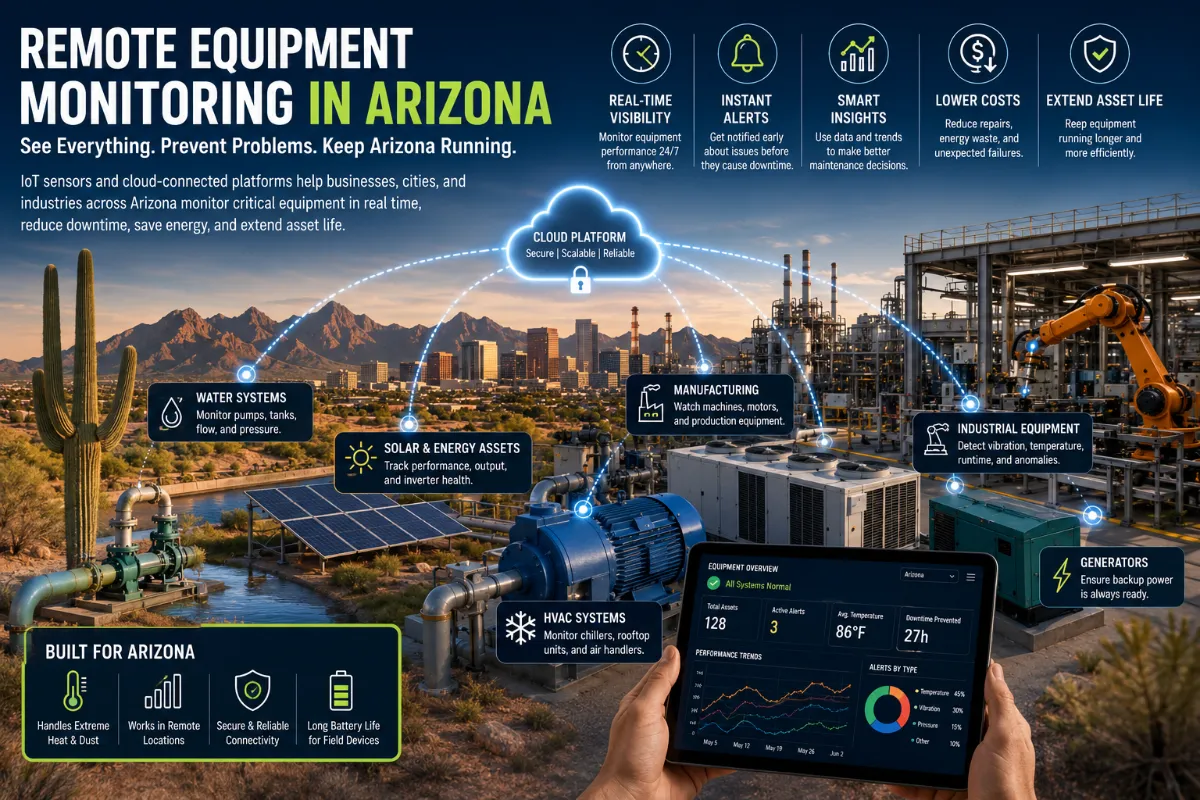
Remote equipment monitoring is becoming one of the most practical IoT applications in Arizona. It is not a futuristic idea. It is already changing how businesses, cities, factories, farms, utilities, and commercial buildings manage the equipment they depend on every day.
Across Arizona, organizations are using connected sensors and real-time dashboards to monitor machines, HVAC systems, pumps, generators, water systems, solar equipment, industrial assets, and building systems without needing someone physically standing next to the equipment.
The reason is simple: Arizona is a hard place for equipment to operate. Extreme heat, dust, long cooling seasons, water pressure demands, large distances, and rising energy costs make equipment failures more expensive and harder to ignore.
Recommended unique topic: Remote Equipment Monitoring in Arizona: How IoT Helps Businesses Manage Heat, Distance, Downtime, and Energy Costs
This topic is stronger than a generic article about remote monitoring because it connects the technology to real Arizona conditions. The article is not just about sensors. It is about how IoT is helping Arizona organizations operate smarter in a challenging environment.
Arizona has a unique mix of industries and infrastructure needs. A factory in Phoenix, a commercial building in Scottsdale, a water system in Tucson, a solar site near Yuma, and a farm in Pinal County may all use different equipment, but they share one problem: when critical equipment fails, the cost can be high.
Remote equipment monitoring gives teams earlier visibility. Instead of waiting for a breakdown, unusual sound, complaint, alarm, or emergency service call, teams can see warning signs through data.
For many Arizona operations, the biggest value is not automation. It is awareness.
Remote equipment monitoring uses IoT sensors, wireless networks, cloud software, and dashboards to track equipment performance from anywhere.
The system collects data from equipment and sends alerts when something changes. This helps owners, operators, and maintenance teams understand whether equipment is running normally or showing signs of stress.
| Equipment Data | What It Can Reveal |
|---|---|
| Temperature | Overheating, cooling problems, equipment stress |
| Vibration | Motor wear, imbalance, bearing issues |
| Pressure | Leaks, blockages, pump problems |
| Runtime | Overuse, inefficient scheduling, abnormal operation |
| Energy Use | Waste, failing components, peak demand problems |
| Flow Rate | Water movement, irrigation issues, pipe restrictions |
| Battery Status | Backup power readiness and field-device health |
Arizona commercial buildings rely heavily on HVAC systems. Remote monitoring helps building owners track rooftop units, chillers, thermostats, air handlers, pumps, and energy use.
This is especially important during hot months when cooling failures can affect tenants, employees, customers, and equipment.
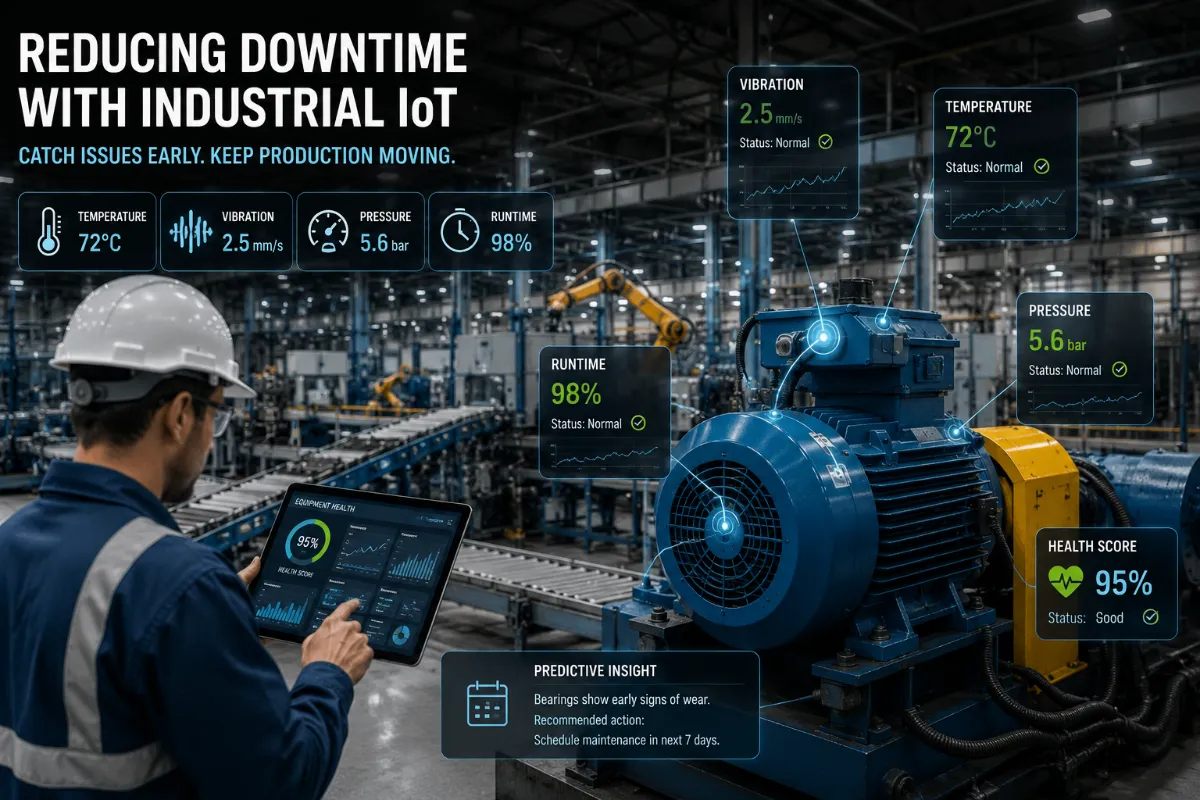
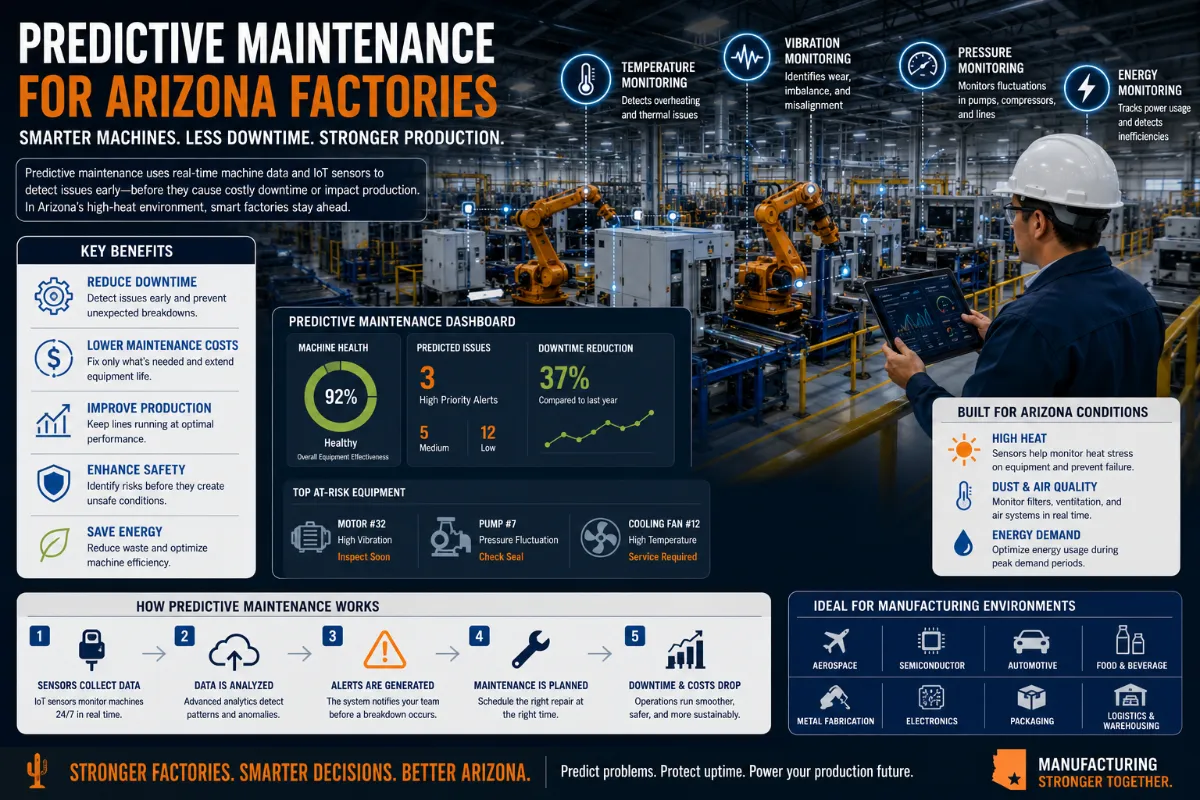
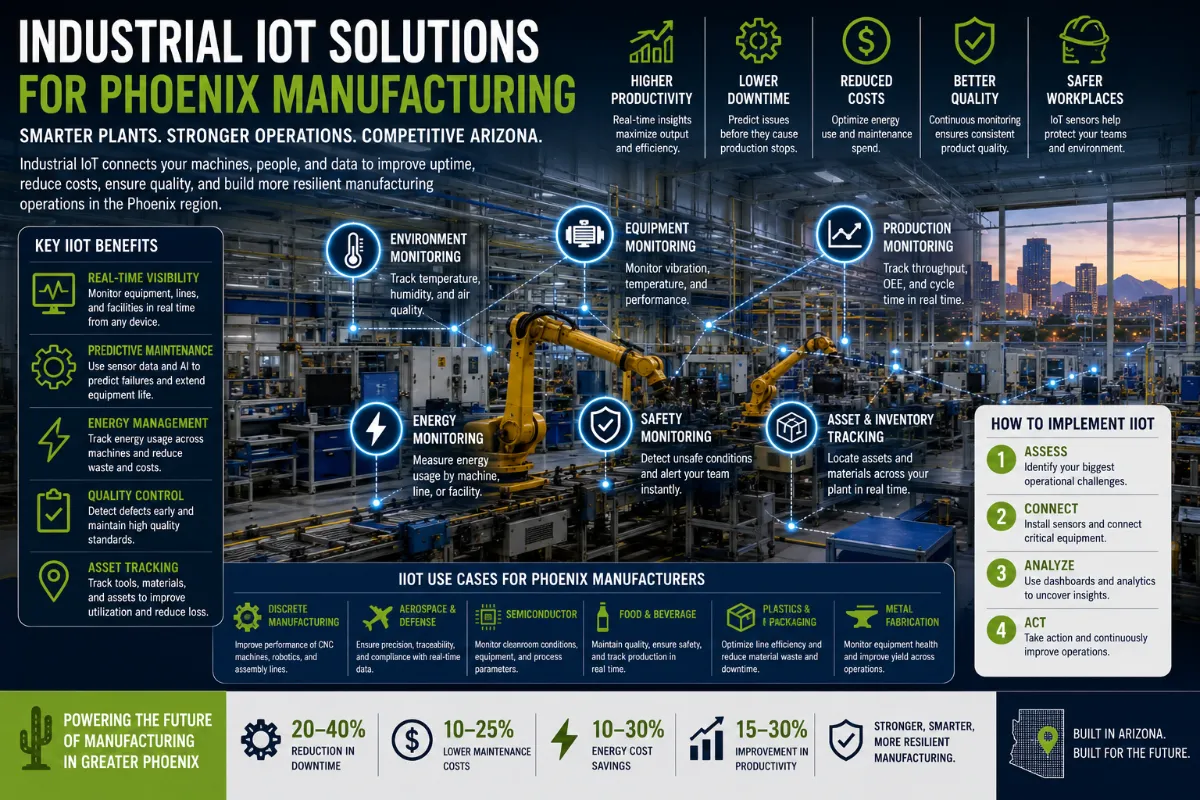
Factories use remote monitoring to track motors, conveyors, compressors, pumps, robotics, electrical systems, and production equipment.
When machines show early warning signs, maintenance teams can schedule repairs before a production line stops.
Water is one of Arizona’s most important resources. Remote monitoring helps track pumps, tanks, flow meters, irrigation systems, pressure levels, and leak conditions.
This can help reduce water loss and improve system reliability.
Arizona’s solar environment makes remote monitoring valuable for solar farms, commercial solar systems, inverters, battery storage, and energy equipment.
Operators can see performance issues quickly instead of discovering them after lost production.
Farms and agricultural operations can monitor pumps, irrigation lines, soil moisture, tank levels, weather conditions, and field equipment.
This matters because many agricultural assets are spread across large areas and cannot be checked manually every hour.
Cities and towns can use remote monitoring for lift stations, pumps, streetlights, public buildings, generators, traffic systems, and water infrastructure.
The goal is to find issues earlier and reduce emergency repairs.
Arizona heat does not just affect people. It affects machines.
High temperatures can increase stress on motors, electrical panels, HVAC systems, batteries, pumps, compressors, and outdoor equipment. When equipment is already working hard, small issues can become expensive failures faster.
Remote monitoring helps teams notice early signs such as rising temperature, longer runtime, higher energy use, or abnormal vibration.
| Business Need | How Remote Monitoring Helps |
|---|---|
| Reduce downtime | Detects warning signs before equipment failure |
| Lower repair costs | Allows planned maintenance instead of emergency repairs |
| Save energy | Identifies equipment that is running inefficiently |
| Improve visibility | Shows equipment status from one dashboard |
| Protect remote assets | Reduces the need for frequent physical inspections |
| Support better decisions | Turns equipment behavior into usable data |
One reason remote equipment monitoring is growing is that it can start small.
A business does not need to connect every machine on day one. Many Arizona organizations begin with one critical system, such as an HVAC unit, pump, compressor, generator, refrigeration system, or solar inverter.
Once the value is clear, they expand to more assets.
Start with equipment that would create the biggest problem if it stopped working. This may be HVAC, pumps, compressors, production machines, refrigeration, generators, or water systems.
Do not monitor data just because it is available. Decide what information would help your team act faster. Temperature, vibration, runtime, pressure, flow, energy use, and alerts are often the best starting points.
Remote monitoring becomes useful when it sends the right alerts to the right people. Alerts should be clear, actionable, and tied to maintenance workflows.
The best value comes from patterns. A machine that slowly runs hotter over several weeks may be telling you something before it officially fails.
After the first equipment group is monitored successfully, expand to other systems with clear business value.
Too much data can overwhelm teams. Start with the equipment and alerts that matter most.
A dashboard is only useful if someone owns it. Assign responsibility to operations, facilities, maintenance, or management teams.
Some Arizona assets are located in remote areas. Connectivity planning is important for farms, utilities, energy sites, and field equipment.
Connected equipment should be protected with secure networks, user permissions, updates, and monitoring.
Remote monitoring connects physical equipment to digital systems. That makes cybersecurity important.
Businesses should use secure passwords, multi-factor authentication, encrypted data transmission, device updates, role-based access, and network separation where needed.
Remote equipment monitoring is one of the quiet ways IoT is changing Arizona. It is not always visible to the public, but it affects everyday life.
It helps buildings stay cool, factories keep running, farms use water more carefully, solar systems perform better, and cities maintain infrastructure more efficiently.
As Arizona continues to grow, remote monitoring will likely become a normal part of how the state manages equipment, energy, water, and critical infrastructure.
Remote equipment monitoring in Arizona is not about replacing people with technology. It is about giving people better visibility into the systems they already manage.
For Arizona businesses, municipalities, farms, factories, and property owners, the value is clear: fewer surprises, faster decisions, lower downtime, and smarter operations.
This article was reviewed by the IOT Arizona Editorial Team for accuracy, clarity, and relevance. Information may be sourced from publicly available treatment resources, government agencies, and healthcare references where applicable.
Last reviewed: June 2026
Industrial IoT (IIoT)
 Industrial IoT (IIoT)
 Industrial IoT (IIoT)
 Industrial IoT (IIoT)