 Industrial IoT (IIoT)
Reducing Downtime with Industrial IoT: Smarter Factory Opera...
Published On 21-06-2026

Published by IOT Arizona Research & Editorial Team
At 4:30 a.m. in Phoenix, nothing looks unusual from the outside.
Truck trailers line up. Warehouse lights switch on. Forklifts begin moving pallets. Employees arrive for another shift.
But something very different is happening inside many Arizona facilities.
The buildings themselves are starting to notice things.
Not in a science-fiction way.
Quietly.
Almost invisibly.
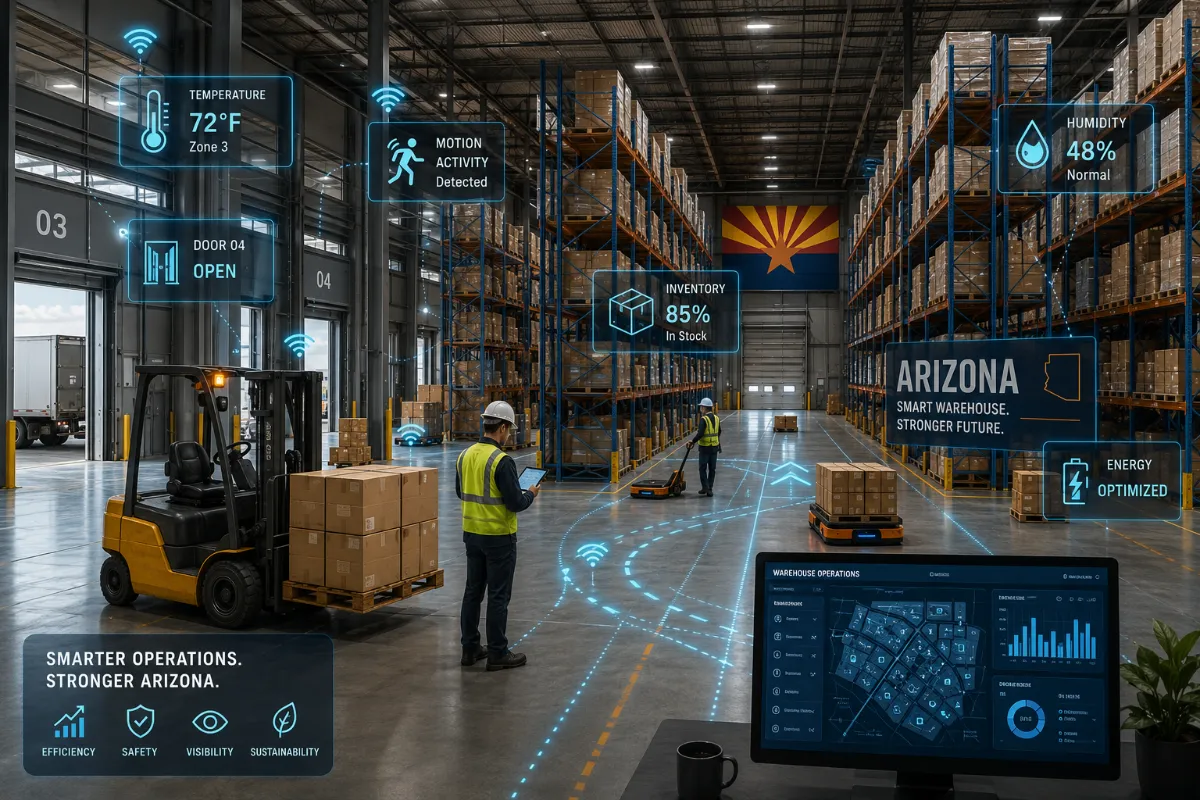
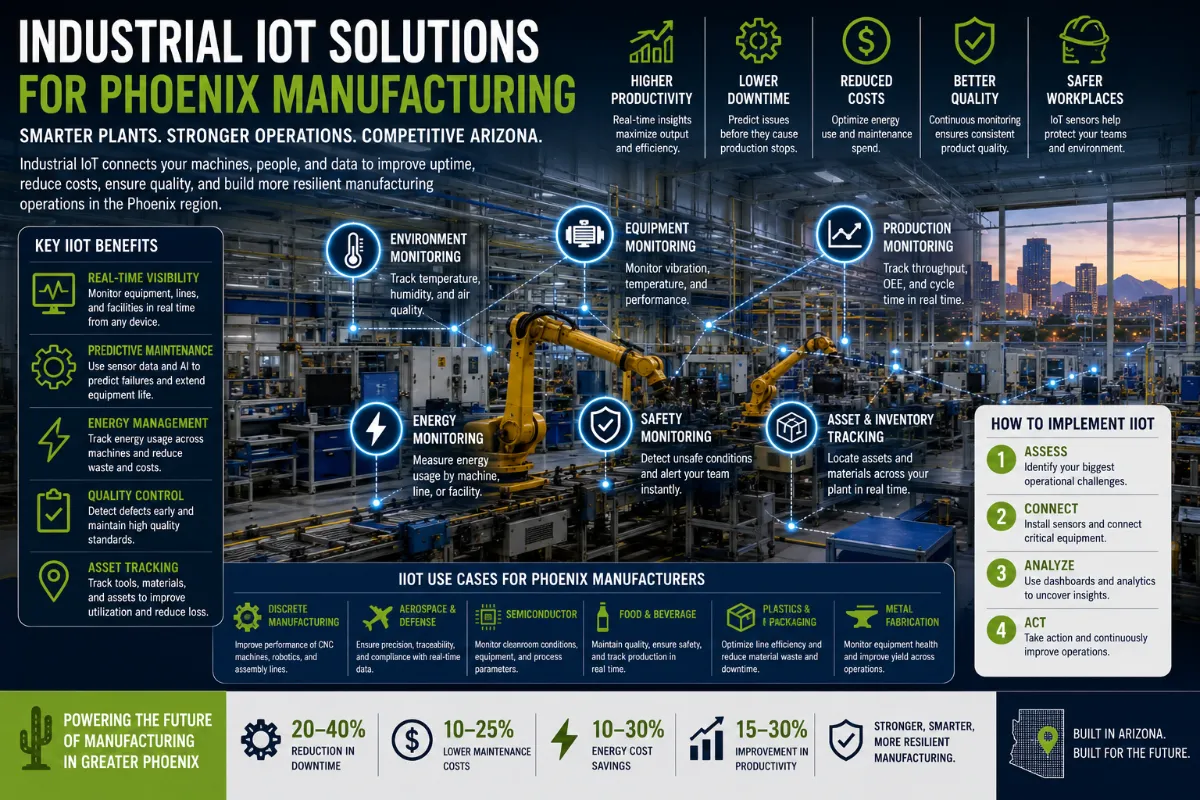
Across Arizona, tiny sensor networks are helping warehouses predict traffic jams before they happen, detect overheating equipment, locate missing inventory, and reduce wasted energy without employees constantly intervening.
The biggest change isn't technology.
It's that warehouses are gradually becoming environments that can respond to their own conditions.
Arizona has become one of America's fastest-growing logistics hubs.
Phoenix, Mesa, Glendale, Goodyear, and Tucson continue attracting distribution centers because of their access to California, Texas, Nevada, Utah, and Mexico.
Companies want faster delivery times.
Consumers expect next-day shipping.
Businesses need resilient supply chains.
The result is enormous pressure on warehouse operators.
Every delay becomes expensive.
Every misplaced item creates ripple effects.
Every equipment failure can slow an entire operation.
That's where invisible sensor ecosystems are becoming important.
Imagine walking inside a modern Arizona warehouse.
You probably won't see advanced robots everywhere.
Instead, you'll notice ordinary objects.
Now imagine all of those objects quietly sharing information.
A loading dock knows when trucks are arriving.
A shelf knows inventory levels are getting low.
A forklift knows which routes are congested.
An air conditioning system knows which zones are overheating.
Suddenly, the building behaves less like a warehouse and more like an active participant.
Arizona presents challenges that many other states don't face.
Extreme temperatures can stress equipment.
Rapid population growth increases shipping demand.
Massive industrial developments are being built at unprecedented speeds.
The state's location makes it a strategic gateway for national commerce.
Sensor-driven operations help businesses adapt to these conditions.
Temperature sensors can protect sensitive products.
Motion sensors can optimize traffic patterns.
Occupancy sensors can manage employee safety.
Environmental sensors can reduce energy consumption during Arizona's hottest months.
All of these tiny improvements compound into major operational gains.
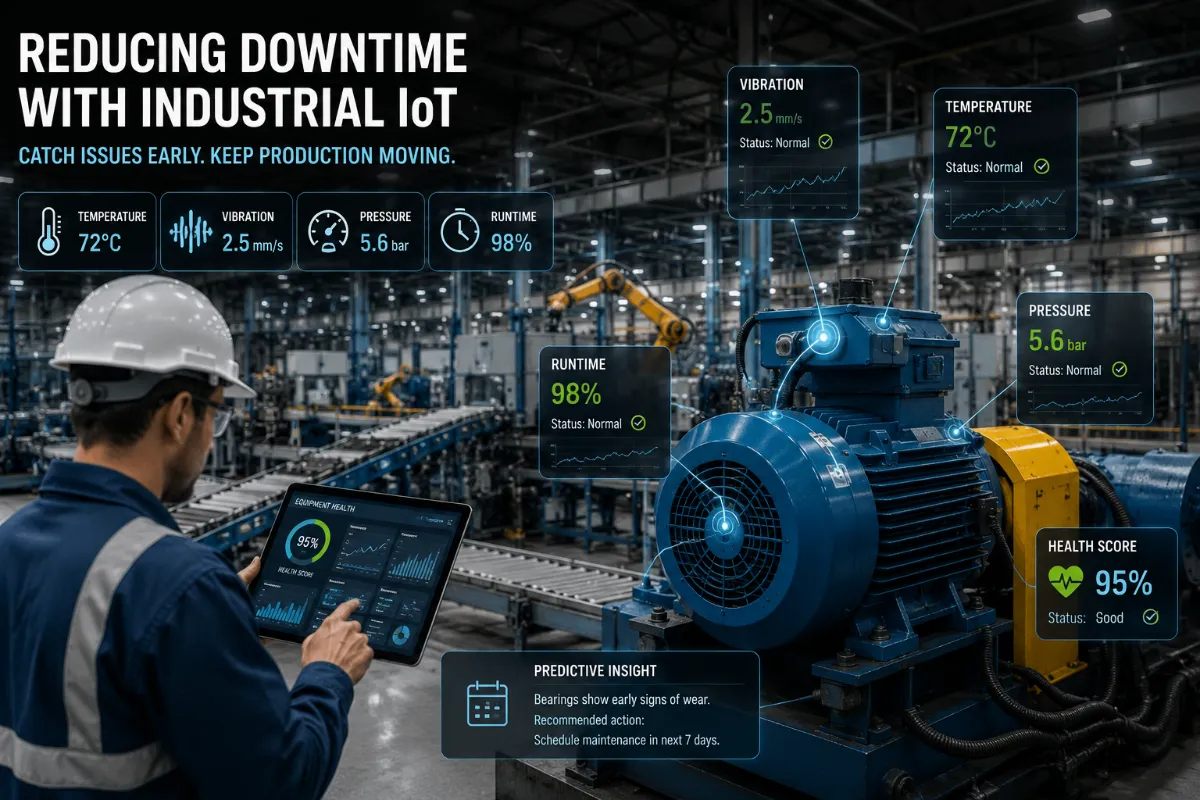
Imagine a conveyor motor beginning to overheat.
Years ago, nobody would know until it stopped working.
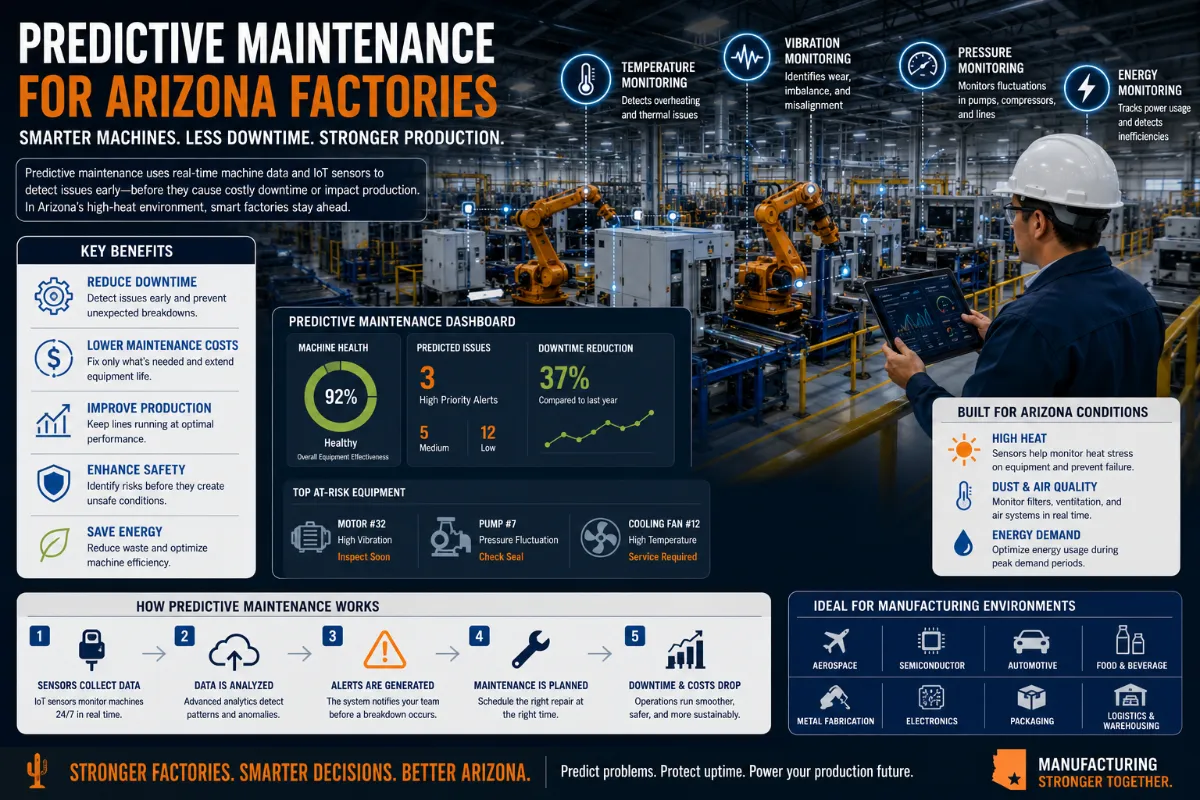
Now, sensors can identify unusual vibration patterns before a breakdown occurs.
Maintenance teams receive alerts.
Repairs happen early.
The production line keeps moving.
Orders remain on schedule.
Customers receive products on time.
One small sensor can prevent dozens of downstream disruptions.
This domino effect is becoming one of Arizona's biggest competitive advantages.
Not engineers.
Ordinary people will.
Residents may notice faster deliveries.
Businesses may experience fewer supply chain delays.
Employees may work in safer environments.
Building owners may reduce operating expenses.
Cities may see more efficient industrial districts.
The technology itself often stays hidden.
Its impact becomes visible everywhere else.
Automation does not necessarily mean fewer jobs.
It often means different jobs.
Employees increasingly spend less time hunting for problems and more time solving them.
New opportunities are emerging in:
The warehouse worker of the future may carry a tablet instead of a clipboard.
Data awareness is becoming just as valuable as physical labor.
By 2031, Arizona warehouses may become some of the most responsive industrial environments in America.
Buildings could automatically adapt to weather conditions.
Traffic systems could coordinate truck arrivals.
Energy consumption could shift throughout the day to reduce strain on the electrical grid.
Inventory shortages may be predicted days in advance.
Entire industrial corridors may operate as connected ecosystems rather than individual buildings.
The transformation won't happen because of one giant invention.
It will happen because thousands of tiny sensors quietly work together.
Arizona is becoming a state where infrastructure itself is learning to respond.
Warehouses are only one piece of a much larger puzzle.
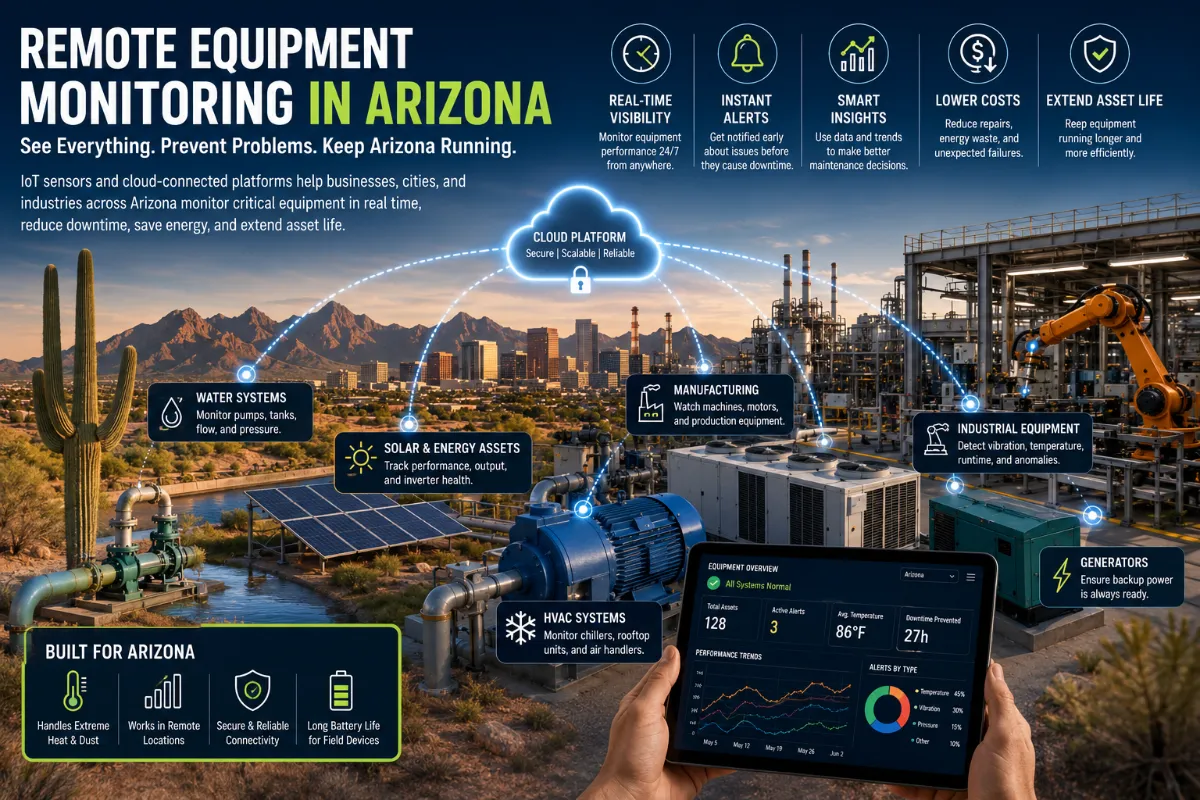
The same ideas will eventually spread into airports, commercial buildings, manufacturing facilities, utilities, and city infrastructure.
The buildings around us are slowly becoming aware of their own environments.
Most people won't even notice when it happens.
They'll simply experience a world that works a little smoother every year.
This article was reviewed by the IOT Arizona Editorial Team for accuracy, clarity, and relevance. Information may be sourced from publicly available treatment resources, government agencies, and healthcare references where applicable.
Last reviewed: June 2026
Industrial IoT (IIoT)
 Industrial IoT (IIoT)
 Industrial IoT (IIoT)
 Industrial IoT (IIoT)