 Industrial IoT (IIoT)
Inside Arizona's New Generation of Warehouses That Seem to R...
Published On 21-06-2026

Published by IOT Arizona Research & Editorial Team
In most factories, downtime does not begin with a dramatic breakdown.
It begins quietly.
A motor runs slightly hotter than usual.
A conveyor belt vibrates differently.
A compressor takes longer to build pressure.
At first, nothing looks urgent. But inside the operation, a small problem is beginning to spread.
When one machine fails, the damage rarely stays in one place.
A production line pauses. Workers wait. Maintenance teams rush. Shipping deadlines become tighter.
Customers may receive late orders. Managers start asking the same question: could we have seen this coming?
Industrial IoT does not need to look futuristic to be valuable.
Its most useful role is simple: notice problems earlier than people can.
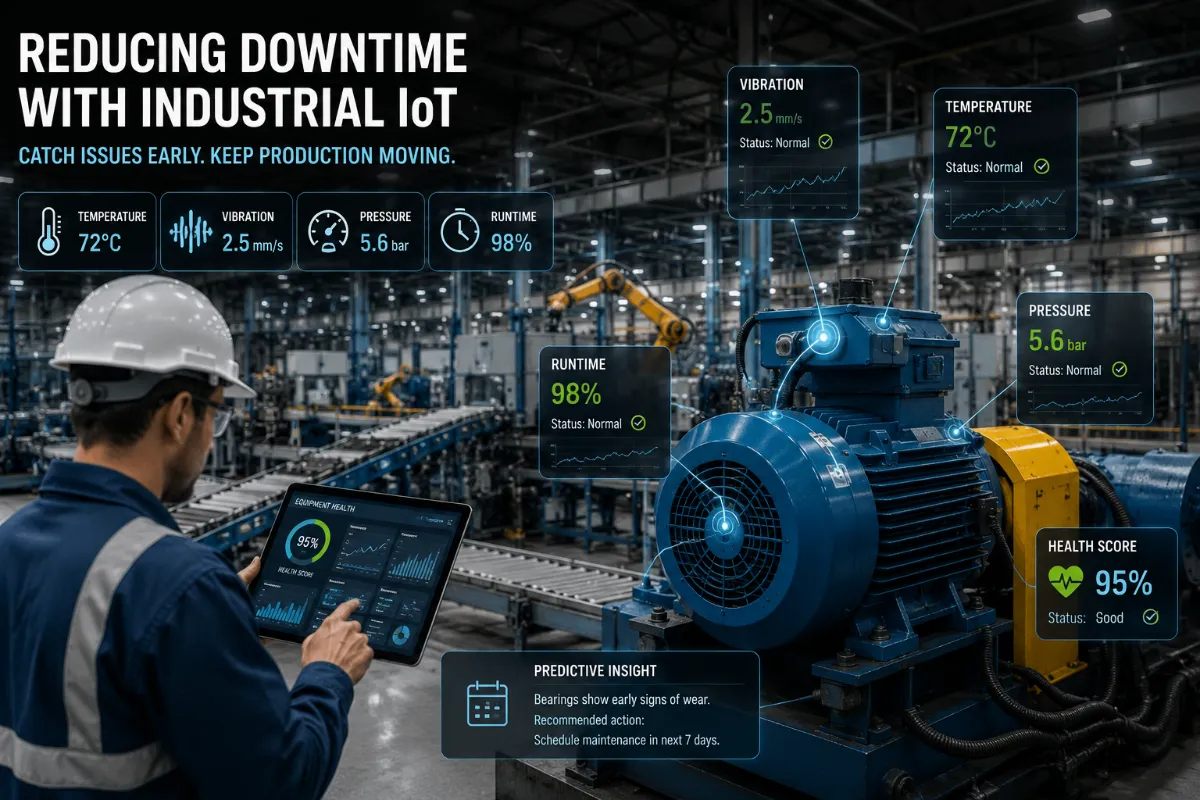
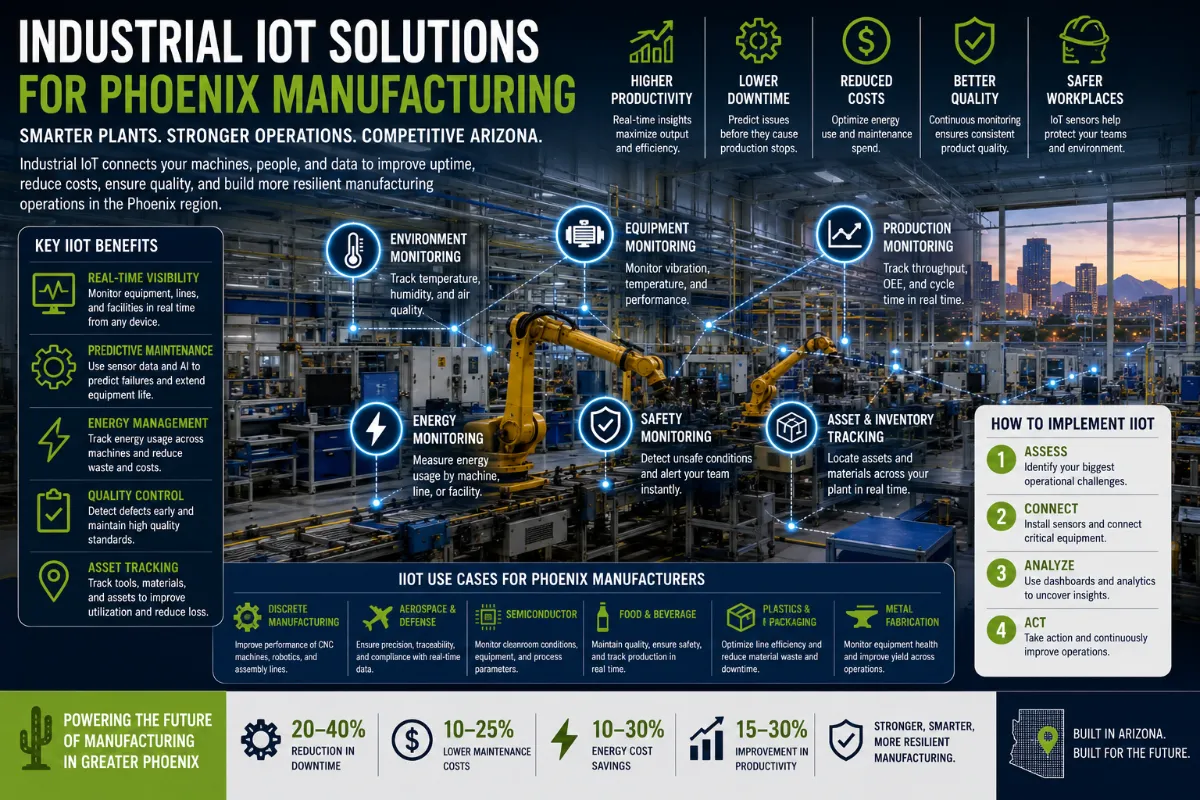
Sensors attached to machines can track vibration, temperature, pressure, energy use, runtime, and equipment behavior.
That data gives operations teams a clearer picture before a machine fails.
Traditional maintenance often follows a painful pattern.
A machine breaks. The team reacts. Production stops. Everyone waits.
Industrial IoT changes that pattern by turning equipment behavior into early warning signals.
A motor that vibrates outside its normal range may need inspection.
A pump drawing more power than usual may be under stress.
A temperature spike may show that a component is wearing down.
Downtime is often described as a maintenance issue.
But for business owners and plant leaders, it is much bigger than that.
Downtime affects labor costs, delivery schedules, customer trust, safety, inventory planning, and revenue.
Reducing downtime with Industrial IoT is about protecting the rhythm of the business.
The first visible change is usually not a dashboard.
It is less confusion.
Maintenance teams know which machine needs attention.
Supervisors can plan around repairs instead of reacting in panic.
Managers can see patterns across shifts, lines, and facilities.
Experienced maintenance workers often know when something feels wrong.
They hear it. They feel it. They recognize patterns from years of working around equipment.
Industrial IoT adds another layer to that experience.
It captures the small changes people may miss during busy shifts or overnight operations.
Reducing downtime is not about making factories less human. It is about giving people more time to act before pressure turns into crisis.
Businesses do not need to connect every machine on day one.
A smarter approach is to begin with the equipment that creates the most disruption when it fails.
That may be a conveyor, compressor, chiller, pump, oven, press, motor, or packaging line.
Start with the assets that stop production, delay shipments, or create safety concerns.
The real promise of Industrial IoT is not perfection.
Machines will still wear down. Parts will still need replacement. Production will still face pressure.
But teams can respond earlier, plan better, and avoid more sudden failures.
That is the real transformation: a facility where fewer people are caught off guard.
Industrial IoT reduces downtime by using sensors to monitor machine conditions and alert teams when equipment shows early signs of stress or failure.
Start with machines that cause the biggest disruption when they fail, such as conveyors, compressors, motors, pumps, chillers, and production-line equipment.
No. Smaller facilities can also use Industrial IoT by starting with a few high-priority machines and expanding over time.
No. It helps maintenance workers make faster, better-informed decisions by giving them earlier visibility into equipment problems.
This article was reviewed by the IOT Arizona Editorial Team for accuracy, clarity, and relevance. Information may be sourced from publicly available treatment resources, government agencies, and healthcare references where applicable.
Last reviewed: June 2026
Industrial IoT (IIoT)
 Industrial IoT (IIoT)
 Industrial IoT (IIoT)
 Industrial IoT (IIoT)