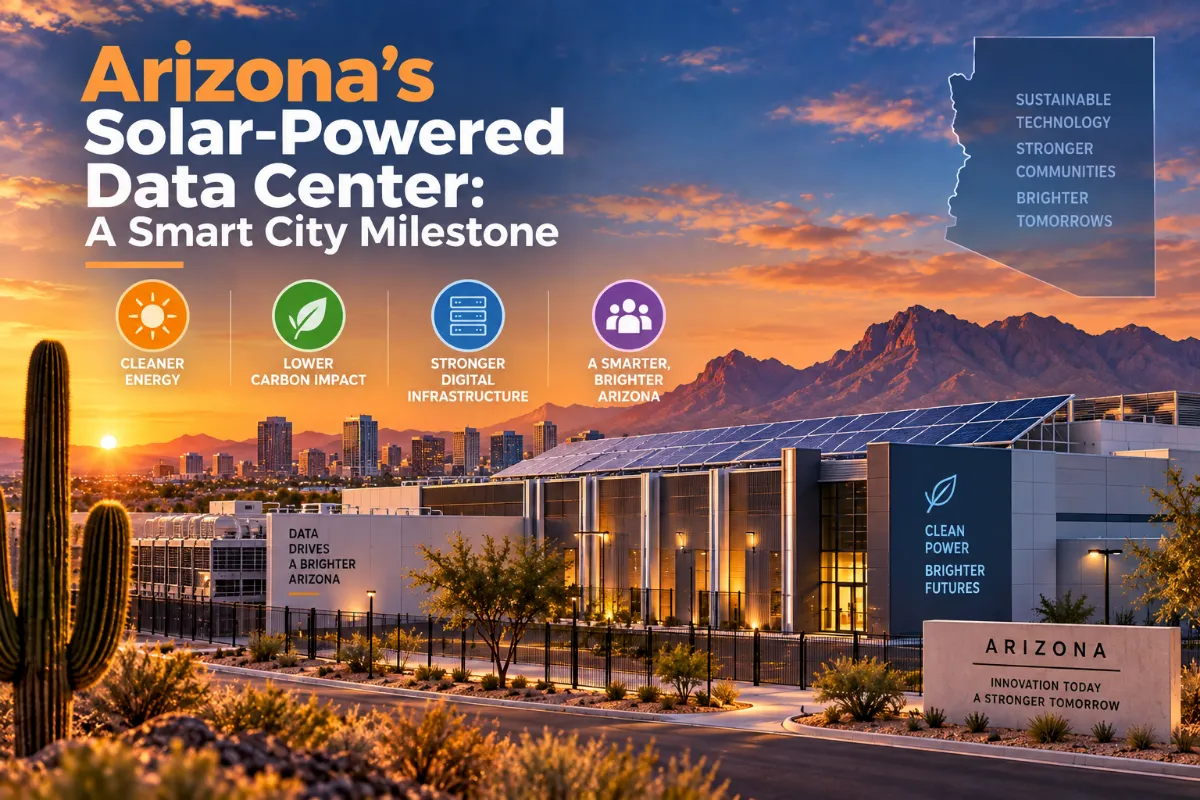
Arizona has quietly become one of the more interesting testing grounds for how renewable energy and digital infrastructure can grow together. A current build in the state has now passed the 35 percent mark on its technical progress, with a photovoltaic power plant already finished in 2025 and a data center slated to come online in 2026. On paper, that might sound like a routine construction update. In practice, it's a preview of how smart cities across the Southwest will likely power the next generation of connected infrastructure.
Smart city technology runs on data, and data runs on electricity. Traffic sensors, water monitoring systems, public safety cameras, and connected utility grids all depend on computing capacity that has to live somewhere close enough to process information quickly. Pairing that computing capacity with a dedicated solar plant is a practical response to two pressures that Arizona knows well: relentless sun and a power grid that gets stretched thin during the hottest months of the year.
Arizona checks a lot of boxes for developers trying to combine solar generation with data infrastructure. The state gets an enormous number of sunny days per year, land outside the major metro cores is comparatively affordable, and the business climate has been friendly to large capital projects, from semiconductor fabrication plants to logistics hubs. The Phoenix, Mesa, and Chandler corridor has already attracted major chipmakers and cloud providers, and that cluster effect tends to pull in supporting infrastructure like data centers, fiber routes, and now on-site renewable power.
There's also a practical energy argument. Summer demand on Arizona's grid is driven heavily by air conditioning, and utilities have had to manage tight margins during heat waves. A data center that generates a meaningful share of its own power through an adjacent photovoltaic plant reduces its draw on the public grid at exactly the times when that grid is under the most strain. That's not just good public relations, it's a real operational advantage for any facility that needs to guarantee uptime for the sensors, cameras, and control systems that keep a smart city running.
The sequencing matters here. Completing the photovoltaic plant first, ahead of the data center, means the site will have a generating asset already producing power before the heavier computing load comes online in 2026. That order of operations gives the developer a chance to test the solar output, work out any grid interconnection issues, and build a buffer of renewable capacity before the data center starts pulling electricity in earnest. It's a more methodical approach than building the data center first and hoping the power supply catches up later.
It's easy to think of data centers as background infrastructure, but for smart cities they're the engine room. Every connected traffic light, every water meter reporting usage in real time, every air quality sensor feeding a public dashboard needs somewhere to send its data and get a response back quickly. When that processing has to travel to a data center on the other side of the country, it adds delay and cost. A regional facility, especially one partly powered by local solar generation, shortens that path.
A few practical examples of what this can support once the data center is operational:
- Real-time traffic management systems that adjust signal timing based on current congestion rather than a fixed schedule
- Water utility networks that can detect leaks or pressure anomalies within minutes instead of during a scheduled inspection
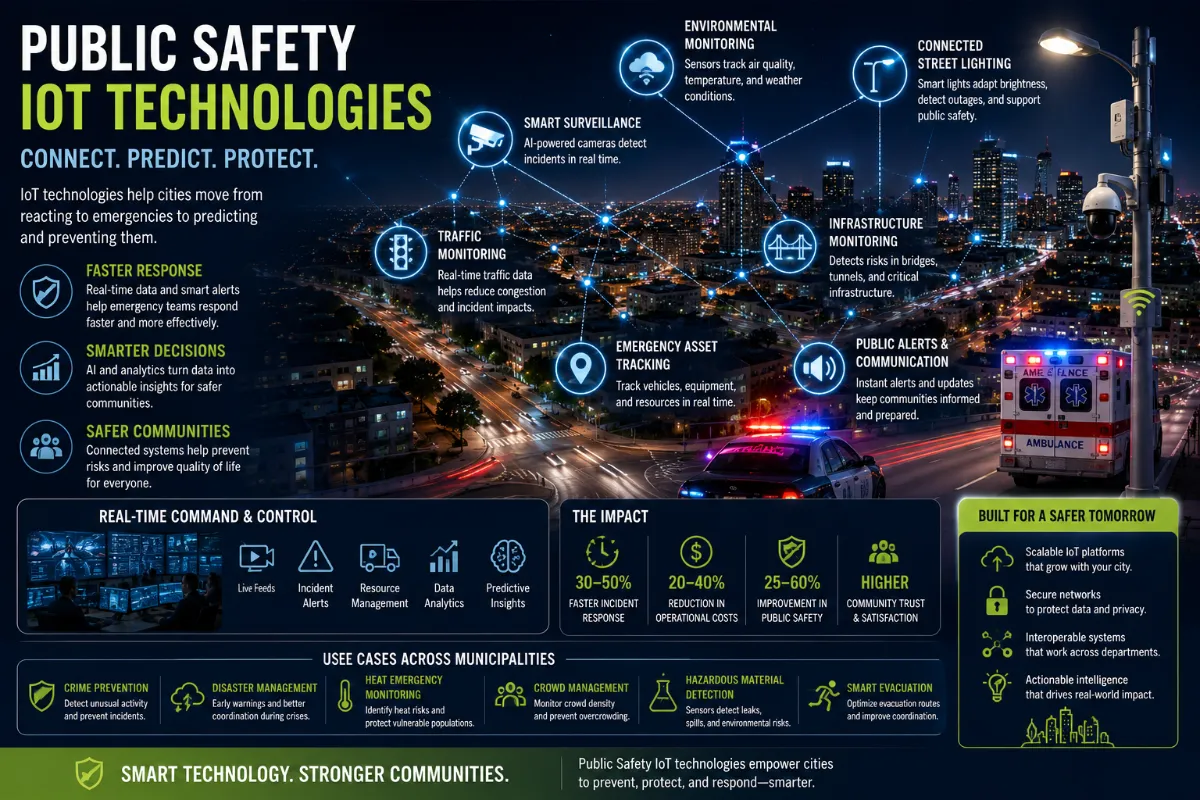
- Public safety camera networks that need local processing to flag incidents without sending raw video long distances
- Energy grid monitoring tools that help utilities balance load across neighborhoods during peak demand periods
None of these applications are exotic, they're the kind of infrastructure many cities are already trying to build. What changes with a project like this is the reliability and speed of the backend that supports them.
Local governments aren't the only ones paying attention. Companies operating in Arizona, from manufacturing plants to logistics operators, increasingly rely on cloud-connected sensors and analytics platforms for everything from predictive maintenance to inventory tracking. A nearby data center backed by renewable generation offers those businesses lower latency connections and, potentially, more competitive pricing on hosting and processing services, since the facility isn't as exposed to volatile grid electricity costs.
There's also a sustainability angle that matters for companies with their own environmental commitments. Businesses that need to report on the carbon footprint of their supply chain or their digital operations have a much easier story to tell when their data processing runs through a facility drawing power from an on-site solar plant rather than a conventional grid mix that still leans on fossil fuels in many regions.
For businesses evaluating whether to route workloads through a facility like this once it's operational, the return on investment isn't only about the electric bill. Lower latency can translate into measurable gains for time-sensitive applications, faster fraud detection, quicker equipment shutdowns when a sensor flags a problem, more responsive customer-facing apps. Those gains are harder to put a dollar figure on than a power bill, but they tend to matter more over time.
Municipal planners and private developers considering similar projects can take a few lessons from how this build is being sequenced.
- Build or secure the power source before finalizing the compute buildout. Renewable generation projects often have their own permitting and interconnection timelines that are worth starting early.
- Plan for hybrid power. Solar alone won't cover every hour of data center operation, especially overnight, so pairing generation with battery storage or a grid connection for backup is still necessary.
- Engage local utilities early. Large new loads, even partially self-supplied ones, still need coordination with the regional grid operator to avoid surprises during peak demand periods.
- Factor in water availability for cooling. Traditional data center cooling can use significant water, which is a sensitive topic in a desert state, so evaluating dry cooling or air-based systems is worth doing at the design stage rather than after construction begins.
- Communicate progress transparently. Publishing milestones, like the 35 percent progress mark referenced here, helps build public and investor confidence that a multi-year infrastructure project is on track.
Projects that combine solar generation with data center construction tend to run into a similar set of obstacles, regardless of location.
| Challenge | Why It Happens |
|---|
| Grid interconnection delays | Utilities need time to study how new generation and new loads affect the existing network |
| Water use for cooling | Arizona's limited water resources make traditional cooling methods a sensitive design choice |
| Supply chain timing | Solar panel and data center hardware supply chains don't always move at the same pace |
| Workforce availability | Skilled labor for both solar installation and data center construction can be in short supply during peak building seasons |
| Permitting complexity | Large energy and technology projects often require multiple layers of local, state, and utility approval |
None of these challenges are unusual for a project of this scale, but they help explain why a 35 percent progress figure, with a clear completed milestone in the solar plant, is a meaningful checkpoint rather than just a number.
The gap between finishing the photovoltaic plant and bringing the data center online is where a lot of the real work happens. That includes installing server infrastructure, building out cooling systems, running fiber connections, and testing how the solar output actually performs against the facility's expected power draw. For anyone tracking this project as an indicator of broader trends, the next milestones to watch will likely involve announcements about power capacity, cooling design, and any partnerships tied to how the facility will be used once it opens.
For Arizona specifically, this kind of build adds to a growing pattern of pairing renewable energy infrastructure with digital infrastructure, a combination that fits the state's climate, its land availability, and its ambitions to be a hub for both technology and clean energy investment. As more smart city systems come to rely on fast, local data processing, projects like this one offer a working example of how the physical and digital sides of city infrastructure are becoming harder to separate.
Whether you're a city planner, a business owner, or simply someone following how Arizona's tech landscape is evolving, the core lesson from this project is straightforward. Reliable, local computing power increasingly depends on reliable, local energy generation. Getting the energy piece built first, and built well, sets the stage for everything that depends on it later.
Frequently asked questions
It refers to overall technical progress across the site's construction, including both the completed photovoltaic plant and the ongoing work toward the data center, which is expected to be finished in 2026.
Solar generation gives the facility a source of power that isn't fully dependent on the public grid, which is especially useful in Arizona where summer electricity demand for cooling can strain grid capacity.
Smart city systems such as traffic sensors, water monitoring, and public safety cameras rely on nearby data processing to work quickly and reliably. A regional data center shortens the distance data has to travel, improving response times.
Common challenges include water use for cooling in a desert climate, delays in grid interconnection approval, supply chain timing for solar and server equipment, and coordinating multiple layers of permitting.
Based on how these projects typically operate, solar power is likely to cover a significant portion of demand during daylight hours, while battery storage or grid backup would still be needed for nighttime or high-demand periods.
The state offers abundant sunshine, available land outside major metro areas, and a business environment that has already attracted large technology investments, making it a practical location for pairing solar generation with data center development.
Related articles

 Smart Cities