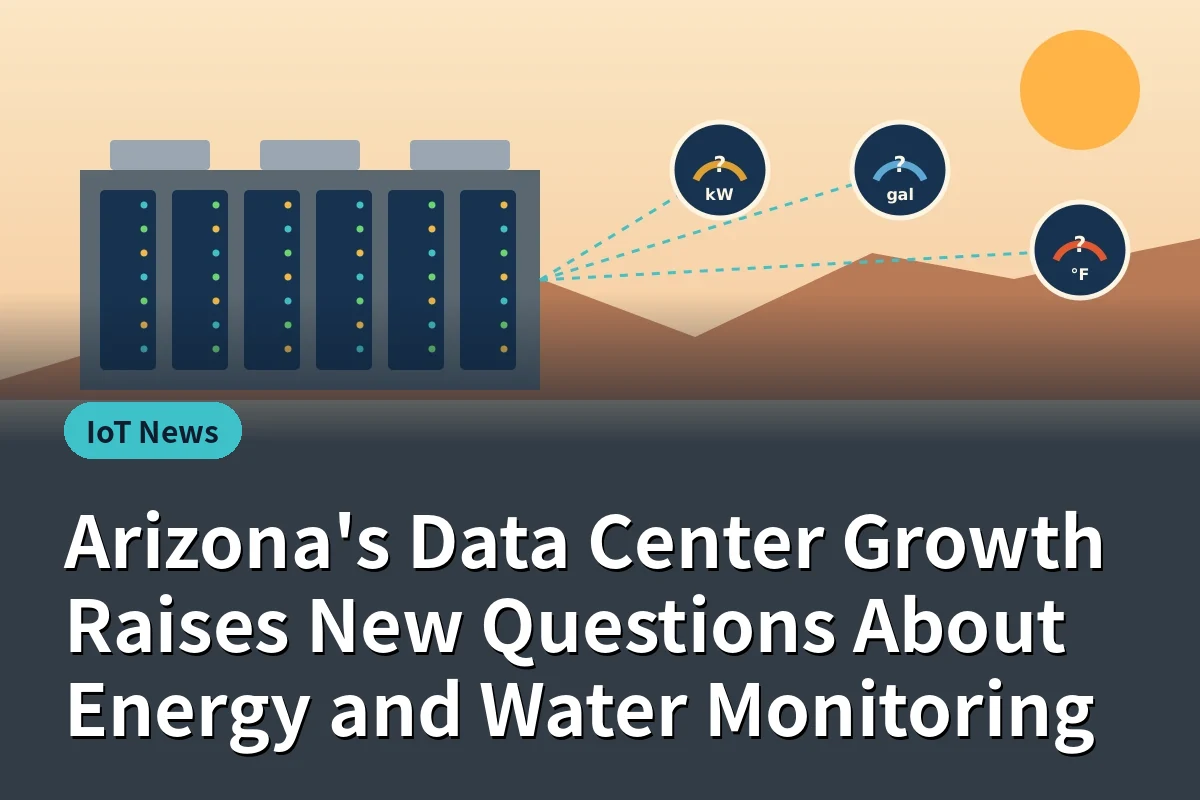
Arizona's argument over data centers has become, in large part, an argument over numbers. Salt River Project says its July 24, 2026 peak of 9,072 megawatts reached about 91 percent of its roughly 10,000 megawatts of installed supply, with data centers a major share of the year-over-year increase. APS says data centers were about 5 percent of its peak load last year and about 7 percent this year. Reserve margins during recent peaks fell to about 10 percent, below the utilities' targets of at least 15 percent for APS and 16 percent for SRP. Cleanview counts 95 planned projects that would roughly triple current data center electricity use in the state, while Attorney General Kris Mayes has identified at least 40 likely projects that would double it.
Then come the disputed figures. A consumer advocate's study estimated that APS may have recovered up to $600 million in new fuel costs over three years from residential and small business customers while large-user demand grew 27 percent; APS disputes the analysis. Western Resource Advocates estimates residential customers are overpaying by about $136 million under APS's proposed cost allocation in its current rate case; APS calls that a difference in perspective. On water, one projection has Phoenix-area data center cooling rising from about 385 million to more than 3.7 billion gallons a year, while another analysis puts statewide data center water use near 0.15 percent of Arizona's total.
Behind each of these disagreements sits the same question: who measures what, at what level of detail, and who gets to see it? This article looks at Arizona's data center debate through that lens. It does not take a side on whether the state should pause, slow or welcome new projects. It asks what monitoring would make the debate more honest.
On August 31, 2026, Mayes called for a statewide pause on approving and building new data centers, citing power bills and Colorado River cuts. Governor Katie Hobbs rejected the call for a moratorium in early September. In mid-October, Mayes said she would explore whether nuisance law could be used against unwanted projects. A large proposed data center near Eloy, which initially planned about 3 gigawatts at peak, was rejected. Some developers, including those behind a proposed Casa Grande project, plan to generate power independently of the grid. Mayes has also called for a Corporation Commission audit to determine whether residents and small businesses should receive refunds.
These are policy and legal questions for elected officials, regulators, courts and communities. But almost every position in the debate rests on data that is incomplete, private or contested.
| Question in the Debate | Data That Would Help Answer It | Typical Visibility Today |
|---|
| How much peak load do data centers add? | Interval demand by customer class at the hour of system peak | Utility aggregates and percentages; little facility-level detail public |
| Are residential customers subsidizing large users? | Cost-of-service studies built on measured load profiles and grid investment drivers | Contested studies in rate case filings |
| How much water do data centers consume? | Metered makeup water, blowdown and reclaimed water by facility and season | Varies by city; often aggregated or not published |
| Do data centers warm nearby neighborhoods? | Dense air and surface temperature sensing around facilities, before and after construction | Research studies; few permanent networks |
| Can data centers help during grid emergencies? | Verified records of load reduction during demand response events | Utility program data, rarely public at facility level |
| Will planned projects actually materialize? | Interconnection queue status and construction milestones | Partly public through utility filings and planning documents |
Most public figures describe data center demand as a share of peak or as planned megawatts. Those numbers matter, but cost allocation depends on detail: when each customer class draws power, how flat or variable its load is and which grid investments it drives. Data centers often run at high, steady load around the clock, which affects both generation needs and how costs are assigned.
Utilities already collect interval data for large customers. Publishing anonymized load profiles by customer class, along with the assumptions in cost-of-service studies, would let regulators, advocates and the public test claims rather than trade them. Our guide to energy monitoring for Arizona data centers explains the facility-level metering that makes accurate profiles possible.
SRP and APS take different approaches. SRP, a not-for-profit public power district with an elected board, charges data centers minimum demand charges tied to their load and requires them to pay 60 percent of required system upgrade costs before construction begins. APS, an investor-owned utility regulated by the Arizona Corporation Commission, is in a rate case where cost allocation is contested and seeks a residential increase of roughly 14 to 16 percent. Commissioner Kevin Thompson has argued that data centers should pay for the generation they require while grid-wide reliability investments are shared by all customers.
Whatever the policy outcome, enforcing it depends on measurement. Minimum demand charges, upgrade cost shares and any future refunds all rely on accurate metering and transparent methods.
Water reporting for data centers varies widely. Some cities set caps or require approval for large users; some companies publish site-level figures; others publish only portfolio totals. Estimates diverge partly because cooling designs differ: evaporative systems consume water, especially in summer, while closed-loop or zero-water designs use far less water but more electricity. Microsoft has said its water-cooled Arizona data centers consume water on net only above 85 degrees Fahrenheit and that it will build only zero-water data centers in the state going forward.
Consistent, metered reporting of water consumption by facility and season, along with the energy trade-off of each cooling approach, would narrow the gap between competing estimates. Our article on IoT monitoring for Arizona data centers covers system-level water metering.
An ASU study reported earlier in 2026 found that data centers can warm surrounding areas by several degrees, a finding Mayes cited when calling for a pause. Measuring that effect reliably requires sensors placed around facilities before and after construction, controlling for other changes such as new roads and buildings. Cities already building heat monitoring networks could include data center areas in their designs. Our article on what connected heat sensors can measure discusses those networks.
SRP has described the risk of building infrastructure for projects that fall through as a potential time bomb. It is building for 10 data center customers in its queue, with roughly 2 gigawatts of additional capacity and about 2.4 gigawatts of transmission, while noting full ramp-up can take five to ten years and not all projects will materialize. APS has sought bids since 2023 for 8 gigawatts of new capacity by 2031. Tracking project milestones, from land and permits to construction and energization, gives planners and the public a clearer picture of which forecasts are firm.
- Standard facility metrics. Peak demand, annual energy, water consumption by source and season, and cooling type, reported consistently.
- Customer class load profiles. Anonymized hourly data showing how data center demand aligns with system peaks.
- Transparent cost studies. Methods and assumptions open to review in rate proceedings.
- Environmental baselines. Temperature and water monitoring around new sites before construction.
- Demand response verification. Measured load reductions during grid events.
- Project tracking. Public milestone data for large interconnection requests.
Some of this already exists in pieces. The gap is consistency, comparability and public access.
Supporters of data center growth point to jobs, tax revenue, construction activity and the importance of computing infrastructure, and they note that large-load tariffs and upgrade payments are designed to make data centers pay their costs. Critics point to rising residential bills, tight reserve margins, water constraints under Colorado River cuts and local effects such as heat and noise. Better monitoring would not settle these disagreements, which involve values as well as facts, but it would let them proceed on shared, verified numbers.
Shared measurement standards would also help communities compare projects fairly, rather than relying on each developer's own way of reporting.
- Facility-level energy and water metering and reporting platforms.
- Environmental monitoring networks around new sites.
- Demand response measurement and verification.
- Data governance tools that share verified metrics while protecting sensitive information.
- OT security for metering and facility systems, as our IoT security guide explains.
The Corporation Commission's decision in the APS rate case, expected by the end of 2026, possible legislation in 2027, local zoning decisions and continued utility planning will shape Arizona's data center future. Whatever path the state chooses, decisions grounded in measured, comparable data will be easier to defend and easier for the public to trust.
Our article on edge computing and Arizona data centers looks at smaller distributed alternatives. Find energy and water monitoring partners in the IoT Arizona company directory, including energy providers in Phoenix. Browse more of our IoT News coverage.
Frequently asked questions
Positions on costs, reserve margins, water use and local heat rest on figures that are often aggregated, private or contested, so better monitoring would let claims be tested.
SRP's July 24 peak of 9,072 megawatts reached about 91 percent of its installed supply, and reserve margins at APS and SRP fell to about 10 percent, below their targets.
SRP uses minimum demand charges and requires 60 percent of upgrade costs before construction. APS cost allocation is being decided in its 2026 rate case.
Cooling designs vary and reporting is inconsistent. Evaporative systems consume water while closed-loop designs use more electricity, and figures are often not published by facility.
An ASU study reported in 2026 found data centers can warm surroundings by several degrees. Confirming effects locally requires before-and-after sensor networks.
Standard facility metrics, customer class load profiles, transparent cost studies, environmental baselines, verified demand response and public project milestones.
Related articles

 IOT News