
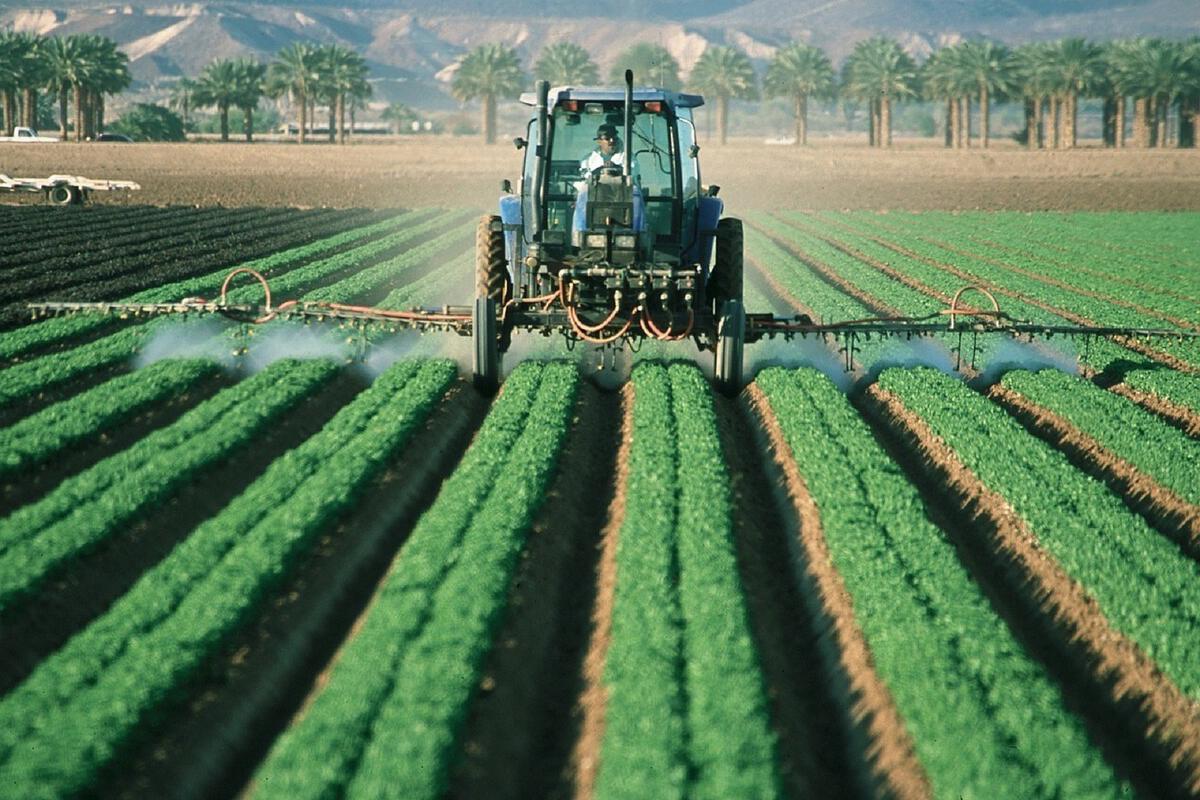
You would think that modern farms would be fertile ground for the Internet of Things (IoT). And in many ways, you’d be right: Smart tractors and other farm equipment, coupled with GPS-equipped smart sensors tracking everything temperature to moisture to soil acidity, mean the IoT can help today’s high-tech farmers plant and harvest more efficiently than ever before.
Who benefits from IoT on the farm?
But if you believe a recent expose in Motherboard, all is not well down on the IoT farm. It turns out that many of the benefits of IoT — and the big data it generates — in agriculture fall not to the farmers, but to the so-called BigAg equipment makers and seed and fertilizer companies.
The problem, according to Motherboard writer Rian Wanstreet — a Ph.D. student at the University of Washington and a non-resident fellow at the Center for Media and Data Studies —is that restrictive End User License Agreements (EULAs) and other mechanisms deliver control of the IoT devices and data that farmers increasingly depend on often to the vendors instead of the farmers.
As Wanstreet explains, “New farming equipment is built to be interconnective and to scoop up data wherever it can, which is then combined with historical information like weather reports. The company can then provide ‘prescriptions’ on where, when, and how much to plant, fertilize, and chemicalize.”
That’s great — the information can help farmers reduce risk and increase productivity. But there’s more to the story. Even though the data these IoT devices gather comes from the farmers and their farms, it’s not clear who actually owns the information. The American Farm Bureau’s Privacy and Security Principles for Farm Data addresses many of these issues, but it’s non-binding and the EULAs for many products may not follow them.
‘Turn key to agree’
Just as important, farmers often don’t have much of a choice. Many companies require ongoing subscriptions to their “precision agriculture data platforms“ in order to take advantage of their services, while others use so called “turn key to agree” EULAs, where simply switching on the tractor ignition signifies acceptance of the vendor’s rules.
Those rules can be restrictive, often forbidding cash-strapped farmers from fixing their own equipment, instead requiring them to use the vendor’s repair services. And they can allow the vendors to reuse, share, or resell the data without compensating — or even notifying — the farmer. The ownership situation can be further complicated because expensive farm equipment — many machines cost more than half a million dollars — is typically leased, often from a unit of the manufacturer,
Worried that manufacturers could remotely “brick” their machines if their rules are not followed, some farmers have even been known to install “illegal Ukrainian software to hack their tractors!” That, in turn, raises security concerns affecting all parties.
IoT issues go beyond the farm
No one is arguing that the data captured by agricultural IoT isn’t valuable. But control and ownership of that valuable data is raising complex issues that don’t have obvious answers.
That’s true down on the farm, of course, but also in factories, offices, vehicles, and private homes. Solving those issues is just as difficult — and just as important — as dealing with technological challenges of the IoT. And it’s simply too early to know how they well play out — and what the implications will be — among users, vendors, industry associations, regulators, and other interested parties.


